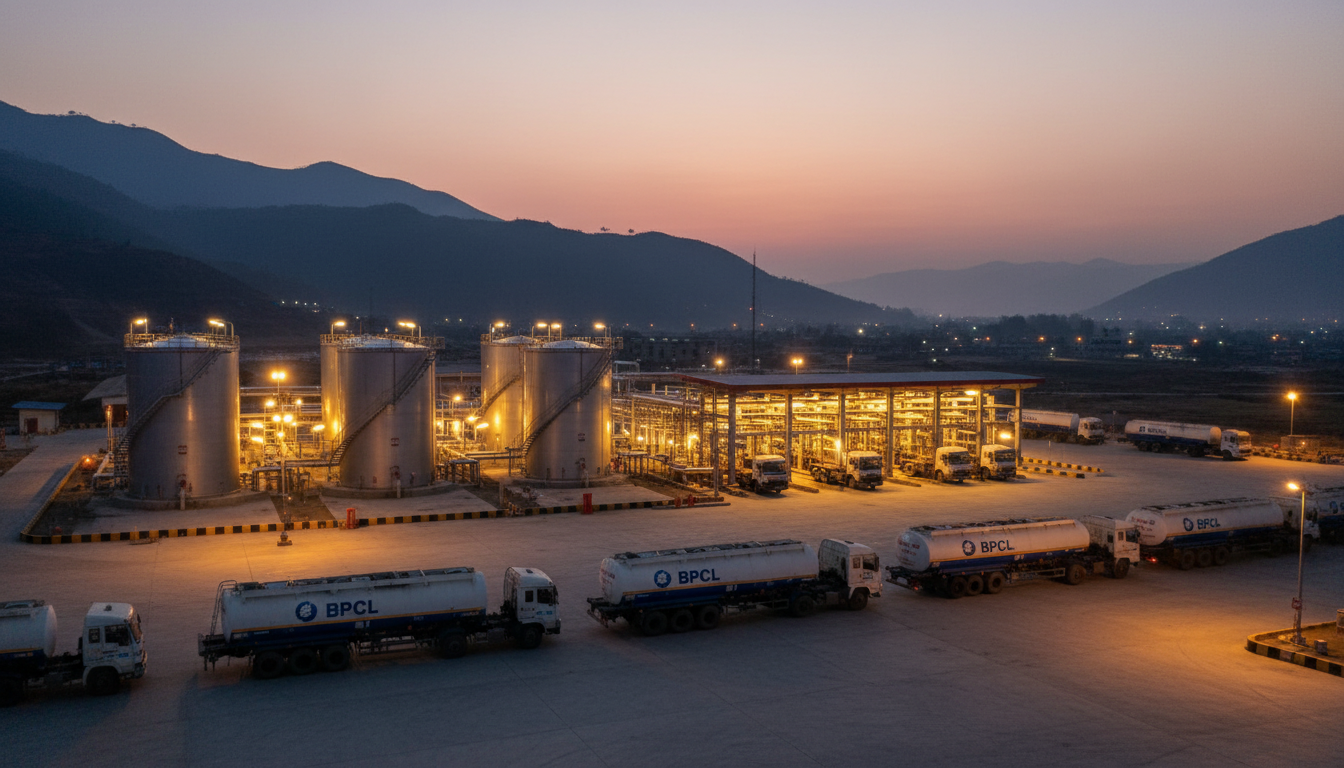
Bharat Petroleum Corporation Limited (BPCL) has significantly bolstered its logistical capabilities and market reach in India’s northern territories, announcing a pivotal agreement with the Railways for a new Gati Shakti multi-modal cargo terminal. Located on the outskirts of Jammu city, this facility represents a strategic investment aimed at enhancing the region’s energy supply chain and streamlining the movement of critical petroleum products. For investors tracking India’s energy sector, this development signals BPCL’s commitment to securing market share, improving operational efficiency, and aligning with national infrastructure initiatives, all while navigating a dynamic global oil landscape.
Bolstering Energy Security in Strategic Regions
The new Gati Shakti multi-modal cargo terminal, situated in Bajalta, is a cornerstone of BPCL’s strategy to ensure robust and reliable fuel distribution across some of India’s most strategically vital regions. The agreement, formalized between Senior Divisional Commercial Manager Uchit Singhal for the Jammu division and Territory Manager (Retail) Jammu, Chandan Chauhan, representing BPCL, underscores a collaborative effort to fortify the nation’s energy infrastructure. With an impressive total storage capacity of 109,225 kilolitres, this state-of-the-art terminal is engineered to handle two rakes per day, facilitating a monthly supply of approximately 162,000 metric tonnes of petroleum products. This substantial capacity is not merely an operational metric; it translates directly into uninterrupted, year-round fuel availability for the populace and industries of Jammu and Kashmir, as well as the high-altitude region of Ladakh. For investors, this move signifies BPCL’s proactive approach to de-risking supply chains and capitalizing on demand in regions where energy access is paramount, establishing a competitive edge through infrastructural superiority.
Operational Efficiency and Environmental Dividends
Beyond the immediate goal of energy security, the Jammu terminal promises a suite of operational and environmental benefits that will accrue to BPCL, the local economy, and the broader Indian logistics network. A primary objective is the significant enhancement of logistics efficiency for the Jammu common user facility, achieved by shifting a substantial portion of freight movement from road to rail. This transition is expected to dramatically reduce the burden of heavy tank lorries on Jammu city roads, leading to smoother traffic flow and reduced congestion. Furthermore, the environmental implications are substantial: by opting for rail transport, BPCL is poised to cut carbon emissions, aligning with global sustainability goals and India’s own environmental commitments. This strategic shift will also lower overall logistics costs for the company, improving efficiency for industries reliant on petroleum products, and generating both direct and indirect employment opportunities within the region. The facility’s use of modern tank wagons for safe and efficient handling operations also elevates safety, health, and environmental standards, presenting a more resilient and responsible operating model for investors focused on ESG metrics.
Navigating Volatile Markets: BPCL’s Strategic Long Game
BPCL’s investment in this critical infrastructure project comes at a time when global oil markets continue to demonstrate significant volatility, a primary concern for investors. As of today, Brent Crude trades at $95.32 per barrel, reflecting a robust 5.47% increase, while WTI Crude has similarly climbed 5.62% to $87.23. This daily rebound follows a period of notable market turbulence, where Brent experienced a significant 19.9% decline, dropping from $112.78 on March 30th to $90.38 by April 17th. Such rapid price swings underscore the inherent risks and opportunities within the sector, prompting frequent questions from our readership, such as “is WTI going up or down?” and “what do you predict the price of oil per barrel will be by end of 2026?” These inquiries highlight a clear investor focus on market direction and future price stability.
BPCL’s proactive expansion in Jammu provides a clear signal that the company is focused on building long-term operational resilience and market penetration, rather than being solely reactive to short-term price fluctuations. By securing robust distribution channels and enhancing supply chain efficiency, BPCL is positioning itself to deliver consistent value regardless of the immediate oil price trajectory. This strategic infrastructure development helps insulate the company’s regional operations from some of the external pressures of a volatile global market, addressing the underlying investor concern about company performance in an uncertain environment. It demonstrates a commitment to foundational strength that can weather market cycles, a crucial factor for sustained investor confidence.
Upcoming Catalysts and the Project’s Imminent Impact
The timing of the Jammu terminal’s expected operational readiness adds another layer of intrigue for investors. The facility is scheduled to become fully operational by the end of this month, April 2026. This coincides precisely with a series of high-impact energy market events that will undoubtedly shape the near-term outlook for oil and gas. Today, April 20th, marks the OPEC+ JMMC Meeting, a critical gathering that often sets the tone for future production policies. This will be followed closely by the API Weekly Crude Inventory report on April 21st and the comprehensive EIA Weekly Petroleum Status Report on April 22nd, providing vital insights into U.S. supply and demand dynamics. Furthermore, the Baker Hughes Rig Count on April 24th will offer a snapshot of drilling activity, culminating in the full OPEC+ Ministerial Meeting on April 25th, where definitive policy decisions are typically made.
Against this backdrop of impending market catalysts, BPCL’s new terminal is set to begin operations, potentially enhancing the company’s logistical flexibility and market responsiveness just as these events unfold. For investors, the ability of BPCL to seamlessly integrate this new, high-capacity distribution hub into its network during such a dynamic period speaks volumes about its operational readiness and strategic foresight. The terminal’s commissioning at this juncture could reinforce BPCL’s position as a reliable and efficient supplier in the northern regions, allowing it to capitalize on market shifts or mitigate potential supply disruptions that might arise from global policy changes or inventory trends. This forward-looking strategic play underscores BPCL’s commitment to sustained growth and robust performance for its shareholders.


