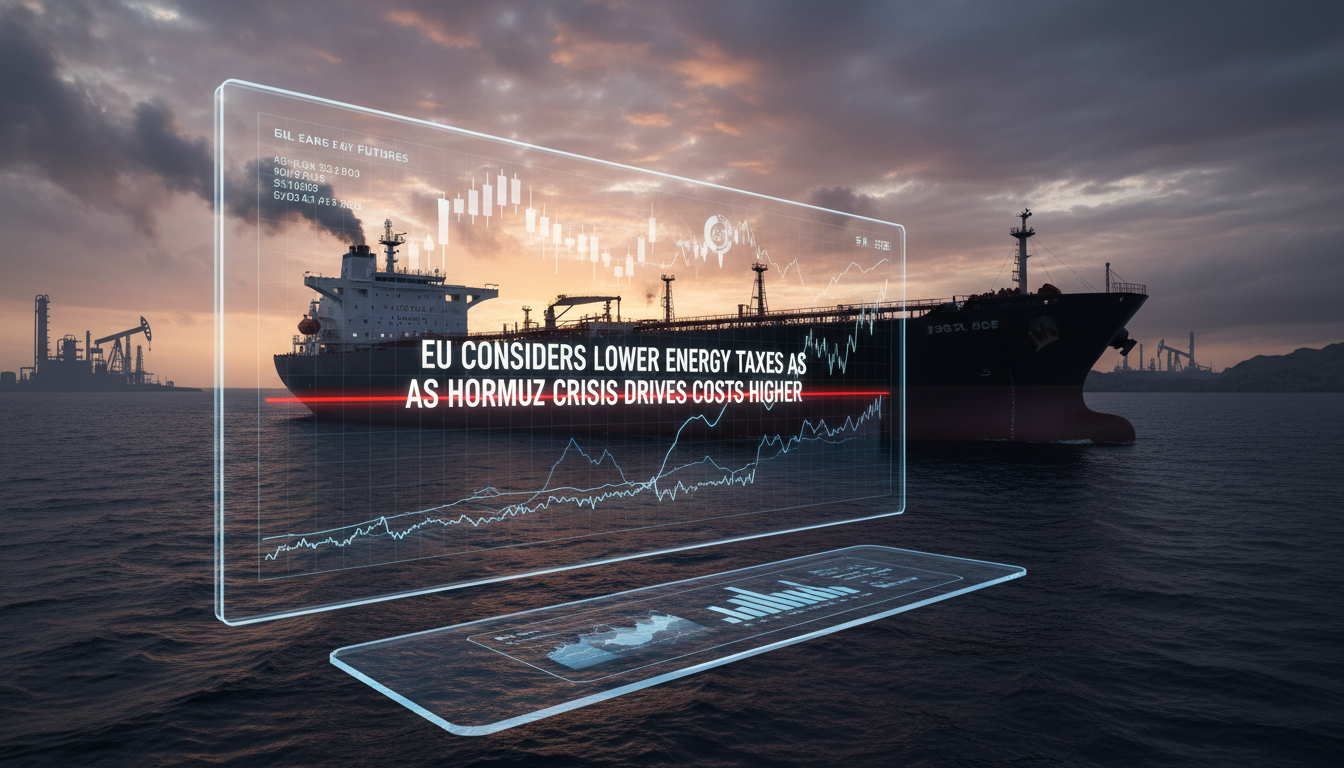
The European Union is once again at a critical juncture regarding its energy policy, grappling with persistent price volatility and the looming threat of supply disruptions. Against a backdrop of elevated global energy costs, the European Commission is poised to unveil a pivotal policy paper next week, aimed at mitigating the financial burden on households and industries while simultaneously accelerating the transition to renewable energy sources. This strategic move comes as investors navigate a complex market characterized by geopolitical tensions and significant price swings, creating both challenges and opportunities across the oil and gas landscape.
EU’s Policy Response to Persistent Energy Pressure
In response to what has been termed the second major energy crisis in four years, the European Commission is preparing to adopt a comprehensive policy paper on April 22nd. This anticipated document will outline recommendations designed to alleviate the economic strain on consumers and businesses. Key proposals include lowering energy taxes and reducing grid charges, measures intended to directly cut costs for end-users. Crucially, the paper is also expected to advocate for a more favorable tax regime for electricity compared to fossil fuels, a deliberate step to boost renewable energy deployment and reduce reliance on traditional hydrocarbons, especially amid surging natural gas prices that have driven power costs upwards.
The urgency behind these recommendations is underscored by the escalating financial toll on the bloc. Just 30 days of the recent conflict added an estimated $16.2 billion (14 billion euros) to the EU’s fossil fuels import bill by the end of March. Our internal market intelligence indicates that this import bill has continued to soar throughout April, exacerbated by supply chain bottlenecks, particularly in critical chokepoints like the Strait of Hormuz. The combination of sustained high prices for gasoline, diesel, and natural gas, coupled with the very real risk of shortages, paints a challenging picture for European energy security and economic stability.
Navigating Volatility: A Snapshot of Current Market Dynamics
The global energy markets remain highly dynamic, a fact clearly reflected in recent trading. As of today, Brent Crude is trading at $95.32 per barrel, marking a robust 5.47% increase in today’s session, with an intraday range of $92.77 to $97.81. Similarly, WTI Crude has seen a significant jump, currently standing at $87.23, up 5.62% for the day within a range of $85.45 to $89.60. This upward movement is also mirrored in refined products, with gasoline prices at $3.04, up 3.75% today.
However, it is essential for investors to contextualize these gains against recent market history. Our proprietary price trend data reveals considerable volatility, with Brent Crude having experienced a notable decline of nearly 20% over the past fortnight, falling from $112.78 on March 30th to $90.38 on April 17th. This sharp rebound on the heels of a significant correction highlights the inherent instability and responsiveness of the market to geopolitical developments and supply concerns. For investors asking about the short-term direction of WTI, this serves as a potent reminder that rapid swings remain the norm, necessitating agile investment strategies.
Forward Implications: Policy, Supply, and Strategic Shifts
Looking ahead, the convergence of policy decisions and supply-side dynamics will shape the market’s trajectory. The European Commission’s policy paper, slated for adoption on April 22nd, will undoubtedly influence investor sentiment, particularly regarding the long-term outlook for fossil fuels versus renewables in Europe. This date coincides with the release of the EIA Weekly Petroleum Status Report, offering a dual perspective on both demand-side policy adjustments and fundamental supply metrics in the crucial U.S. market.
Further impacting the supply landscape are the upcoming OPEC+ meetings. Today, April 20th, sees the Joint Ministerial Monitoring Committee (JMMC) meeting, a precursor to the full OPEC+ Ministerial Meeting scheduled for April 25th. Investors will be closely watching for any signals regarding production policy, especially given the recent price recovery and ongoing geopolitical risks. Any shift in output targets could have immediate and significant repercussions for crude prices. Moreover, the aviation sector faces potential headwinds, with industry leaders expressing concerns about possible jet fuel shortages as early as May if current conflicts persist. This scenario, articulated by Ryanair’s CEO, suggests that supply risks are not merely theoretical but could materialize in the very near future, impacting airline profitability and the broader logistics chain.
Investor Sentiment and Strategic Positioning Amid Uncertainty
Our first-party reader intent data from the past week clearly illustrates the pervasive uncertainty among oil and gas investors. A significant number of queries revolve around directional price movements, with investors keenly asking about the short-term trajectory of WTI and what they can expect the price of oil per barrel to be by the end of 2026. This reflects a fundamental desire for clarity in a highly opaque environment. Furthermore, questions regarding the performance of specific companies, such as Repsol, underscore investor focus on how individual entities are positioned to navigate this volatile landscape.
For investors, the EU’s impending policy shift presents a dual challenge and opportunity. While lower taxes on electricity and a push towards renewables could create headwinds for traditional fossil fuel investments in the long run, the immediate need for energy security and the ongoing geopolitical risks ensure continued demand for oil and gas. Strategic positioning may involve scrutinizing companies with diversified energy portfolios, those demonstrating strong operational resilience in the face of supply chain disruptions, or those poised to benefit from accelerated renewable energy build-outs. Given the persistent volatility and the Commissioner’s warning that prices may not return to pre-conflict levels soon, a robust, informed, and adaptable investment strategy remains paramount.


