The Maturing Energy Transition: Why Natural Capital Demands Oil & Gas Investor Attention
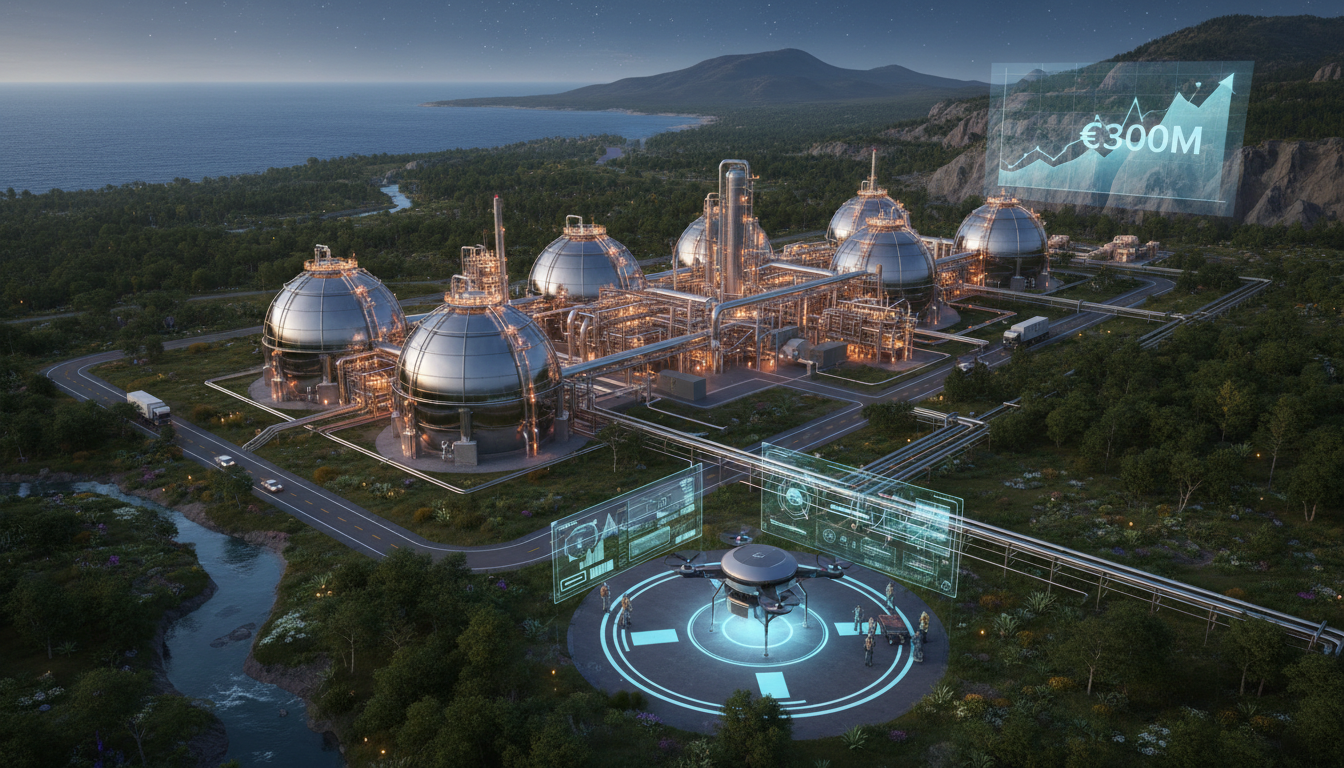
The global investment landscape is undergoing a profound transformation, with capital increasingly flowing towards sustainable assets. A recent and significant development in this shift is the unveiling of the Value Nature Fund I, a new closed-end natural capital fund targeting a substantial €300 million (approximately $351 million USD). Spearheaded by impact investment firms Triodos Investment Management and Fondaction Asset Management (FAM), this initiative is set to channel institutional capital into the regeneration of agricultural lands and forested areas across North America and Europe. For oil and gas investors, this isn’t just a peripheral environmental story; it’s a powerful signal about the evolving definition of “energy transition” and the expanding universe of investable assets designed for long-term resilience and value creation, even as traditional energy markets navigate their own complex dynamics.
Natural Capital Fund I: A New Frontier for Institutional Allocation
The Value Nature Fund I is not merely another ESG-themed product; it represents a strategic institutional bet on natural capital as a distinct and critical asset class. With an initial commitment of C$25 million (approximately $18 million USD) from Fondaction, the fund aims to mobilize significant financial resources to transform land management practices. Its core objective is to convert conventional, intensive farmlands and forests into regenerative, ecologically sound operations that prioritize ecosystem health, biodiversity, and long-term productivity. This shift aligns with a broader macroeconomic trend where environmental stewardship is increasingly viewed not just as a cost center, but as a driver of sustainable economic value. The collaboration between Triodos, with its deep expertise in European sustainable food and agriculture, and Fondaction, with its robust track record in North American environmental and natural capital markets, creates a formidable partnership poised to deploy capital strategically across a wide geographical footprint, encompassing Europe, Canada, and the United States.
Market Volatility Underscores Diversification Imperative
Against the backdrop of this long-term capital reallocation, the immediate energy markets continue to demonstrate their characteristic volatility, reinforcing the strategic appeal of uncorrelated assets. As of today, Brent crude trades at $95.32, marking a significant 5.47% increase for the day, while WTI crude sits at $87.23, up 5.62%. This recent upturn follows a challenging period where crude prices saw substantial downward pressure. Our proprietary data shows Brent crude plummeting from $112.78 on March 30th to $90.38 by April 17th, a nearly 20% decline in just over two weeks. Such sharp swings highlight the inherent risks and unpredictable nature of relying solely on traditional energy commodities. For oil and gas investors, the launch of a €300 million natural capital fund serves as a compelling reminder that while the core business remains vital, prudent portfolio management increasingly involves exploring opportunities that offer alternative return profiles and enhanced resilience against fluctuating commodity prices and geopolitical tensions. Diversifying into areas like natural capital can provide a hedge, balancing the growth potential of traditional energy with the stability and ESG alignment demanded by modern institutional mandates.
Addressing Investor Concerns: Beyond Short-Term Price Swings
Our proprietary reader intent data offers a window into the immediate concerns of oil and gas investors, revealing a strong focus on market direction and future pricing. Questions such as “what do you predict the price of oil per barrel will be by end of 2026?” and “is WTI going up or down?” dominate the discourse. While these questions reflect legitimate tactical considerations for short-term trading and positioning, the emergence of funds like Value Nature I speaks to a more fundamental, long-term strategic shift. Investors are not just looking for immediate profits; they are increasingly seeking durable value in a world transitioning away from carbon-intensive economies. The €300 million target of this natural capital fund, backed by significant institutional capital, directly addresses the underlying investor desire for assets that can deliver robust financial performance while also contributing to environmental sustainability. This isn’t about abandoning oil and gas, but rather about acknowledging that a diversified energy portfolio of the future will likely include a wider array of assets, including those that directly contribute to ecological restoration and sustainable land use, offering a different pathway to long-term returns and risk mitigation.
Upcoming Energy Events and the Broadening Investment Horizon
The coming weeks are packed with critical events that will undoubtedly influence short-term oil and gas market dynamics. Today, April 20th, investors will closely watch the OPEC+ JMMC Meeting for any signals regarding production policy. This will be followed by the full OPEC+ Ministerial Meeting on April 25th, where decisions on supply could significantly impact crude prices. Additionally, key data releases such as the API Weekly Crude Inventory (April 21st and 28th), the EIA Weekly Petroleum Status Report (April 22nd and 29th), and the Baker Hughes Rig Count (April 24th and May 1st) will provide immediate insights into demand, supply, and drilling activity. While these events are crucial for navigating traditional energy investments, the simultaneous growth of significant natural capital funds like Value Nature I highlights a broadening investment horizon. Smart capital is recognizing that while these conventional drivers remain potent, the long-term energy transition is creating entirely new avenues for investment. These new vehicles offer opportunities to capture value from environmental restoration, carbon sequestration, and sustainable resource management—elements that are becoming increasingly indispensable components of a forward-looking energy investment strategy, complementing, rather than replacing, traditional oil and gas positions.


