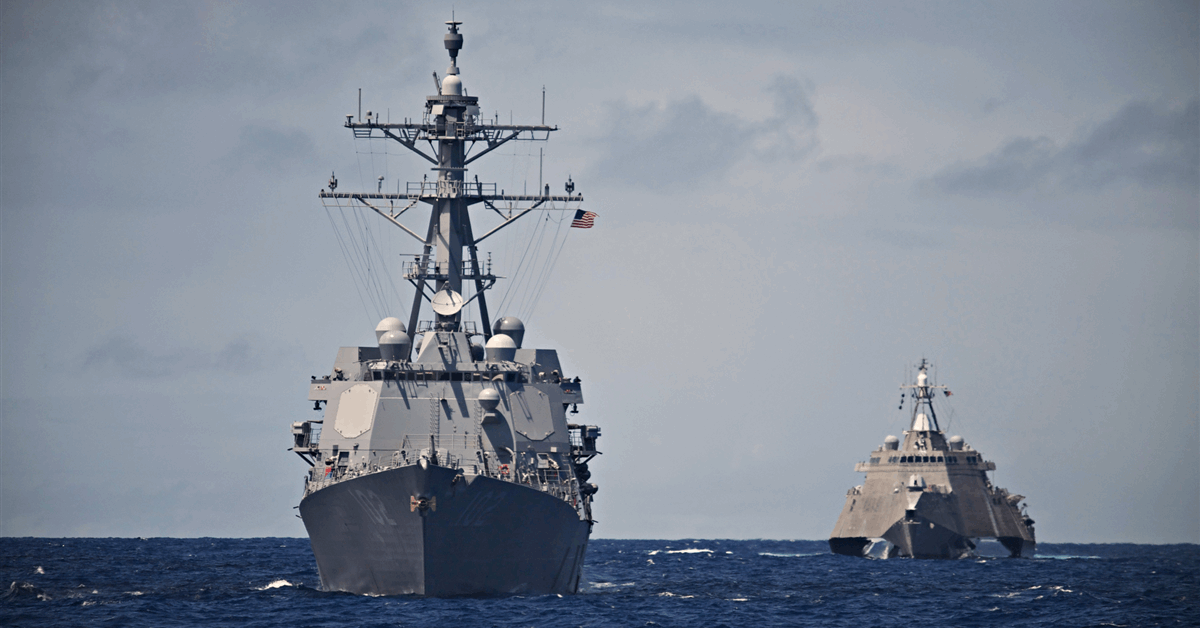
Geopolitical Tensions Ignite Crude Futures: Hormuz Blockade Threatens Global Supply
The global oil market is grappling with a sudden and profound jolt following former President Donald Trump’s declaration of an impending naval blockade of the strategic Strait of Hormuz. This aggressive stance, articulated after the collapse of direct US-Iran talks in Pakistan over nuclear disagreements, has immediately recast the risk landscape for energy investors. With the US military set to commence enforcement at 10 am New York time on Monday, the implications for global crude flows, liquefied natural gas (LNG) shipments, and investor portfolios are nothing short of monumental. This isn’t merely a headline; it’s a fundamental re-evaluation of supply security and geopolitical risk premium, demanding immediate attention from anyone invested in the energy sector.
Market Reacts Violently to Escalating Hormuz Crisis
The immediate market response to Trump’s announcement has been sharp and decisive. As of today, Brent Crude is trading at $95.48, marking a significant 5.64% increase, with its daily range already spanning from $92.77 to $97.81. Similarly, WTI Crude has surged to $87.32, up 5.73%, after trading between $85.45 and $89.6. These gains represent a stark reversal from the recent downtrend, which saw Brent fall from $112.78 on March 30th to $90.38 just last Friday, April 17th. This $-22.4 (or 19.9%) decline over two weeks has been entirely overshadowed by the sudden prospect of a major supply disruption. Gasoline prices have also seen a notable uptick, currently sitting at $3.04, an increase of 3.75%. The market is clearly pricing in a substantial risk premium, reflecting the critical role the Strait of Hormuz plays in global energy transit. Approximately one-fifth of the world’s crude oil and LNG supply typically flows through this narrow choke point. The US Central Command’s statement that the blockade will be “enforced impartially against vessels of all nations entering or departing Iranian ports and coastal areas” underscores the broad potential impact, although the primary effect is likely to be on Iranian exports, which have historically accounted for a significant share of oil moving through the waterway.
Navigating the Supply Shock: Investment Implications
The failure of US-Iran negotiations, reportedly due to differences on the nuclear issue, has thrown the fragile ceasefire into disarray. Trump’s explicit threat to “BLOW TO HELL!” any Iranian vessel firing upon US forces or peaceful shipping highlights the extreme tensions. Iran’s Islamic Revolutionary Guard Corps (IRGC) has, in turn, labeled any military vessel approaching the Strait under “any pretext” as a ceasefire violation. This escalating rhetoric alone warrants a reassessment of energy portfolio exposure. For investors, the immediate concern shifts to the potential for sustained supply disruptions. A full blockade, particularly if met with resistance, could severely constrain global crude availability. This scenario drives up the cost of oil and, consequently, the profitability of upstream exploration and production (E&P) companies. However, it also introduces significant volatility and risk for refiners who might face higher feedstock costs and supply chain complexities. Shipping companies, too, will contend with increased insurance premiums and rerouting challenges if the Strait becomes impassable or too dangerous. Investors must now analyze their holdings for exposure to Middle Eastern crude supplies and the resilience of their logistical chains, considering the potential for a prolonged period of elevated crude prices.
Forward-Looking Catalysts: OPEC+ and Inventory Reports Under Scrutiny
The immediate future holds several critical events that will further shape the energy market’s response to the Hormuz blockade threat. Investors will be keenly watching the OPEC+ Joint Ministerial Monitoring Committee (JMMC) Meeting scheduled for Monday, April 20th. This will be the first opportunity for major oil producers to publicly react to the escalating geopolitical risk. Will they maintain current production cuts, signaling confidence in the market’s ability to absorb the shock, or will they consider increasing output to stabilize prices and mitigate potential shortages? The full OPEC+ Ministerial Meeting on Saturday, April 25th, will be even more crucial, potentially yielding concrete policy adjustments. Beyond OPEC+, the weekly inventory reports will take on heightened significance. The API Weekly Crude Inventory reports on Tuesday, April 21st, and Tuesday, April 28th, followed by the EIA Weekly Petroleum Status Reports on Wednesday, April 22nd, and Wednesday, April 29th, will provide vital insights into crude stockpiles and demand trends. Any signs of drawing inventories could exacerbate supply fears, while unexpected builds might offer a momentary reprieve. Furthermore, the Baker Hughes Rig Count on April 24th and May 1st will be scrutinized for any shifts in US production activity, though an immediate response to a geopolitical event of this magnitude is unlikely. These upcoming events are no longer routine data releases; they are potential catalysts that could either amplify or mitigate the current market volatility.
Investor Sentiment: Grappling with Uncertainty and Long-Term Outlook
The current environment has undoubtedly sparked a flurry of questions among investors, reflecting a deep uncertainty about the trajectory of oil prices. Queries like “Is WTI going up or down?” or “What do you predict the price of oil per barrel will be by end of 2026?” underscore the need for clarity in a highly volatile market. While the immediate reaction points firmly upwards for crude prices due to the Hormuz threat, the sustainability of this surge hinges on the duration and scope of any blockade, as well as the geopolitical response. A full, sustained disruption could push prices significantly higher, potentially establishing a new, higher floor for crude through 2026. However, any de-escalation or successful navigation of the crisis could see prices retract, albeit likely settling at a higher geopolitical risk premium than before. Portfolio managers are now tasked with balancing the immediate profit potential from rising crude prices against the increased systemic risk. Diversification, hedging strategies, and a careful assessment of company-specific resilience to supply chain shocks and higher operating costs are paramount. This event serves as a stark reminder that geopolitical factors remain a primary driver in energy markets, capable of fundamentally altering investment theses overnight.


