Strategic Petroleum Reserve Loan: A Calculated Move Amidst Market Volatility
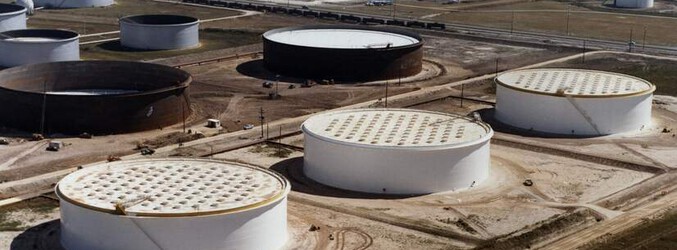
The United States Department of Energy has once again stepped into the global oil arena, announcing the loan of 8.48 million barrels of crude oil from its Strategic Petroleum Reserve (SPR). This latest intervention, the second tranche of emergency releases, underscores a concerted effort to inject liquidity and stabilize a market continually grappling with geopolitical tensions and the persistent threat of supply route disruptions. For energy investors, this action is a critical signal, revealing the government’s current assessment of market stability and its readiness to utilize strategic assets to mitigate price shocks.
Market Response and Nuanced Demand Signals
This recent SPR loan saw four key players in the commodities and refining sectors secure allocations: Gunvor USA, Phillips 66, Trafigura Trading, and Macquarie Commodities Trading. While substantial, the awarded volume did not fully utilize the 10 million barrels initially offered by the Department of Energy for this specific tranche. This follows a previous offering where approximately 45.2 million barrels, roughly half of the available volume, were lifted by companies last month. The fact that the full offered volume wasn’t taken up in either instance suggests a nuanced market response; while the liquidity is welcomed, demand for these specific SPR barrels might not be as urgent as the government’s intervention might imply, or perhaps current commercial inventories are sufficient for some market participants. This dynamic offers a subtle indicator for investors monitoring long-term price trajectory, informing predictions on crude oil prices through the end of 2026 and beyond.
Crude Prices Surge Amidst Geopolitical Jitters and SPR Intervention
Against the backdrop of these strategic maneuvers, crude oil markets are exhibiting significant volatility. As of today, Brent crude trades at $95.48 per barrel, marking a robust +5.64% surge within the day, with WTI crude following suit at $87.32, up +5.73%. This strong intraday rally is particularly noteworthy given the recent downward pressure on prices; the 14-day Brent trend saw a significant decline from $112.78 on March 30th to $90.38 on April 17th, representing a nearly 20% drop. This sharp rebound highlights the sensitivity of the market to real-time supply-demand shifts and geopolitical headlines, particularly those concerning potential disruptions stemming from the broader Middle East region. For investors asking about the near-term direction of WTI, today’s price action suggests a powerful upward impulse, despite government efforts to increase supply. The SPR loan, while providing a theoretical dampener, is clearly contending with potent bullish forces driven by immediate market sentiment and perceived risk.
The Strategic Loan Mechanism: A Smart Play for Future Supply
The mechanism behind these SPR releases is particularly insightful for financial professionals: crude is issued as a loan rather than an outright sale. This structure mandates recipient companies to return the borrowed volumes to the SPR, augmented by an additional premium in barrels. This ingenious design allows the government to support immediate market stability by boosting supply without incurring direct costs to taxpayers, as the reserves are replenished with a net gain in crude. It reflects a sophisticated approach to leveraging national assets for economic stability, signaling the government’s confidence in its ability to repurchase barrels at a potentially lower future cost, or at least to secure a net gain. This approach also implies a long-term commitment to maintaining SPR integrity, a factor oil market participants should carefully consider when assessing long-term supply dynamics and the reliability of this strategic buffer.
SPR Levels, US Production Paradox, and Upcoming Catalysts
The Strategic Petroleum Reserve currently holds approximately 413 million barrels, a level not witnessed since the mid-1980s. While this historical low might initially raise concerns for energy investors, a critical contextual factor mitigates immediate alarm: the dramatic transformation of the U.S. energy landscape. The nation has ascended to become the world’s largest oil producer, significantly enhancing its domestic production capacity and, consequently, its energy independence. This “U.S. Production Paradox” means that while SPR levels are historically low, the underlying domestic supply capability is robust. Looking forward, several key events on the energy calendar will provide further clarity for investors navigating this complex environment. With the OPEC+ JMMC Meeting scheduled for April 20th and the full Ministerial Meeting on April 25th, investors will be closely monitoring any signals regarding production cuts or increases that could directly impact global supply balances. Additionally, the EIA Weekly Petroleum Status Reports on April 22nd and April 29th, alongside the API Weekly Crude Inventory reports on April 21st and April 28th, will offer crucial insights into domestic supply-demand dynamics. These reports, coupled with the Baker Hughes Rig Count on April 24th and May 1st, will provide a vital pulse check on U.S. production activity, all of which will influence the performance of major oil and gas companies like Repsol and the broader energy sector through the end of April and into May.


