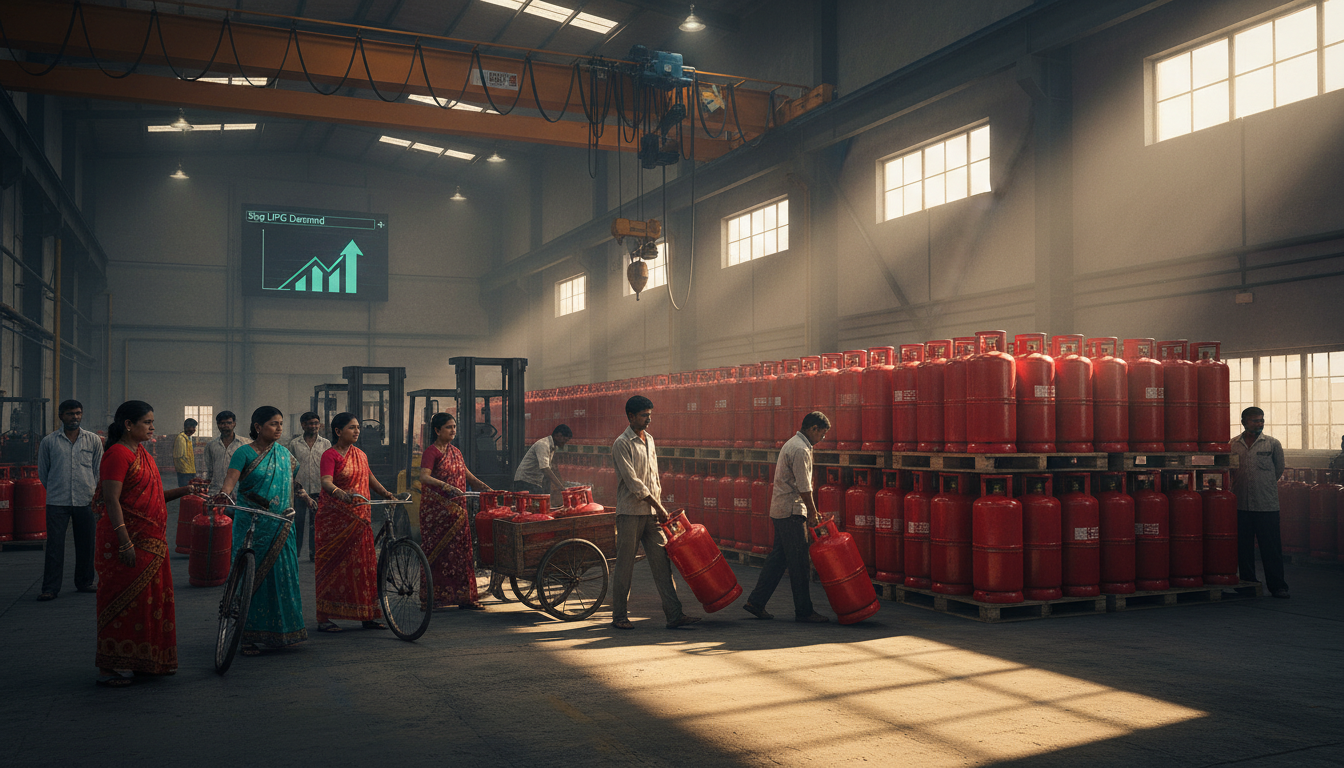
India’s liquefied petroleum gas (LPG) sector is currently a focal point for energy investors, presenting a compelling blend of strategic retail expansion and robust industrial supply management. The nation’s proactive stance on enhancing energy accessibility and ensuring industrial continuity takes on heightened significance amidst a globally turbulent energy landscape. For those tracking India’s downstream oil and gas opportunities, these initiatives underscore substantial market growth potential, the pervasive influence of regulatory frameworks on profitability, and a deliberate trajectory towards energy diversification. This analysis delves into how India’s domestic strategies are shaping the investment thesis for local oil marketing companies (OMCs) and what global factors will dictate their financial performance.
Navigating Global Volatility: India’s Domestic Shield
The global crude market continues its characteristic dance of volatility, a key backdrop for India’s energy strategy. As of today, Brent crude trades at $95.57 per barrel, posting a significant gain of 5.74%, while WTI crude follows suit at $87.45, up 5.88%. However, these daily upticks must be viewed within a broader context. Over the past two weeks, Brent has seen a substantial decline, dropping from $112.78 on March 30th to $90.38 on April 17th, a nearly 20% contraction. This dramatic swing highlights the persistent unpredictability that defines international oil markets.
Against this backdrop, India’s government-mandated price absorption for domestic LPG consumers plays a crucial role in insulating the populace from immediate price shocks. While this policy ensures energy equity and social stability, it simultaneously places OMCs in a unique position. These companies, at the forefront of policy implementation, face direct impacts on their financial performance as they absorb the delta between international procurement costs and fixed retail prices. Investors must therefore weigh the benefits of a broadening customer base against the regulatory cap on profitability, understanding that while demand is robust, margins can be pressured by external market dynamics.
The 5 kg Cylinder Revolution: Unlocking New Demand Frontiers
A cornerstone of India’s retail expansion strategy is the intensified push for 5 kg Free Trade LPG (FTL) cylinders, a move designed to deepen LPG penetration into previously underserved segments of the population. Initiatives like the Ghaziabad program exemplify this effort, specifically targeting economically weaker sections, transient populations, and daily wage laborers who traditionally lacked access to standard-sized gas connections. District Supply Officers confirm that 85 gas agencies across Ghaziabad alone are now equipped to distribute these smaller units, each allocated a quota of 50 cylinders, demonstrating a concerted, on-the-ground effort.
The operational framework for these 5 kg cylinders is meticulously crafted for maximum convenience and accessibility. Beneficiaries require only an Aadhaar card and an initial deposit of Rs 1,500, which includes a Rs 900 security deposit, with the remainder covering the cost of the gas itself. The low entry barrier, coupled with the option for refills every 15 days, is set to integrate a vast, untapped consumer segment into the formal LPG distribution network. For investors, this represents a strategic expansion of the total addressable market for LPG, promising sustained and increased sales volumes over time for OMCs. It also underscores the government’s enduring commitment to energy equity, a significant factor influencing the operational mandates and public perception of state-owned OMCs.
Industrial Stability and India’s Evolving Energy Mix
Beyond the burgeoning retail sector, the Ministry of Petroleum and Natural Gas (MoPNG) is concurrently focused on ensuring a stable and consistent supply of bulk LPG for industrial use. This directive is critical for maintaining economic stability and supporting continuous demand across diverse manufacturing sectors. Industrial LPG serves as a vital energy source for a multitude of industries, from ceramics and textiles to food processing, underpinning significant portions of India’s economic output. The government’s emphasis on industrial supply continuity provides a stable demand floor for OMCs, buffering them against some of the retail sector’s regulatory pricing pressures.
This strategic focus on industrial LPG also aligns with India’s broader objectives of energy diversification and a measured transition away from more carbon-intensive fuels. While the nation eyes long-term renewable energy goals, LPG offers a cleaner-burning, more efficient alternative to traditional biomass or coal for many industrial applications. Investors are keenly watching India’s long-term energy strategy, often asking about the projected price of oil per barrel by the end of 2026. India’s approach to industrial LPG helps mitigate the impact of such long-term price uncertainty by diversifying its energy portfolio and ensuring a stable domestic supply chain for a critical fuel, thereby supporting economic resilience irrespective of extreme global price swings.
Ahead of the Curve: Key Events Shaping LPG Investment
For astute investors, understanding the future trajectory of India’s LPG market requires a close eye on upcoming global energy events. The next two weeks are particularly active, featuring crucial gatherings and data releases that will undoubtedly influence crude prices and, by extension, the economics for Indian OMCs. The OPEC+ Joint Ministerial Monitoring Committee (JMMC) meeting on April 20th, followed by the full OPEC+ Ministerial Meeting on April 25th, are pivotal. These meetings will dictate production quotas and supply strategies, directly impacting global crude prices. Any decision to adjust output could significantly alter the import costs for India, affecting the financial health of OMCs given their domestic price absorption mandate.
Furthermore, the weekly API and EIA crude inventory reports (April 21st, 22nd, 28th, 29th) provide vital snapshots of U.S. supply and demand dynamics, while the Baker Hughes Rig Count (April 24th, May 1st) offers insights into future production capacity. These indicators will collectively shape investor sentiment around global oil prices. A central question for many investors remains whether WTI crude will trend up or down in the near term. The outcomes of these events will provide critical signals, directly impacting the cost structure for Indian OMCs and, consequently, their profitability. Investors should monitor these dates closely to anticipate shifts in the global crude market and assess the potential ripple effects on India’s strategically managed LPG sector, recognizing that global supply adjustments will continue to test the resilience of India’s domestic pricing mechanisms.


