Escalating Geopolitical Risks Threaten Global Oil Supply: Saudi Infrastructure Hit
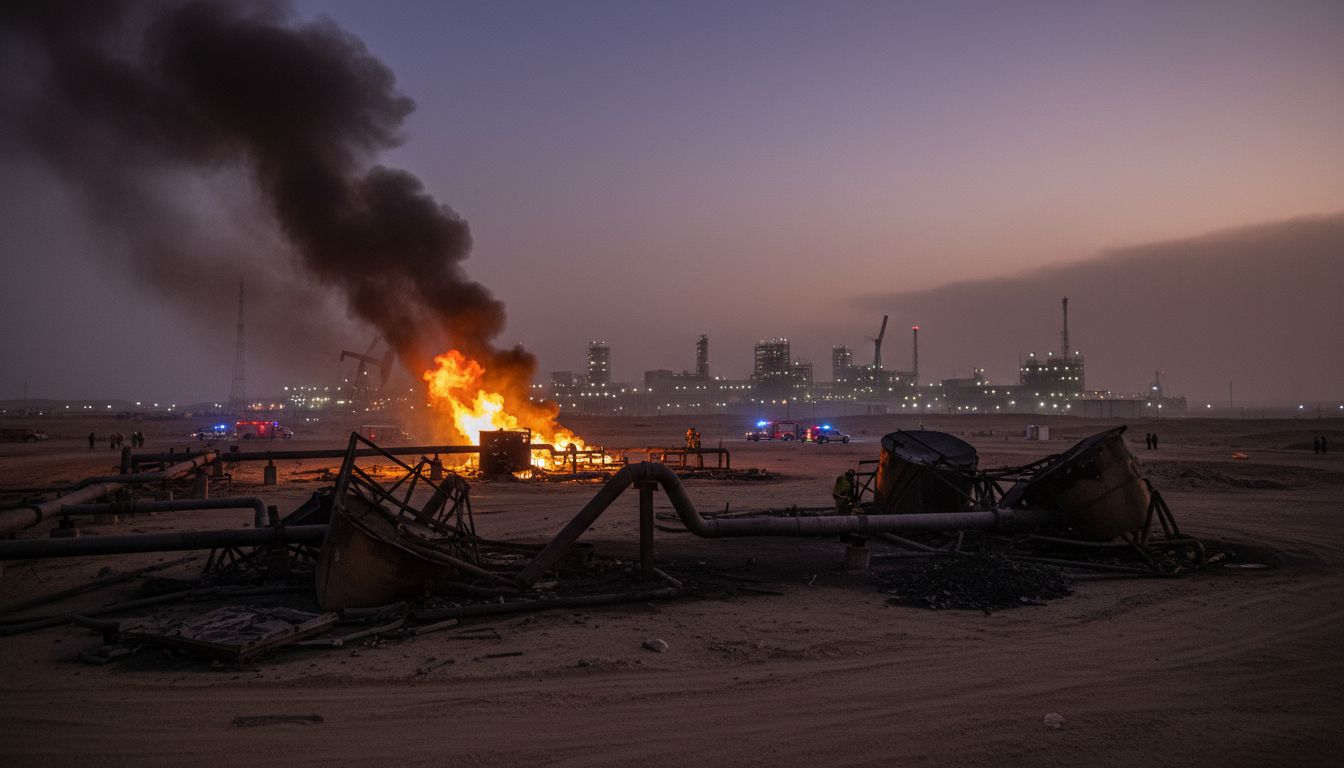
The global oil market faces significant tightening following a series of sophisticated attacks on critical energy infrastructure within Saudi Arabia. These targeted assaults have directly impacted the Kingdom’s crude oil and natural gas production capabilities, concurrently diminishing its vital export capacity. For investors monitoring the volatile landscape of oil and gas, these developments signal heightened supply vulnerability and potential for increased market volatility.
Key energy installations across strategic regions—Riyadh, the Eastern Province, and the industrial hub of Yanbu—were subjected to these coordinated attacks. Among the most critical targets was a pumping station situated on the East-West pipeline. This particular artery represents Saudi Arabia’s primary conduit for transporting crude oil to the Red Sea, offering an indispensable alternative route that bypasses the geopolitically sensitive Strait of Hormuz. The deliberate targeting of such a crucial bypass underscores a clear intent to disrupt global energy flows and challenge regional energy security.
Quantifying the Disruptions: A Significant Blow to Production and Export Pathways
Saudi authorities have confirmed substantial reductions in operational capacity directly attributable to these incidents. The attacks have curtailed over 600,000 barrels per day (bpd) of crude oil production capacity. Furthermore, flows through the strategically vital East-West pipeline have seen a significant reduction of approximately 700,000 bpd. Before these disruptions, this pipeline was handling an impressive 7 million bpd (MMbpd), with a substantial 5 MMbpd earmarked for international export markets.
The implications of this reduction extend beyond mere volume. The East-West pipeline’s operational integrity is paramount for Saudi Arabia to maintain consistent export volumes, especially given its role in circumventing the Strait of Hormuz. Any impediment to this system directly compromises the Kingdom’s ability to reliably deliver crude to global consumers, impacting overall energy supply security and pricing stability.
Upstream Assets Under Pressure: Manifa and Khurais Impacts Detailed
Beyond pipeline infrastructure, the attacks have also directly impacted critical upstream production assets. The offshore Manifa field and the onshore Khurais complex, both cornerstone elements of Saudi Arabia’s hydrocarbon output, experienced capacity reductions. Each of these major facilities saw its output capacity diminished by an estimated 300,000 bpd. This dual impact on key production sites underscores the breadth and severity of the coordinated assaults.
Investors should note the strategic importance of these fields. Khurais is renowned for its lighter crude streams, which are typically directed through the East-West pipeline. Conversely, Manifa specializes in heavier crude grades. The simultaneous disruption of both light and heavy crude streams adds complexity to Saudi Arabia’s ability to meet diverse market demands and adjust its crude slate for export.
The Geopolitical Nexus: Intensifying Strain on Global Oil Balances
These recent disruptions inflict additional pressure on an already taut global oil balance. The market has been grappling with the effective closure of the Strait of Hormuz during the ongoing regional conflict, a development that has already forced Saudi Arabia to reroute significant volumes through its East-West pipeline to sustain its export commitments. The very system designed to mitigate the risks associated with the Strait of Hormuz is now itself under attack, creating a compounded layer of vulnerability in the global supply chain.
This situation critically highlights the inherent fragility of global upstream production and export infrastructure when confronted with escalating regional instability. As major oil producers increasingly rely on alternative routes to ensure uninterrupted flows to international markets, these vital arteries become prime targets, exacerbating geopolitical risk premiums embedded in oil prices.
Analyst Perspectives and the Investor Outlook: Volatility on the Horizon
Market analysts are quick to characterize the reported damage as a “measurable supply shock.” Expert assessments, including those from JPMorgan, suggest that the aggregated loss of production capacity is roughly equivalent to 10% of Saudi Arabia’s pre-conflict crude exports. Such a substantial reduction from the world’s leading oil exporter carries significant implications for global supply-demand dynamics and crude pricing.
For investors, the uncertainty surrounding the timing and duration of these outages remains a paramount concern. The speed with which production and export capabilities can be fully restored hinges directly on the extent of the damage sustained by the targeted facilities. Repair timelines for complex energy infrastructure can often be protracted, extending the period of reduced supply.
The broader market has already reacted to the overarching supply disruptions and escalating regional tensions, evidenced by Brent crude prices rising sharply since the initial onset of the conflict. Any further constraints on Saudi Arabia’s output or export capacity resulting from these attacks will almost certainly fuel additional price volatility, as the market rigorously assesses the pace of recovery and the ongoing geopolitical premium. Investors in the oil and gas sector must remain vigilant, as the interplay of supply shocks and geopolitical risks is set to define market movements in the immediate future.