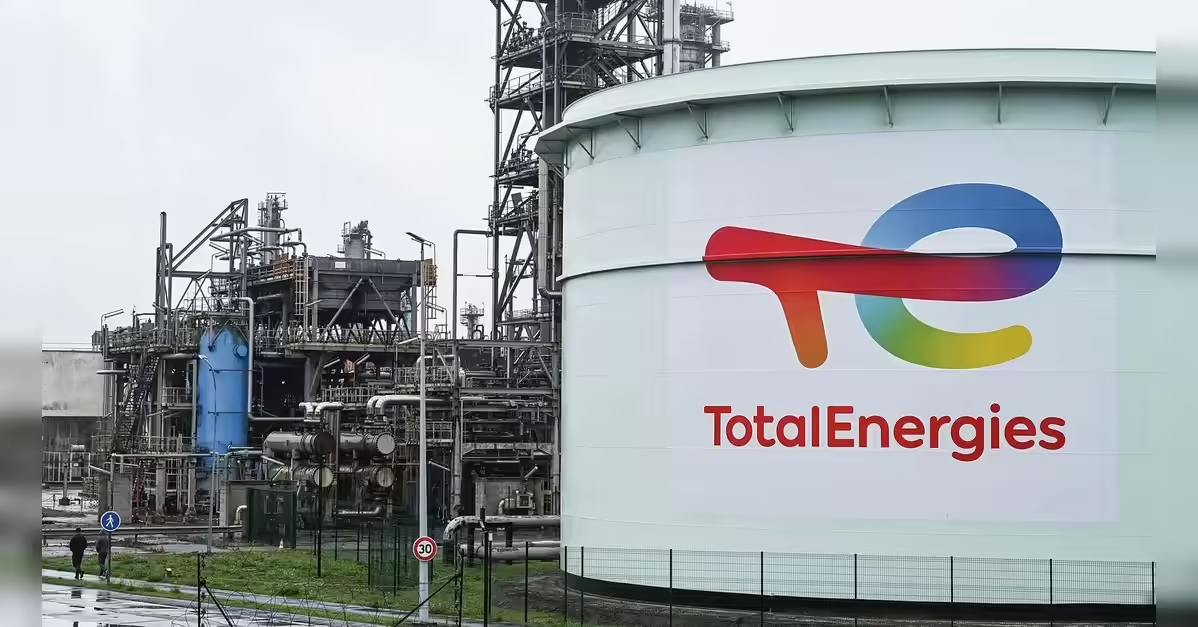
Geopolitical Tensions Spark TotalEnergies Refinery Shutdown, Rattle Oil Markets
The global energy landscape is once again highlighting the fragility of supply chains in conflict-prone regions, with TotalEnergies confirming the shutdown of its jointly operated SATORP refinery on Saudi Arabia’s eastern Gulf coast. This critical facility, a 62.5% Saudi Aramco and 37.5% TotalEnergies venture, ceased operations after sustaining damage from recent regional attacks, as reported on April 10, 2026. While the company stated there were no casualties, the incident, which occurred during the night of April 7-8, impacted one of the refinery’s two processing trains, leading to the precautionary offline status of both units. This development adds a fresh layer of geopolitical risk to an already volatile market, demanding astute analysis from investors navigating the intricate interplay of supply, demand, and regional instability.
The SATORP Incident: A Closer Look at Operational Disruption
The SATORP refinery, a cornerstone of Saudi Arabia’s downstream processing capabilities, represents a significant asset for both Saudi Aramco and TotalEnergies. Its temporary closure, even if precautionary, underscores the direct impact of escalating regional conflicts on vital energy infrastructure. Saudi authorities have explicitly linked these attacks to broader regional tensions, attributing strikes to Iran, which they claim have targeted energy and strategic infrastructure across Gulf countries. Officials noted that these “incidents” have “disrupted several production operations at key facilities,” including SATORP. The decision to take both processing units offline, rather than just the damaged train, suggests a cautious approach aimed at thorough assessment and ensuring employee safety, a prudent move given the heightened security environment. Investors must now weigh the potential duration of this disruption against the backdrop of global refined product demand and the broader implications for TotalEnergies’ and Saudi Aramco’s operational continuity and profitability in the region.
Market Reaction and Investor Focus Amid Surging Prices
The news of the SATORP shutdown arrives at a particularly sensitive time for oil markets, where investor sentiment is heavily swayed by geopolitical undercurrents. As of today, April 20, 2026, the market is exhibiting a sharp upward swing, with Brent Crude trading at $95.42, marking a robust 5.58% increase for the day. WTI Crude mirrors this trend, standing at $87.26, up 5.65%. This immediate surge contrasts sharply with recent price volatility; our proprietary data indicates Brent had seen a significant decline from $112.78 on March 30 to $90.38 by April 17, representing a nearly 20% drop in just over two weeks. Today’s rebound, therefore, signals that the market is quickly recalibrating its risk premium in response to the Saudi refinery incident and the broader escalation. Questions from our readership, such as “is wti going up or down” and “what do you predict the price of oil per barrel will be by end of 2026?”, clearly illustrate the prevalent uncertainty and the urgent need for clarity on price direction. The SATORP incident serves as a stark reminder that physical supply disruptions, even localized ones, can trigger rapid price adjustments, adding another layer of complexity to future price forecasts.
Upcoming Events and Forward-Looking Supply Dynamics
Looking ahead, the SATORP shutdown injects a new variable into the discourse surrounding global oil supply and refining capacity, which will undoubtedly feature in upcoming industry discussions. The OPEC+ Joint Ministerial Monitoring Committee (JMMC) meeting scheduled for tomorrow, April 20, 2026, and the full OPEC+ Ministerial Meeting on April 25, will be crucial. While the JMMC typically reviews market conditions and compliance, the Saudi incident could introduce a fresh urgency to their deliberations regarding output policy. Any prolonged disruption at SATORP could tighten refined product markets, potentially influencing OPEC+’s stance on maintaining or adjusting production quotas. Furthermore, the weekly API and EIA inventory reports, due on April 21/22 and April 28/29, respectively, will be closely scrutinized for any signs of tightening crude or product stocks. A decrease in crude processing at SATORP would theoretically free up some crude supply but could concurrently reduce the availability of key refined products, impacting inventories. Investors should pay close attention to these reports and the Baker Hughes Rig Count on April 24 and May 1 for broader indications of supply-side responses and market rebalancing efforts.
Navigating Geopolitical Risk in Your Investment Strategy
The incident at SATORP serves as a powerful reminder that geopolitical risk remains a primary driver in the oil and gas sector. The attacks, attributed to Iran in response to earlier strikes by the United States and Israel, highlight the interconnectedness of regional conflicts and global energy security. For investors, this translates into a heightened risk premium embedded in crude prices, a factor that will likely persist as long as tensions remain elevated. Companies with significant assets or operational exposure in the Middle East, like TotalEnergies and Saudi Aramco, face increased operational risks and potential capital expenditure for enhanced security or repairs. Astute investors should consider the resilience of their portfolios to such shocks. Diversification, hedging strategies, and a keen focus on companies with robust risk management frameworks become paramount. Monitoring the frequency and severity of such “incidents” will be key to understanding the evolving risk profile of the region and its implications for long-term oil price stability and investment returns.


