Ingka Investments Fuels German Solar Boom with 110 MW Expansion: A Blueprint for Energy Diversification
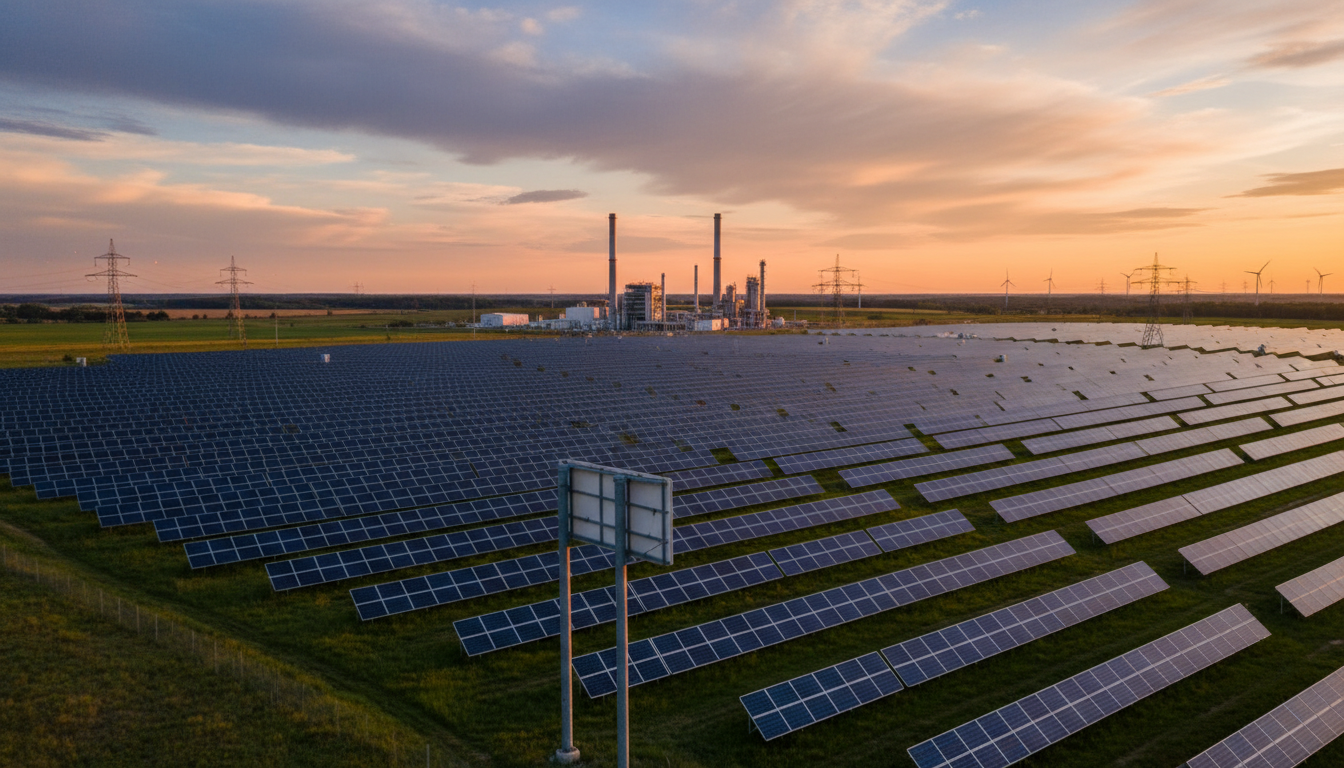
The global energy landscape continues its rapid transformation, and significant capital allocation by corporate giants into renewable infrastructure is a trend investors cannot afford to overlook. Ingka Group’s investment arm, Ingka Investments, is making substantial strides in Europe’s energy transition, specifically cementing its position in Germany with the initiation of two large-scale solar power projects. These ventures are poised to add 110 MW of clean electricity generation, capable of powering an estimated 26,000 households annually, showcasing a dual-track strategy combining utility-scale generation with innovative consumer-facing energy solutions.
This aggressive push into green energy assets forms a critical component of Ingka Investments’ overarching commitment to deploy €7.5 billion, approximately $8.1 billion, into wind and solar projects by 2030. Such substantial investment underscores a broader corporate trend: moving beyond mere internal decarbonization targets to actively shape and participate in the evolving energy grid infrastructure. For investors scrutinizing the future of energy portfolios, these moves signal a robust shift in capital flow, creating new market dynamics and compelling investment theses in the renewable sector.
Germany: A Strategic Nexus for Renewable Capital
Germany stands out as a prime market for renewable energy investment, driven by an ambitious national energy transition agenda and a dynamic regulatory environment. Ingka Investments has commenced construction on its Bokel Schäferkate solar park, with an anticipated operational date by October 2026. Following this, the Heideland project is slated to break ground in early 2027, with commissioning expected by October 2027. Together, these installations will contribute 110 MW to the national grid, significantly bolstering Germany’s ability to meet its 2030 clean energy targets. This concerted effort to scale renewable capacity is critical for reducing reliance on fossil fuels and enhancing energy security.
The German market’s appeal to private capital is multifaceted. A supportive policy framework, coupled with predictable long-term power demand and attractive returns, establishes a compelling environment for infrastructure investors. By expanding its renewable portfolio within this key European economy, Ingka is not merely hedging its operational energy costs but is also actively engaging in the fundamental restructuring of Europe’s power markets. This strategic positioning offers a window into how major global entities are de-risking their energy futures while capturing market share in nascent, high-growth sectors.
Bridging Grid Infrastructure with Consumer Empowerment
Beyond its significant utility-scale investments, Ingka’s strategy uniquely extends into the residential energy sector through its retail arm, IKEA Germany. A pivotal partnership with Svea Solar allows consumers to access accessible home energy solutions, accelerating the adoption of renewables at the household level. This integrated approach encompasses practical offerings such as plug-in balcony solar kits, simplifying clean electricity generation for homeowners without complex installations, and an innovative dynamic electricity tariff. The tariff, managed via a user-friendly application, grants customers access to renewable energy at wholesale prices, seamlessly integrating with existing home energy management systems.
This shift towards decentralized energy models, where consumers transition from passive recipients to active participants in energy generation and consumption, represents a profound evolution in energy markets. For policymakers and energy investors alike, such models are increasingly vital for balancing grid demand, fostering energy independence, and accelerating mass adoption of sustainable practices. The integration of consumer-facing technology with large-scale generation illustrates a holistic vision for the energy transition, offering diversified revenue streams and reducing exposure to traditional energy price volatility.
Executive Vision: Commercial Imperative Meets Societal Impact
Peter Jelkeby, Country Retail Manager for IKEA Germany, articulated the dual benefits of this strategy, highlighting both commercial viability and societal advancement. “For us, fostering a better everyday life for many people directly correlates with forging a more sustainable energy future,” Jelkeby stated. He further emphasized, “Our investments in major solar parks contribute to decarbonizing the German energy system as a whole, extending beyond our own operations. A greener grid delivers widespread benefits to every household and business connected to it. Simultaneously, IKEA Germany is committed to directly empowering customers through in-home solutions, such as user-friendly balcony solar kits and a dynamic electricity tariff that makes renewable power more affordable and accessible. This approach transforms sustainable energy from an aspiration into an everyday reality for the masses, truly shaping a superior future for everyone.” This perspective underscores how leading corporations are framing ESG initiatives not just as compliance exercises but as core drivers of business growth and market differentiation.
Strategic Implications for Energy Sector Stakeholders
For C-suite executives and astute investors in the broader energy market, Ingka’s integrated model provides a potent case study for a dual-track strategy gaining significant momentum across Europe. The synergy between large-scale renewable generation and consumer-centric energy services offers multiple advantages: it diversifies revenue channels, mitigates exposure to fluctuating fossil fuel prices, and aligns seamlessly with increasingly stringent ESG disclosure requirements. Furthermore, this approach signifies a significant convergence across the retail, energy, and technology sectors. Companies possessing extensive consumer reach are uniquely positioned to influence energy consumption patterns at scale, effectively transforming sustainability into a tangible product offering rather than a mere corporate social responsibility initiative.
The Systemic Shift Underway
Ingka Group’s latest capital deployments are a powerful affirmation of a fundamental dynamic in the ongoing global energy transition: private capital is no longer confined to carbon offsets or procurement contracts. It is actively and strategically shaping critical infrastructure, redefining market access, and facilitating broad consumer participation. As Germany progresses towards its ambitious 2030 targets, the intricate interplay between expanding grid capacity and fostering widespread household adoption will dictate the pace and success of this transition. Enterprises capable of operating effectively across both these critical layers are poised to exert a disproportionate influence on Europe’s evolving energy ecosystem and, by extension, on the global energy markets. Investors seeking to navigate this paradigm shift must recognize and capitalize on these integrated strategies, as they represent the vanguard of future energy economics.


