Global Geopolitics Roil UK Energy Markets: Starmer Cites Putin, Trump for Price Swings
The intricate web of global geopolitics is delivering significant turbulence to the United Kingdom’s energy landscape, prompting a pointed critique from British Prime Minister Keir Starmer. In recent remarks, Starmer voiced profound exasperation over the persistent volatility in energy bills for both households and businesses, directly attributing these fluctuations to the strategic maneuvers of Russian President Vladimir Putin and former U.S. President Donald Trump.
Speaking on an ITV News’ Talking Politics podcast this past Thursday, Starmer articulated a sentiment widely shared by energy consumers. “I’m fed up with the fact that families across the country see their bills go up and down on energy, businesses’ bills go up and down on energy, because of the actions of Putin or Trump across the world,” he stated. This candid assessment underscores the acute vulnerability of national energy security to international political and military actions, a critical factor for investors monitoring the oil and gas sector.
The Prime Minister’s comments arrive as global crude prices, which had seen a significant ascent amidst the escalating US-Israeli war in Iran, experienced renewed volatility during a precarious two-week ceasefire. This dynamic illustrates the immediate and tangible impact of geopolitical tensions on commodity markets, fundamentally shaping the profitability and stability of energy investments.
The Enduring Shadow of Eastern European Conflict
Russia’s full-scale invasion of Ukraine in February 2022 marked a seismic shift in global energy dynamics, with its repercussions continuing to reverberate across continents. Starmer’s reference to Putin highlights the persistent fallout from a conflict that has caused untold human suffering and fundamentally reshaped European energy supply chains. For four years, since the invasion, the war has been a primary driver of elevated natural gas and power prices across Europe, including the UK.
The geopolitical premium embedded in energy costs due to the Russia-Ukraine war has forced nations, particularly those in Europe, to recalibrate their energy strategies, emphasizing diversification away from Russian hydrocarbon dominance. This pivot has spurred increased investment in liquefied natural gas (LNG) infrastructure and renewable energy projects, yet the immediate term remains susceptible to any further escalation or disruption in Eastern Europe. Investors in European energy utilities and infrastructure continue to face headwinds from elevated input costs and the political imperative to secure alternative, often more expensive, supplies.
Middle East Flashpoints Ignite Crude Swings
Concurrently, the Middle East remains a crucible of geopolitical risk, directly influencing the global crude oil market. The recent US-Israeli war in Iran, which saw oil prices surge, underscores the region’s outsized importance to global supply. Any perceived threat to the flow of crude from this critical production hub—home to a significant portion of the world’s proven oil reserves and key transit chokepoints—sends immediate shockwaves through trading floors.
The subsequent “fragile two-week ceasefire” introduced a period of heightened uncertainty, causing oil prices to fluctuate wildly as market participants weighed the likelihood of sustained peace against the ever-present risk of renewed hostilities. Such rapid shifts exemplify the challenges faced by energy traders and long-term investors alike, who must constantly recalibrate their models to account for unpredictable political developments in volatile regions. The narrative around a potential definitive agreement for lasting peace, as hinted by U.S. officials, is a speculative driver for markets, creating both opportunity and considerable downside risk.
Iran’s Nuclear Ambitions and Market Leverage
Former President Trump’s actions regarding Iran, specifically related to the US-Israeli conflict and the pursuit of a “definitive agreement” on nuclear weapons, are a core component of the current geopolitical risk premium in oil markets. White House spokeswoman Anna Kelly defended Trump’s posture, stating, “Many world leaders have spent decades talking about the threat posed by Iran, but doing nothing about it. President Trump took courageous action to ensure Iran can never possess a nuclear weapon, and as he said, we are far along with a definitive agreement to deliver lasting peace.”
This aggressive stance and the ensuing conflict have profound implications for global oil supply. Any significant disruption to Iranian crude exports or broader instability in the Persian Gulf region, particularly near the Strait of Hormuz, would inevitably trigger a sharp increase in oil prices. Furthermore, Starmer’s criticism of Israel’s “wrong” decision to conduct deadly strikes on Lebanon during the ceasefire, coupled with Iran’s accusation of U.S. violations, highlights the intricate and often contradictory diplomatic maneuvering that keeps energy markets on edge. These developments collectively illustrate how the pursuit of national security objectives by major powers directly translates into tangible financial risks and opportunities for energy investors.
UK’s Quest for Energy Independence Amid Global Turmoil
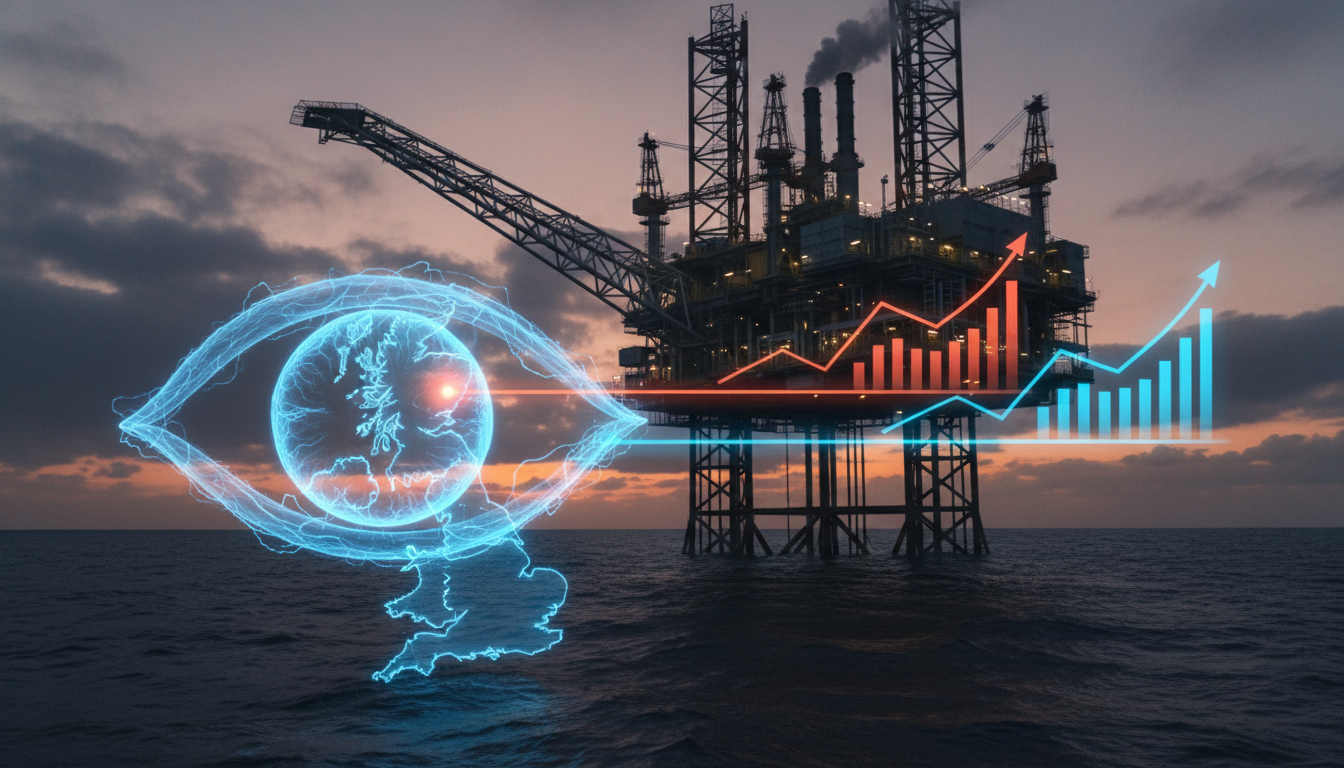
For the United Kingdom, Starmer’s frustrations are not merely political rhetoric but reflect a fundamental challenge to national economic stability and energy security. The UK, like many European nations, has been highly exposed to natural gas price spikes, given its significant reliance on gas for electricity generation and heating. While the country has made strides in renewable energy deployment, the intermittency of sources like wind and solar means conventional fuels, predominantly natural gas, remain crucial for grid stability.
The imperative to insulate British consumers and businesses from the vagaries of international energy markets will likely drive further domestic policy emphasis on diverse energy sources, including nuclear power, carbon capture, and accelerated offshore wind development. For investors, this translates into a dynamic regulatory and subsidy environment, creating opportunities in clean energy infrastructure, energy storage, and technologies that enhance grid resilience. However, the short-to-medium term investment landscape for traditional oil and gas in the North Sea will remain heavily influenced by governmental policies seeking to balance energy security with decarbonization targets.
Navigating the Geopolitical Premium: An Investor’s Perspective
The current confluence of events—the protracted conflict in Ukraine, the volatile situation in the Middle East, and the aggressive posturing of major global powers—underscores a critical reality for oil and gas investors: geopolitical risk is no longer an occasional factor but a constant, pervasive element in market valuation. The explicit linkage made by a G7 leader between domestic energy costs and international political actions signals a heightened awareness and potential for policy responses that could further shape the investment landscape.
Market participants must now factor in a persistent “geopolitical premium” when assessing crude oil, natural gas, and refined product prices. This premium reflects not just immediate supply disruptions but also the long-term uncertainty created by global power struggles. Successful investment strategies in this environment will demand a nuanced understanding of international relations, robust risk management protocols, and an agile approach to portfolio diversification, acknowledging that energy security and affordability are increasingly intertwined with global political stability.