Navigating Asia’s Energy Crisis: A Deja Vu or a Resilient New Era for Investors?
As the global energy landscape grapples with one of the most significant oil supply disruptions witnessed since the Arab embargo of the 1970s, economic tremors are undeniably spreading across Asia. For astute investors, the situation immediately evokes an uncomfortable question: Are we witnessing a replay of the 1997 Asian Financial Crisis? While surface-level parallels appear striking – regional currencies under pressure, a rising risk of capital outflows, and governments implementing emergency energy measures – a deeper dive reveals a fundamentally different and, arguably, more resilient picture.
Governments across Asia are battling spiking energy costs with urgent policy responses. Thailand has resorted to gasoline rationing, while the Philippines declared a national emergency amid soaring pump prices. Widespread trade deficits and escalating inflation expectations certainly echo the late-1990s turmoil. However, leading economists emphasize that these similarities are largely superficial. Asia’s economies, forged by the painful lessons of that prior crisis, are now equipped with far more flexible exchange-rate regimes and substantially deeper foreign exchange reserves, providing a crucial buffer against external shocks.
Financial Upheaval vs. Physical Supply Shock: Understanding the Core Difference
A critical distinction for investors lies in the nature of the current crisis compared to 1997. The Asian Financial Crisis was fundamentally a financial account shock, characterized by a sudden drying up of bank inflows and a subsequent credit crunch. In stark contrast, the present challenge is a current account shock, driven by the physical depletion of vital oil and product inflows. The 1997 episode, particularly for Southeast Asian nations, was a much larger systemic shock, rooted in excessive short-term dollar-denominated debt, dangerously thin reserve cushions, and quasi-fixed exchange rates that crumbled under speculative pressure.
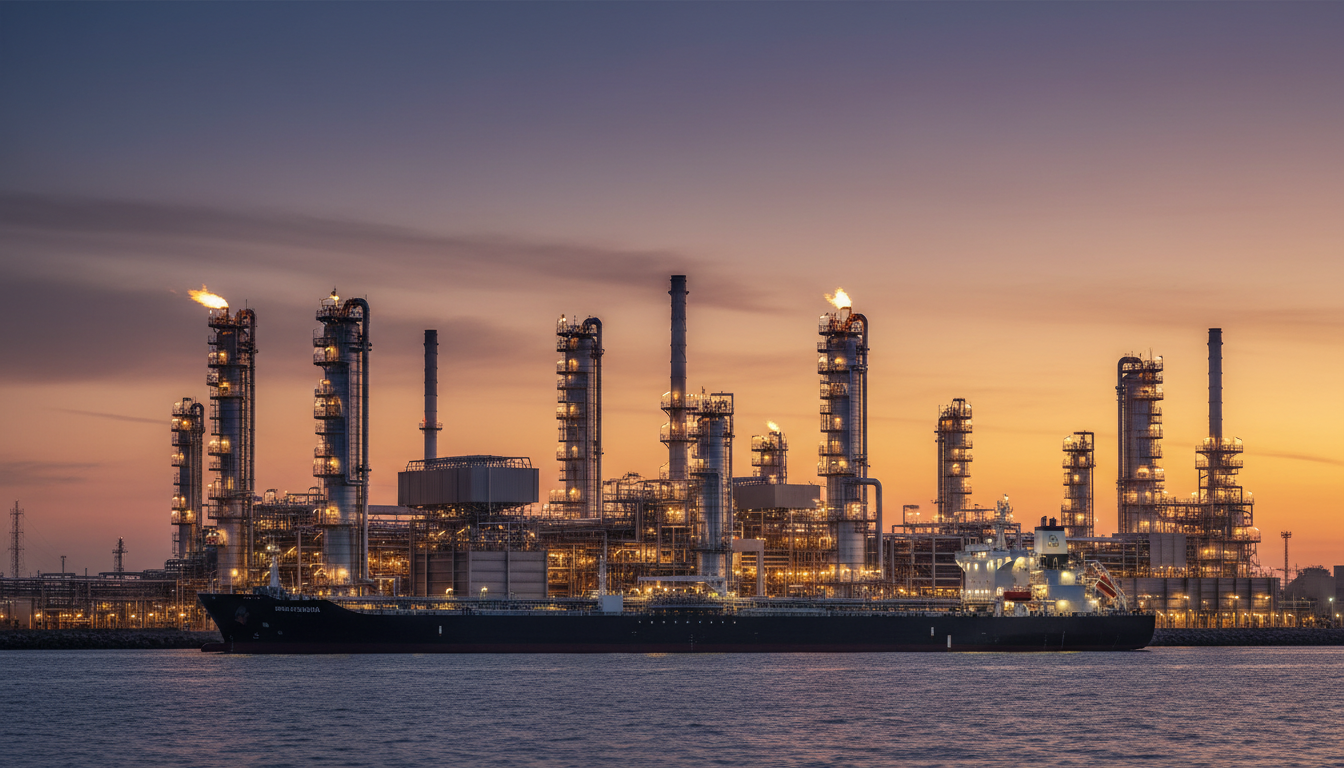
Today, the primary challenge for Asia stems from an effective blockade impacting the Strait of Hormuz. This vital artery typically supplies approximately one-third of the region’s total oil requirements, with an estimated 10 million barrels per day out of the needed 30 million barrels currently being disrupted. This physical impediment has led to soaring diesel and jet fuel prices, creating ripple effects of supply shortages across the entire continent.
Asia’s Fortified Financial Architecture: A Legacy of Resilience
The financial architecture of Asian economies has undergone substantial evolution over the past three decades. This transformation, largely a direct consequence of the 1997 crisis, has created a far more robust defense mechanism against external shocks. Nations have significantly bolstered their foreign exchange reserves, reducing reliance on short-term foreign funding, and fostering deeper local financial markets with broader domestic investor bases.
Consider the dramatic improvements: South Korea’s foreign exchange reserves now stand at over $400 billion as of end-January, a staggering increase from the mere $30 billion to $40 billion held during the 1997-1998 crisis. Furthermore, South Korea’s local-currency bond market has expanded to approximately 3,500 trillion Korean Won ($2.3 trillion), with foreign investors holding around 21% of outstanding bonds – a critical cushion that was nonexistent in the late 1990s. India’s reserves have similarly surged to around $688 billion, thanks to proactive interventions by the Reserve Bank of India to stabilize the rupee since the conflict began. Countries like Indonesia, the Philippines, and Thailand also possess significantly larger reserves than they did three decades ago.
Crucially, unlike the late 1990s, when many Asian economies held substantial dollar-denominated debt, most nations in the region have now built up their dollar reserves. This means that while weaker currencies remain uncomfortable, they can now offer some trade benefits rather than exacerbating financial losses. Exchange rate reforms have been instrumental in strengthening regional resilience. Most Asian currencies are now allowed to float more freely, absorbing pressure through gradual weakening, thereby minimizing the risk of a sudden collapse seen when pegs were aggressively defended with dwindling reserves.
Navigating Stagflation Risks and Uneven Vulnerabilities
Despite these fortifications, Asia’s oil-dependent economies are undeniably bearing the brunt of the prolonged Middle East conflict. The physical shortage of a primary energy input raises genuine concerns about stagflation – a challenging combination of high inflation and stagnant economic growth. Fiscal space is also more constrained than in 1997, due to elevated public debt levels and limited room for aggressive stimulus measures.
Indonesia and the Philippines appear most vulnerable. Indonesia’s 2026 energy subsidies budget assumed crude oil prices at $70 a barrel, but officials have flagged a worst-case scenario of $92. Brent crude futures for June delivery recently stood around $97 a barrel, highlighting the significant fiscal pressure. For the Philippines, one of the region’s most oil-exposed economies, rapidly rising fuel prices leave limited scope for increased subsidies. Headline inflation in the country surged to a 20-month high of 4.1% in March, up from 2.4% in February.
However, investor positioning across the region has remained cautiously optimistic rather than panicked. While some selective outflows from Indonesian bonds have been observed, these have been largely offset by modest net inflows into regional equities, indicating no broad capital flight is evident yet.
Bright Spots: Resilience Amidst the Storm
Not all Asian economies face equal exposure to this energy shock. Malaysia, Singapore, and China demonstrate greater resilience. These nations benefit from current-account surpluses, robust strategic reserves, and more diversified energy sources. Singapore, in particular, stands out due to its highly diversified growth model and strong institutional framework. Malaysia also enjoys an advantage as an energy exporter and continues to attract significant investment inflows into key sectors like semiconductors and AI-related technologies.
Global Ripple Effects and the Path Forward
The impact of this oil shock extends beyond Asia’s borders. Should the conflict escalate further, perhaps involving a strike on an oil tanker in the Strait of Hormuz, the global repercussions would be profound. Such an event would likely trigger a massive oil price spike and exert heavy pressure on emerging market currencies worldwide. Central banks might be forced to liquidate significant holdings of U.S. Treasurys to acquire dollars, aiming to defend their currencies. This selling pressure could push U.S. yields higher, sending ripples through global bond markets.
Today’s capital flows, while appearing more volatile, are generally less destabilizing than in the past. The absence of extensive currency mismatches, unhedged foreign-currency exposures, and a lack of transparency – all hallmarks of the 1997 crisis – signifies a more mature and transparent financial landscape.
The Asian Financial Crisis of 1997 served as a harsh but invaluable lesson, prompting policymakers across the region to spend decades meticulously building the financial and fiscal buffers now being tested. The ultimate question facing investors is the duration of this current physical energy shortage. Can a de-escalation resolve the supply crunch before the economic damage spirals out of control globally? Time is indeed running out to avoid major costs to the world economy, and a significant escalation of geopolitical tensions could quickly morph the initial inflation spike into a debilitating growth shock.