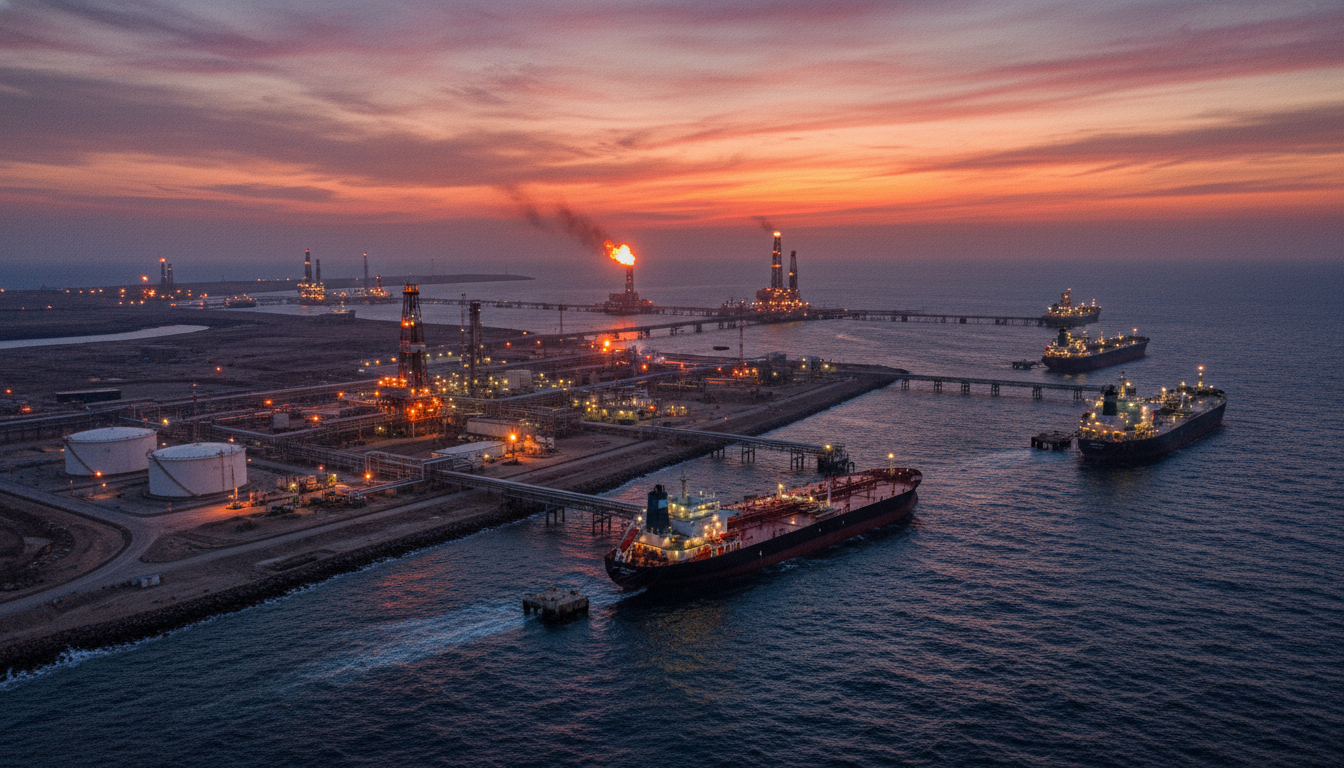
Geopolitical Tensions Drive Oil Market Volatility as Kharg Island Strikes Intensify Middle East Risk
Global energy markets remain gripped by significant volatility as geopolitical tensions in the Middle East escalate. Early Tuesday, U.S. forces conducted targeted strikes near Iran’s critical Kharg Island, focusing on military assets while deliberately avoiding the island’s vital oil export infrastructure. This strategic precision aims to de-escalate direct conflict with Iran’s oil operations, yet the proximity of such military action to a major crude hub injects a substantial risk premium into oil prices. Investors are closely monitoring the situation as Brent crude now trades near $110 per barrel, with U.S. crude hovering around $115 per barrel, reflecting the ongoing supply uncertainties.
The latest U.S. military action involved hitting bunkers, radar systems, and ammunition storage facilities on Kharg Island. These operations mirror a similar round of strikes carried out last month, underscoring a sustained strategic approach by U.S. forces. Importantly, Iran’s primary crude export terminal, responsible for handling the vast majority of the nation’s oil shipments, was not directly impacted. While this outcome temporarily alleviates immediate concerns about direct supply disruption, the very existence of military activity near such a pivotal energy facility undeniably raises the specter of broader threats to regional oil flows, a critical consideration for oil and gas investors.
Kharg Island’s Strategic Importance for Global Oil Supply
Kharg Island stands as an indispensable node in the global oil supply chain, serving as the cornerstone of Iran’s crude oil exports. Its ability to facilitate substantial crude shipments makes it a highly sensitive geopolitical flashpoint. Any prolonged disruption to operations at Kharg Island would send immediate and severe shockwaves across international energy markets, directly impacting global oil supply and pricing dynamics. Even without direct damage to the oil facilities, the ongoing military skirmishes in the vicinity signify an elevated risk profile for oil and gas assets within the region, compelling investors to factor in higher geopolitical risk premiums.
The current conflict has persisted for six weeks, and U.S. President Donald Trump has linked any potential resolution to the full restoration of navigation through the Strait of Hormuz. This critical chokepoint, a maritime artery for approximately one-fifth of the world’s daily oil supply, has seen constrained traffic amidst the regional hostilities. The President emphasized that freedom of navigation through Hormuz is a “very big priority” and must form an integral part of any diplomatic agreement, frequently setting and then adjusting deadlines for Iran to comply. These diplomatic pressures, paired with military actions, create a dynamic and unpredictable environment for global oil and gas investing.
The Strait of Hormuz: A Critical Bottleneck and Market Catalyst
Beyond Kharg Island, the broader conflict has significantly disrupted maritime shipping across the Persian Gulf. Intermittent missile and drone attacks have fueled safety concerns for commercial vessels traversing these vital waters, subsequently leading to increased insurance premiums and transport costs for crude oil shipments. The persistent constraints on traffic through the Strait of Hormuz, an essential passage for a colossal volume of global oil, contribute directly to the tightening of available supplies on the international market. This continuous pressure on a key oil transportation route acts as a powerful upward force on crude oil prices, reflecting the underlying supply risks.
Iran, for its part, has issued explicit warnings, stating it may escalate the conflict by targeting energy infrastructure throughout the Gulf region should the attacks persist. Such a move could trigger a much wider supply shock, potentially impacting multiple oil-producing nations and creating unprecedented challenges for global energy stability. Furthermore, recent hostilities have extended beyond naval routes, with missile and drone exchanges reported near crucial infrastructure in Saudi Arabia, another major oil exporter. Strikes inside Iran targeting transport and logistics assets also carry the potential to indirectly disrupt energy operations, magnifying the regional risk landscape for oil and gas investors.
Navigating Supply Risks and Diplomatic Prospects for Oil Investors
Despite the observable escalation in military activity, diplomatic channels remain active. U.S. officials have expressed cautious optimism regarding the possibility of a response from Tehran, indicating a potential pathway for de-escalation. Iran’s stated demands for a resolution include a permanent end to the conflict, relief from international sanctions, and guarantees related to safe passage through the Strait of Hormuz. These ongoing diplomatic overtures, juxtaposed against heightened military posturing, contribute to the intricate dance of factors influencing global oil prices.
For investors focused on oil and gas, markets currently exhibit extreme sensitivity to every new signal regarding escalation or de-escalation. While the latest strikes near Kharg Island have not caused material disruption to oil exports, the inherent risk premium associated with the region’s critical export infrastructure continues to build. Prudent energy investors must remain acutely aware of these evolving geopolitical dynamics, understanding that sudden shifts could rapidly impact crude oil prices and the profitability of oil and gas ventures globally. The interplay of military pressure, diplomatic maneuvers, and the unshakeable importance of Middle Eastern oil supply ensures that volatility will likely remain a defining characteristic of global energy markets for the foreseeable future.