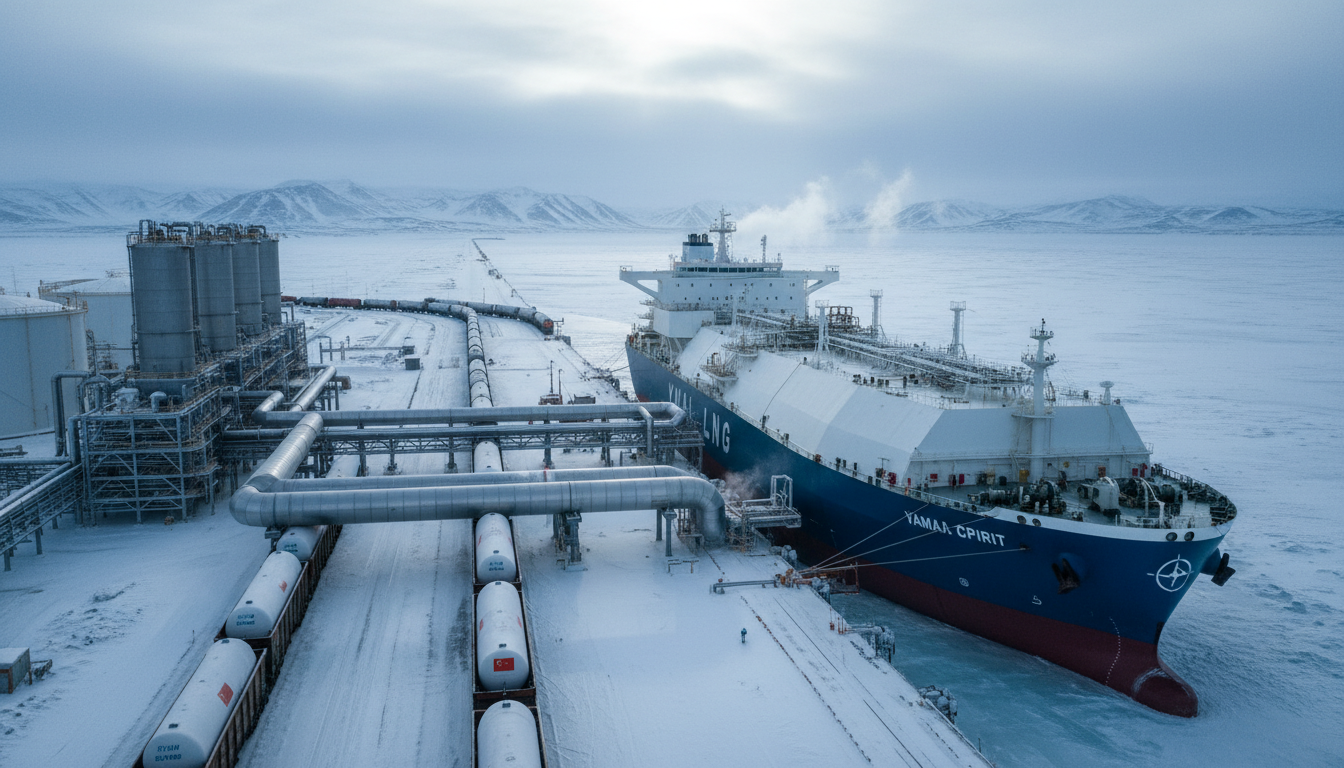
Russia’s LNG Export Pivot: Yamal Ships First Cargo to China in Months as EU Ban Looms
The global liquefied natural gas (LNG) market is witnessing a significant strategic pivot as Russia’s Yamal LNG facility dispatched its inaugural cargo to China in five months. This development, marked by the Geneva carrier’s recent departure, which is estimated to arrive in China by May 15, signals Moscow’s proactive reorientation of energy exports ahead of the European Union’s escalating natural gas import restrictions.
Operated by Novatek, Russia’s leading LNG producer and exporter, Yamal LNG is navigating a complex geopolitical landscape. Unlike the sanctioned Arctic LNG 2 project, which is already confined to selling its output primarily to China due to international penalties, Yamal LNG currently remains free of such direct restrictions. This distinction offers Yamal a temporary window for market maneuverability, though the broader EU phased ban casts a long shadow over its future European sales.
Europe Tightens the Net: The Phased Russian LNG Import Ban
Investors must closely monitor the European Union’s robust strategy to diminish its reliance on Russian natural gas. Commencing April 25, the EU will implement a ban on imports of Russian LNG under spot contracts. This marks a critical initial step in a comprehensive, stepwise plan aimed at eliminating all Russian gas imports by the close of 2027. The full prohibition on LNG imports is slated for early 2027, with pipeline gas imports set to be entirely phased out by autumn 2027.
This aggressive timeline underscores Europe’s commitment to energy security and diversification, creating substantial ripple effects across the global LNG trade. For the remaining months before the full ban takes effect, unsanctioned facilities like Yamal LNG retain the ability to supply European markets, but the commercial and strategic imperatives for diversification are now undeniable.
Shifting Flows: A Look at Recent Export Patterns
The journey of the Geneva carrier to China represents more than just a single shipment; it illuminates a profound shift in trade routes. This particular delivery from Yamal LNG is the first destined for China since November 2025. Data reveals that throughout the current year, all prior Yamal LNG shipments had been directed exclusively to Europe. This historical pattern highlights Europe’s significant, albeit diminishing, role as a primary recipient of Yamal’s output.
Furthermore, Russia’s overall LNG exports experienced a year-on-year increase in the first quarter of 2026. This surge was predominantly driven by accelerated shipments to Europe, as buyers moved to secure volumes in anticipation of the April 25 ban on short-term spot contracts. Such pre-emptive actions illustrate the immediate market response to impending regulatory changes, temporarily bolstering Russian export figures before the structural changes take full effect.
Moscow’s Strategic Reorientation: A Global Energy Rebalance?
In response to the evolving European energy policy, top Russian officials have made their intentions clear: to proactively redirect LNG exports away from the EU, even before the full bans are implemented. In early March, Russian Deputy Prime Minister Alexander Novak articulated this strategy, emphasizing a move towards alternative markets. Novak reportedly stated that a portion of LNG currently destined for Europe would be reallocated to regions fostering “constructive, pragmatic relations” with Russia, where there is demonstrable demand and opportunities for long-term contractual agreements.
This strategic declaration signals Moscow’s ambition to cultivate new, stable partnerships in the global energy sphere. For investors, this means closely observing the development of new long-term contracts and infrastructure, particularly in Asia, which could redefine traditional trade flows and pricing benchmarks for LNG.
Operational Hurdles and Market Realities for Russian LNG
Despite Russia’s clear intent, the practicalities of a rapid and comprehensive market pivot present significant challenges. Industry analysts caution that logistics, increased shipping costs, and the intricacies of existing long-term contracts could impede Moscow’s ability to swiftly reorient its LNG volumes away from Europe. Diverting cargoes to more distant markets, such as China, often entails longer transit times and higher freight expenses, impacting the overall profitability of such ventures.
Moreover, a substantial portion of global LNG trade operates under long-term agreements, which are not easily amended or cancelled. These contractual commitments tie producers to specific destinations and buyers, limiting the flexibility to simply reroute large volumes based on geopolitical shifts. Overcoming these operational and contractual hurdles will require substantial investment in new shipping capacity, potentially renegotiating existing agreements, and developing robust infrastructure to support new trade corridors, all of which demand time and significant capital.
Investor Outlook: Navigating the Evolving LNG Landscape
The unfolding scenario in Russian LNG exports presents both challenges and opportunities for investors within the oil and gas sector. The EU’s decisive moves towards energy independence from Russia will undoubtedly reshape the global LNG market, creating new supply-demand dynamics and potentially influencing price volatility. Companies involved in LNG infrastructure, shipping, and alternative gas sources stand to gain from increased demand for diversified supplies.
Conversely, those with significant exposure to Russian energy exports or relying on traditional European gas markets may face headwinds. Monitoring geopolitical developments, understanding the intricacies of sanctions regimes, and assessing the long-term viability of new trade routes are paramount for informed investment decisions. The ongoing transformation of the global natural gas market underscores the critical importance of agility and strategic foresight in a rapidly evolving energy landscape.


