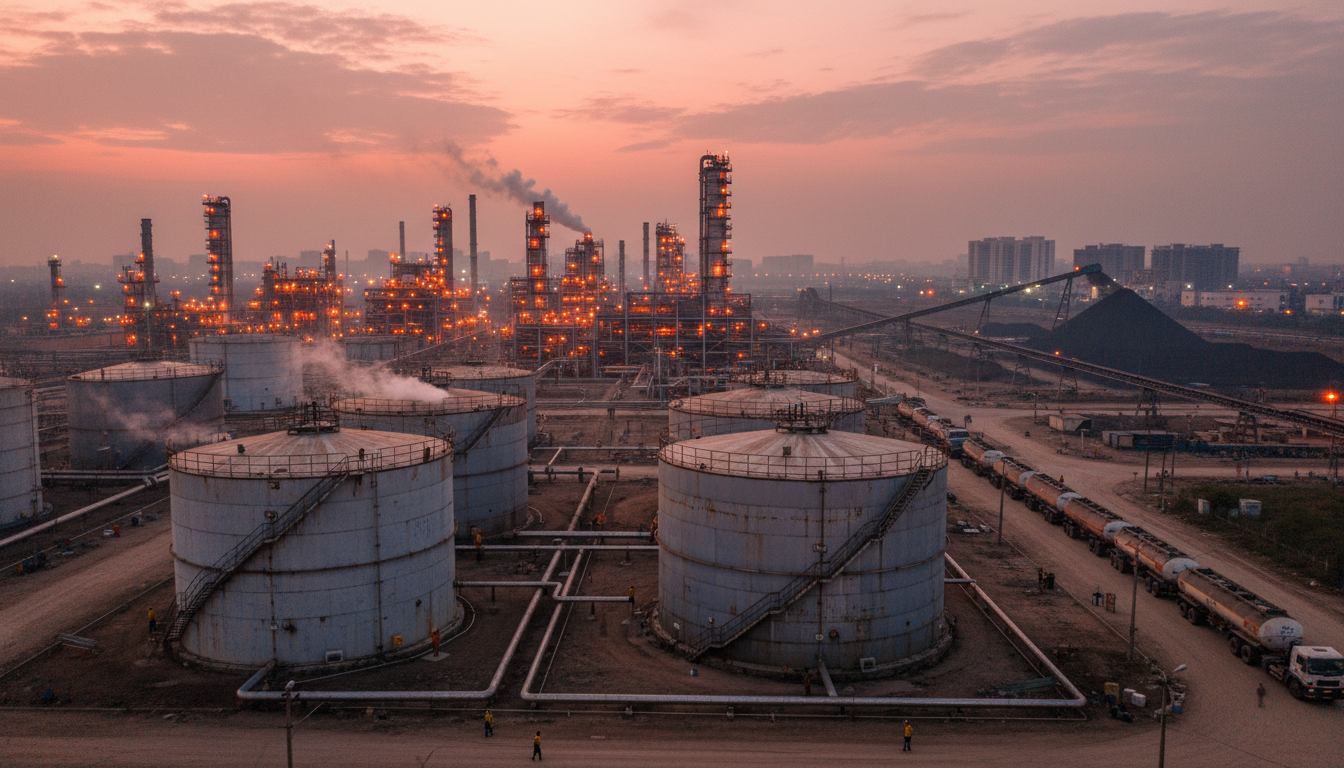
India stands as a formidable engine of global energy demand, and recent data underscores its unwavering consumption appetite. Last month, the subcontinent’s fuel usage surged to 21.37 million tons, marking the highest level observed since December of the prior year and significantly exceeding February’s 20.19 million tons. For investors tracking the world’s fastest-growing major economy, these figures paint a compelling picture of underlying industrial activity and transportation needs. However, this bullish demand narrative is not without its complexities, as geopolitical turbulence and critical supply chain vulnerabilities continue to introduce substantial risk, particularly within the crucial liquefied petroleum gas (LPG) market.
India’s Resilient Demand Amidst Geopolitical Headwinds
The sheer scale of India’s energy consumption growth cannot be overstated. With fuel usage hitting multi-month highs, the nation’s economic momentum is clearly translating into robust demand across the energy spectrum. This sustained growth trajectory positions India as a pivotal player in shaping global energy markets, offering a counter-cyclical demand signal even as other major economies navigate their own challenges. Industrial expansion, increased mobility, and a burgeoning middle class all contribute to this relentless demand for refined products. However, the very factors driving this growth also expose India’s reliance on global supply chains, creating a delicate balance between domestic ambition and external vulnerabilities.
LPG: The Strait of Hormuz Chokepoint and Strategic Reallocations
While overall fuel consumption has soared, the LPG segment tells a different story. Last month witnessed a notable contraction in LPG availability, a direct consequence of significant supply chain disruptions, primarily centered around the Strait of Hormuz. India’s profound dependence on Middle Eastern producers, accounting for approximately 90% of its LPG imports, coupled with its status as one of the top three global LPG consumers, renders it acutely susceptible to instability in this vital maritime chokepoint. Last year alone, India consumed a staggering 33.15 million metric tons of LPG, with a substantial 60% of this volume secured through international imports. The ongoing regional conflict in the Middle East has exacerbated these shortages, forcing the Indian government into strategic interventions. Authorities have been compelled to reallocate LPG supplies, cutting provisions to commercial establishments and industrial users to safeguard cooking gas availability for households, thereby prioritizing domestic energy security and public welfare. While recent diplomatic efforts in March reportedly allowed at least three LPG carriers to traverse the Strait of Hormuz, offering a glimmer of immediate relief, the broader issue of crude oil imports from the region has also seen a sharp plunge, prompting downward revisions to India’s GDP outlook by economic analysts. This demonstrates how localized energy supply issues can quickly ripple through the broader economy.
Navigating Volatility: Investor Sentiment and Market Realities
The contrasting signals from India’s domestic demand and the broader geopolitical landscape are clearly reflected in current market dynamics and investor sentiment. As of today, Brent Crude trades at $94.05, representing a modest increase of 0.87% on the day, within a range of $91.39-$94.86. Similarly, WTI Crude stands at $90.30, up 0.7%. However, a critical look at the past two weeks reveals a significant pullback, with Brent shedding approximately 7%, dropping from $101.16 on April 1st to $94.09 by April 21st. This downward trend underscores the market’s sensitivity to both supply fears and broader economic concerns, even as a major demand center like India shows robust growth. Investors are clearly grappling with the direction of crude prices, with frequent inquiries around WTI’s trajectory and the year-end outlook for oil barrels dominating recent discussions. This reflects a market seeking clarity amidst the push and pull of strong underlying demand in key regions versus persistent geopolitical risks that threaten supply stability and could impact global economic forecasts.
Forward Outlook: Key Events Shaping the Supply-Demand Narrative
Looking ahead, the coming weeks present several pivotal data releases that will offer crucial insights into the evolving supply-demand balance and help shape investor strategies. We will be closely monitoring the EIA Weekly Petroleum Status Reports on April 22nd, April 29th, and May 6th. These reports are invaluable for gauging U.S. inventory levels for crude and refined products, refining activity, and product supplied, all of which directly impact global sentiment and pricing. Similarly, the Baker Hughes Rig Count, scheduled for April 24th and May 1st, will provide key indicators of North American production trends, a significant swing factor in the global supply equation. Perhaps most critically, investors should pay close attention to the EIA Short-Term Energy Outlook on May 2nd. This comprehensive report will offer updated projections for global supply, demand, and price forecasts, and any revisions to these figures – particularly in light of the geopolitical tensions impacting India’s crude and LPG imports – could significantly move markets. The interplay between these global supply metrics and India’s localized demand and supply challenges will be a defining theme for crude and product markets in the near term.
India’s robust energy demand growth remains an undeniable force in the global market, yet its vulnerability to geopolitical disruptions, particularly in critical chokepoints like the Strait of Hormuz, presents a significant investment paradox. While diplomatic efforts offer temporary relief for specific commodities like LPG, the broader energy landscape remains fraught with peril, impacting crude imports and potentially slowing the nation’s impressive economic momentum. Investors must navigate this complex environment by closely monitoring not only India’s domestic energy consumption patterns but also the broader geopolitical developments and the upcoming critical market data releases that will define the global supply-demand equilibrium. Diversification and a keen understanding of regional supply chain fragilities will be paramount in capturing value from this dynamic market.


