Investment Spotlight: Egypt’s $570 Million Play in Sustainable Aviation Fuel
Egypt is making a decisive move to anchor itself within the burgeoning global sustainable aviation fuel (SAF) supply chain. A substantial $570 million investment is powering a new facility on the Mediterranean coast, targeting an annual production capacity of 120,000 tonnes of SAF by 2029. This ambitious project, spearheaded by the Egyptian Petrochemicals Holding Company (ECHEM), promises to significantly reduce the nation’s carbon footprint, with projections indicating an annual abatement of up to 400,000 tonnes of CO2 emissions. For energy investors, this initiative represents a critical development in an emerging market, showcasing how strategic capital deployment, technological partnerships, and a focus on waste-based feedstocks are shaping the future of aviation decarbonization amidst recognized market constraints.
Alexandria’s Industrial Hub Pivots to Green Aviation Fuel Production
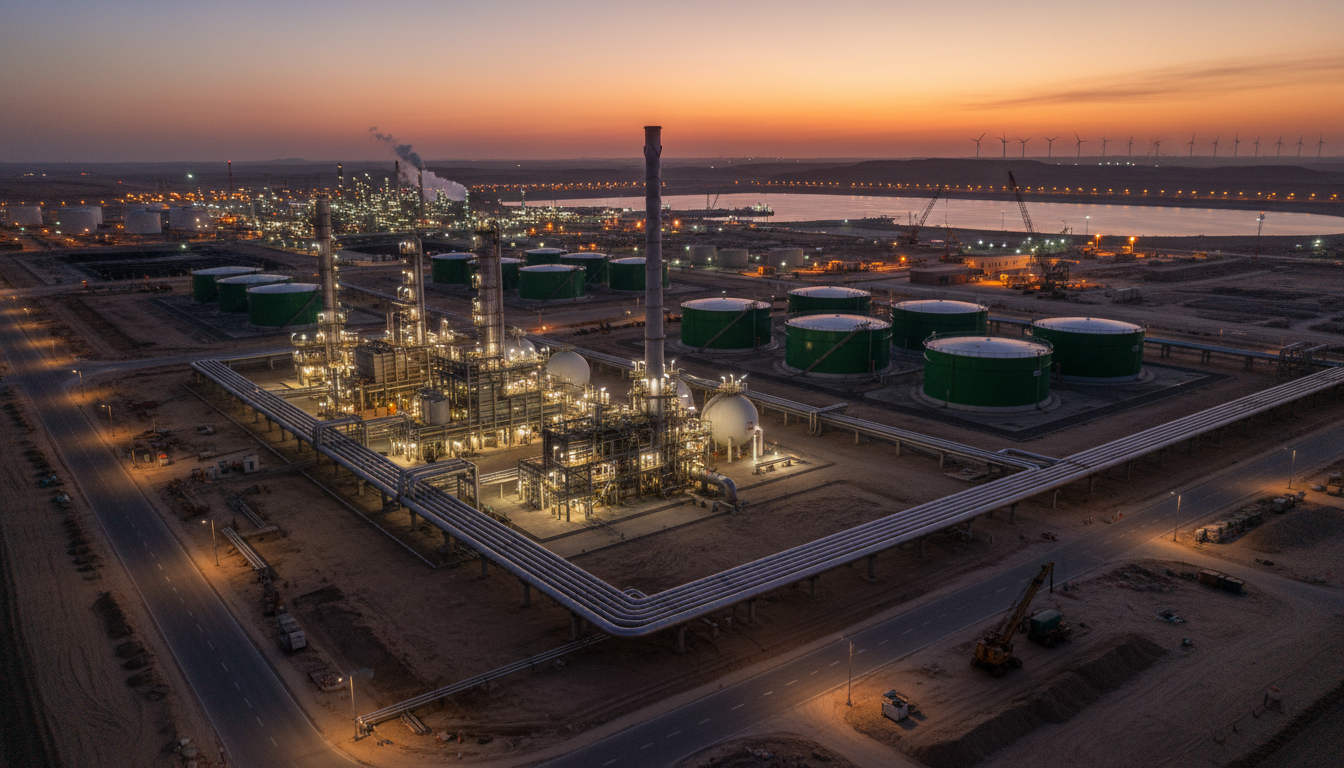
The industrial heartland of Alexandria is poised to become a strategic cornerstone in Egypt’s low-carbon energy transition. ECHEM has confirmed that its flagship $570 million sustainable aviation fuel project, located in this key Mediterranean city, has entered advanced development stages. Permitting, essential contracting, and crucial financing arrangements are actively progressing, signaling strong momentum. The project falls under the purview of Egyptian Sustainable Aviation Fuel Company (ESAF), a dedicated ECHEM subsidiary, tasked with bringing the 120,000-tonne annual capacity online. With commercial operations slated for 2029, Egypt aims to establish a localized SAF production capability, positioning itself alongside a growing cohort of nations addressing aviation’s escalating decarbonization imperatives.
Strategic Partnerships and Feedstock Innovation Drive Decarbonization
At the technological core of this transformative project lies a pivotal partnership with US-based Honeywell UOP. This collaboration will supply advanced hydrotreating capabilities, forming the backbone of the facility’s conversion process. In a significant step forward, ESAF formalized this technological alliance in December 2025 through a licensing agreement. This accord grants ESAF access to cutting-edge conversion technology specifically designed to process waste-based inputs into high-quality aviation fuel. Tamer Heikal, Chairman of ESAF, and Matt Spalding, Vice President for Honeywell Energy and Sustainability Solutions (ESS) across Asia Pacific, Middle East, North Africa, and India, signed the agreement, underscoring the international significance of this venture.
Crucially, the Alexandria facility will primarily utilize used cooking oil as its feedstock. This strategic choice aligns with global industry efforts to prioritize waste-derived inputs over crop-based alternatives, which often raise concerns about land use and food security. This waste-to-fuel pathway is projected to deliver substantial lifecycle emissions reductions. Official estimates suggest the facility could achieve an impressive reduction of up to 400,000 tonnes of CO2 emissions annually once fully operational, placing it among the most impactful SAF initiatives currently under development in emerging economies and offering a compelling case for environmentally conscious investors.
Navigating Investment Hurdles: Financing, Execution, and Global Market Dynamics
While ECHEM reports solid progress on financing and contract finalization, the Alexandria SAF project, like any large-scale industrial undertaking, faces inherent execution risks that demand close investor scrutiny. The ongoing process licensor selection indicates that final technical configurations are still being meticulously determined. For investors and stakeholders, this critical phase involves securing competitive financing structures, diligently managing construction timelines, and ensuring long-term feedstock supply stability – all of which will directly influence the project’s ability to meet its ambitious 2029 startup target.
Beyond the project-specific challenges, the Egyptian initiative unfolds against a backdrop of complex global SAF market constraints. The International Air Transport Association (IATA) recently revised its 2025 SAF production estimate downward to 1.9 million tonnes, attributing this adjustment to insufficient policy support globally to fully leverage existing installed capacity. Moreover, IATA highlighted a persistent and significant pricing gap: SAF currently costs approximately twice as much as conventional jet fuel, a differential that can escalate to five times more in markets where blending mandates are strictly enforced. These economic realities continue to temper airline adoption and slow overall demand growth, even as regulatory pressures to decarbonize intensify across the aviation sector.
Egypt’s capacity to produce competitively priced SAF will undoubtedly be a key determinant of the Alexandria project’s enduring viability and attractiveness to global buyers. Access to cost-effective feedstocks, the deployment of highly efficient processing technology, and the cultivation of supportive domestic policy frameworks will all play a pivotal role in narrowing this critical price differential, influencing future investment returns.
Investor Takeaways: Decoding Egypt’s SAF Ambition
For C-suite leaders and discerning investors, the Alexandria SAF project offers a compelling case study into how emerging markets are strategically entering the energy transition through targeted industrial investments. It vividly illustrates three critical themes currently shaping the global clean energy sector. First, the project underscores the increasing importance of waste-based feedstocks as a sustainable and economically viable pathway for biofuel production. Second, it highlights the indispensable role of international technology partnerships in enabling rapid deployment of complex decarbonization solutions. Finally, it shines a light on the persistent, yet critical, gap between ambitious climate goals and the current economic realities of scaling up new energy technologies.
Airlines, facing mounting pressure to fulfill their net-zero commitments, are actively seeking secure and diversified SAF supply agreements. Projects like ESAF’s could evolve into highly strategic partners for future offtake agreements, particularly as regional production capacity expands and provides a more localized supply solution. Investors should recognize the potential for these long-term contracts to de-risk investments and provide stable revenue streams in the evolving aviation fuel market.
Reshaping the Global SAF Landscape: Egypt’s Emerging Role
Egypt’s strategic entry into SAF production mirrors a broader, observable shift in the geographical distribution of clean fuel development. While early projects were predominantly concentrated in established markets like Europe and North America, new capacity is increasingly being planned and developed in regions such as the Middle East, Africa, and Asia. These emerging markets often present distinct competitive advantages, including robust feedstock availability, favorable industrial policy alignment, and supportive governmental initiatives aimed at fostering domestic energy independence and green growth.
If successfully executed, the Alexandria facility will not only deliver significant contributions to global emissions reductions but also solidify Egypt’s role within the evolving global energy landscape. Its progress will be closely monitored by policymakers, industry executives, and investors alike, all seeking scalable and replicable models for sustainable aviation fuel deployment beyond traditional markets, signaling a new era for green energy investment in the region.


