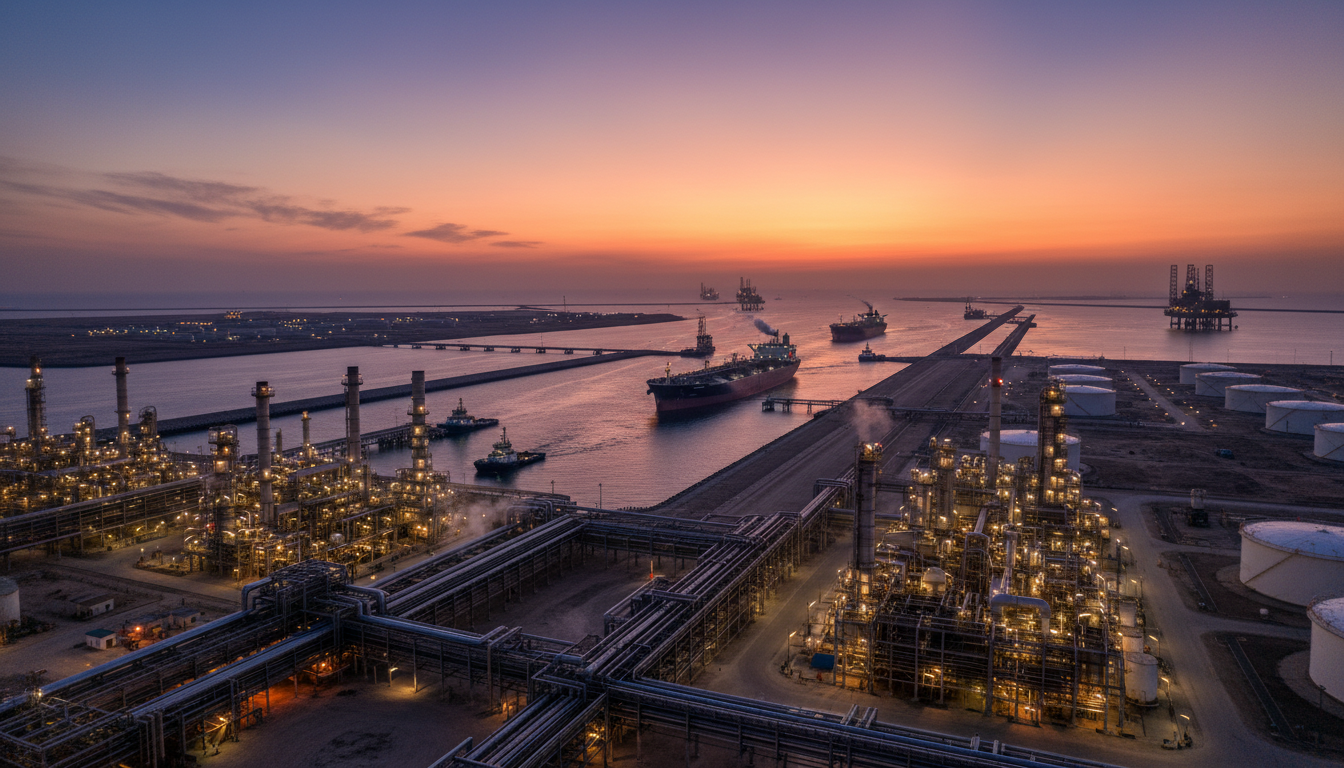
In a move largely anticipated by the market, OPEC recently signaled its intent to collectively increase daily oil output by an additional 206,000 barrels. However, this announced boost largely remains a theoretical exercise for investors tracking global energy supplies. The harsh reality on the ground, particularly in the Middle East, dictates that actual production remains severely constrained by the escalating crisis surrounding the Strait of Hormuz. This critical chokepoint continues to throttle vital oil flows, overshadowing any nominal increase pledged by the cartel.
Industry analysts had widely predicted this symbolic gesture from OPEC. Reports indicated that the eight member nations actively managing their production quotas stand ready to inject these additional barrels into the market swiftly, contingent on a significant de-escalation of tensions in the Persian Gulf. Yet, the current geopolitical climate offers little optimism for such a scenario in the near term, keeping a tight lid on the region’s export capabilities.
The Imperative of Hormuz: A Bottleneck for Global Energy
The Strait of Hormuz represents an undeniable cornerstone of global energy security, historically facilitating the passage of over 20% of the world’s total oil supply. Today, this crucial maritime artery finds itself severely impacted by the ongoing geopolitical confrontation between the U.S. and Israel on one side, and Iran on the other. This conflict has directly translated into tangible disruptions for major oil producers within the region.
Leading OPEC members, including Saudi Arabia, Iraq, Kuwait, and the United Arab Emirates, have already undertaken substantial output curtailments. These nations face significant challenges as their crude exports stall amid the heightened risks and operational complexities. The combined effect of these production cuts is staggering, exceeding an estimated 11 million barrels per day. Such a massive reduction in available supply naturally exerted upward pressure on crude benchmarks, pushing prices toward the $120 per barrel mark last month, though they have since receded somewhat from those peaks.
Current Market Snapshot: Brent, WTI, and the Geopolitical Premium
As investors assess the volatile landscape, Brent crude currently trades at $109.73 per barrel. Interestingly, West Texas Intermediate (WTI), the U.S. benchmark, commands a rare premium over its international counterpart, priced at $111.20 per barrel. This unusual market dynamic underscores the intense geopolitical risk premium being factored into pricing, particularly following recent strong rhetoric from President Trump. The U.S. leader issued another stark warning to Tehran, employing unusually forceful language and setting a new deadline for the reopening of the Strait of Hormuz, threatening “hell” should Iran fail to comply. Such declarations further cement the market’s perception of ongoing high-stakes instability.
The severity of the supply disruptions became even clearer with recent data. Reuters reported last week that OPEC’s aggregated oil output losses for March alone reached an estimated 7.2 million barrels per day. This figure, compiled from data provided by LSEG and prominent analytics firms including Kpler, offers a stark illustration of the crisis’s impact on actual production volumes.
OPEC Production Plunge: Lowest in Years
Analysis of March’s production figures reveals significant contractions across key producers. Kuwait, Iraq, the United Arab Emirates, and Saudi Arabia accounted for the most substantial reductions. These critical OPEC members collectively contributed to a total OPEC output of only 21.57 million barrels per day for the month of March. This represents the cartel’s lowest production rate recorded since June 2020, highlighting the profound extent of the operational and export challenges currently gripping the region.
In a striking contrast to the widespread declines, only two OPEC members managed to increase their oil production during March: Venezuela and Nigeria. These nations, often grappling with their own distinct internal challenges, found themselves in the unique position of bucking the broader trend of output reduction, albeit from a much smaller base compared to the Middle Eastern giants.
Persistent Tensions and a Distant Resolution
The outlook for a swift resolution to the Strait of Hormuz crisis remains decidedly bleak. Reports from news agencies confirmed a continuation of Iranian attacks on vital infrastructure within the Gulf countries, with fresh strikes reported over the weekend in the UAE, Bahrain, and Kuwait. These ongoing acts of aggression reinforce the prevailing sentiment among market participants: the prospects for the Strait of Hormuz reopening and resuming normal, unconstrained oil flows in the foreseeable future appear increasingly distant. For investors, this translates into continued supply uncertainty and a heightened risk premium embedded in crude prices.
The interplay of theoretical OPEC increases, actual production curtailments, and relentless geopolitical tensions shapes an exceptionally complex and volatile environment for oil and gas investors. Monitoring the Strait of Hormuz and the broader Persian Gulf region remains paramount for understanding global supply dynamics and making informed investment decisions in the energy sector.


