Kremlin’s Energy Revenue Rollercoaster: From Sharp Decline to Geopolitical Windfall
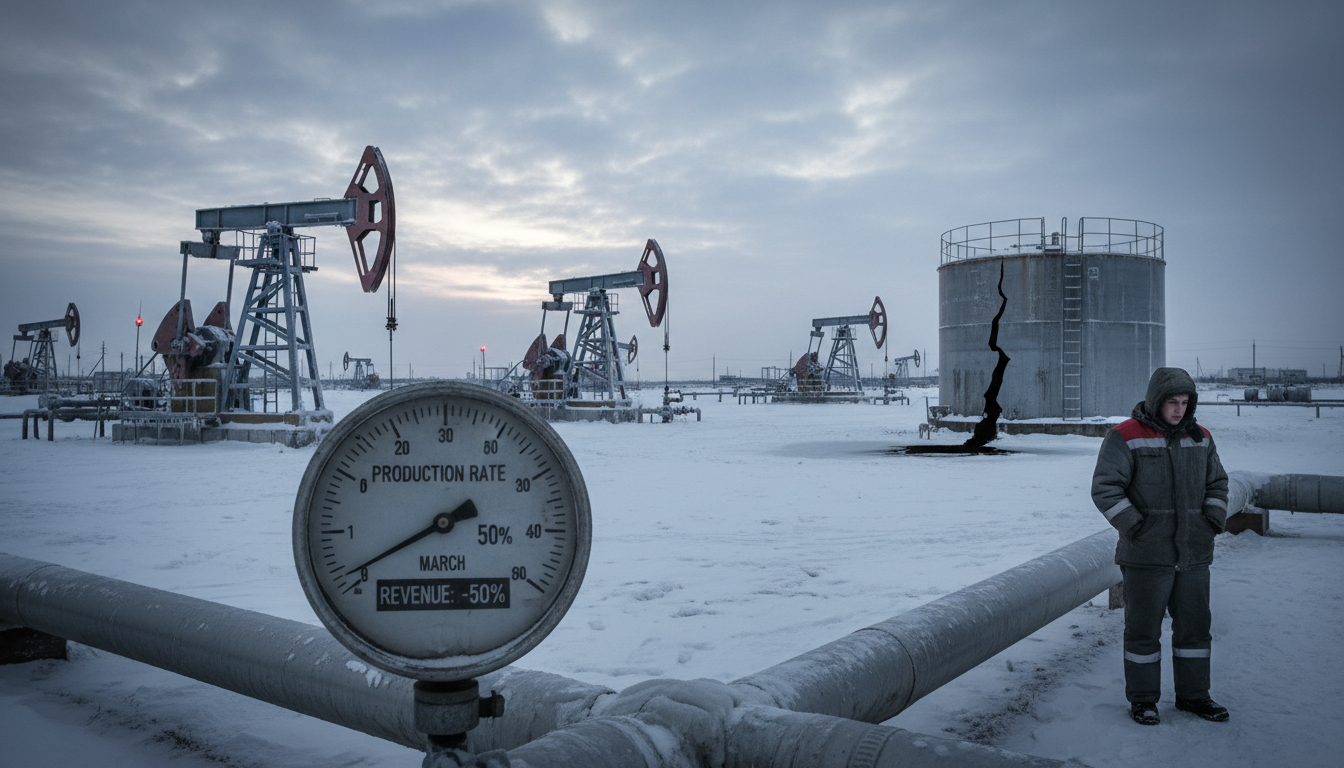
Moscow’s financial coffers faced significant pressure in March as Russia’s oil tax revenue experienced a dramatic near-halving compared to the previous year. This substantial fiscal challenge underscored the Kremlin’s reliance on energy exports, just before an unexpected turn of events in the Middle East delivered a crucial, albeit temporary, boost to the nation’s earnings.
Data from Russia’s Finance Ministry reveals that oil producers remitted 494.9 billion rubles, equivalent to approximately $6.18 billion, in oil taxes last month. This figure represents a steep 48% decline year-on-year. The broader picture for federal finances was equally stark, with combined oil and gas revenues plunging nearly 43% from the prior year, settling at 617 billion rubles. These figures highlight the immediate strain on Russia’s state budget, a critical concern for investors monitoring the nation’s economic stability.
The primary driver behind this sharp revenue contraction was the methodology for tax calculation. March’s tax obligations were determined by the average price of Urals crude, Russia’s key export blend, recorded during February. During this period, Urals averaged below $45 per barrel, according to government statistics. This valuation sat considerably below the $59 per barrel benchmark assumed in Russia’s 2026 budget, creating a significant shortfall. Energy sanctions continued to compel Russian producers to offer steep discounts to remaining buyers, further depressing realized prices. Concurrently, a stronger ruble against the U.S. dollar exacerbated the revenue plunge, as each dollar earned from oil exports translated into fewer rubles for the state budget.
The immediate consequence of these diminished energy tax receipts was a widening of Russia’s budget deficit. As economic growth continued to stagnate, the ongoing financial demands of the conflict in Ukraine placed immense pressure on available resources. Investors closely watching Russia’s fiscal health understood that prolonged low oil revenues would severely constrain Moscow’s ability to fund its strategic objectives and maintain internal stability.
However, the narrative shifted dramatically. As early as the upcoming month, Russia’s budget is poised for a significant surge in oil and gas revenues. This anticipated rebound stems directly from a sharp uptick in Urals crude prices observed throughout March, largely spurred by escalating geopolitical tensions in the Middle East. By the close of March, Urals crude delivered to India, a pivotal buyer of Russian oil, was reportedly trading above $120 per barrel. This remarkable reversal saw Russian crude command a premium over the international Brent benchmark, an astonishing turnaround for a commodity previously sold at substantial discounts.
The conflict in the Middle East, specifically involving Iran, has created significant disruption and uncertainty surrounding the Strait of Hormuz. This vital chokepoint is critical for the passage of energy exports from numerous Gulf nations. Crucially, Russian oil exports do not rely on this strategic maritime route, rendering them more attractive and reliable to key buyers, particularly in Asia, who sought to de-risk their supply chains amidst rising regional instability. This geographic advantage suddenly provided a powerful market lever for Russian crude.
Adding to this burgeoning demand, the United States implemented a policy allowing a broad spectrum of countries, including India, to procure large volumes of Russian crude that were already in transit at sea. This waiver effectively lubricated the sales process, further stimulating Asian demand for Russian barrels and helping to push prices higher. The combined effect of geopolitical disruption and strategic waivers repositioned Russian crude in the global market, at least temporarily, offering a lifeline to Moscow’s budget.
Thanks to this sharp upward trajectory in oil prices, Moscow has reassessed its immediate fiscal strategy. The Kremlin reportedly no longer anticipates substantial cuts to budget spending. In fact, if the conflict in Ukraine persists, there is a strong possibility that defense outlays could even see an increase, according to sources familiar with the government’s plans. This newfound fiscal flexibility underscores the profound impact of global energy market dynamics on Russia’s strategic decision-making and military capabilities.
Despite this significant financial reprieve, President Vladimir Putin has exercised caution, urging both his government and Russian oil producers to maintain a moderate approach to spending. Putin’s advisory reflects an understanding that the current elevated oil prices may prove temporary, subject to the capricious nature of global geopolitics and market supply-demand balances. Such a pragmatic stance acknowledges the inherent volatility of crude markets and the need for long-term fiscal prudence.
A closer examination of the underlying figures reveals the specific components contributing to March’s initial revenue decline. Russia’s oil and gas revenues for March were calculated using an average Urals price of $44.59 per barrel, a notable decrease from the $61.69 per barrel utilized a year earlier. Furthermore, the ruble-dollar exchange rate was pegged at 76.85 rubles per dollar for the calculation period, starkly stronger than the 92.9 rubles per dollar seen in the prior year. This stronger ruble meant that for every barrel of oil sold, the budget received fewer rubles, compounding the revenue shortfall despite consistent export volumes.
It is important for investors to note that despite the year-on-year decline in total tax revenue, March typically registers as a month of higher oil revenue payments. This is due to Russia’s profit-based oil tax schedule, which mandates that these substantial payments are largely made four times annually: in March, April, July, and October. Therefore, while the *amount* paid in March was a significant quarterly disbursement, the *value* of that payment was significantly reduced compared to the previous year, reflecting the lower underlying oil prices in the preceding month.
In summary, Russia’s energy revenues are navigating an extremely volatile landscape. While March presented a stark reminder of the financial vulnerabilities stemming from price discounts and a strong ruble, the rapid shift in geopolitical circumstances, particularly in the Middle East, quickly reshaped Moscow’s fiscal outlook. Investors in the global oil and gas sector must keenly observe these intricate interplays of supply, demand, sanctions, and geopolitical events, as they continue to dictate the financial health and strategic direction of major energy-producing nations like Russia.


