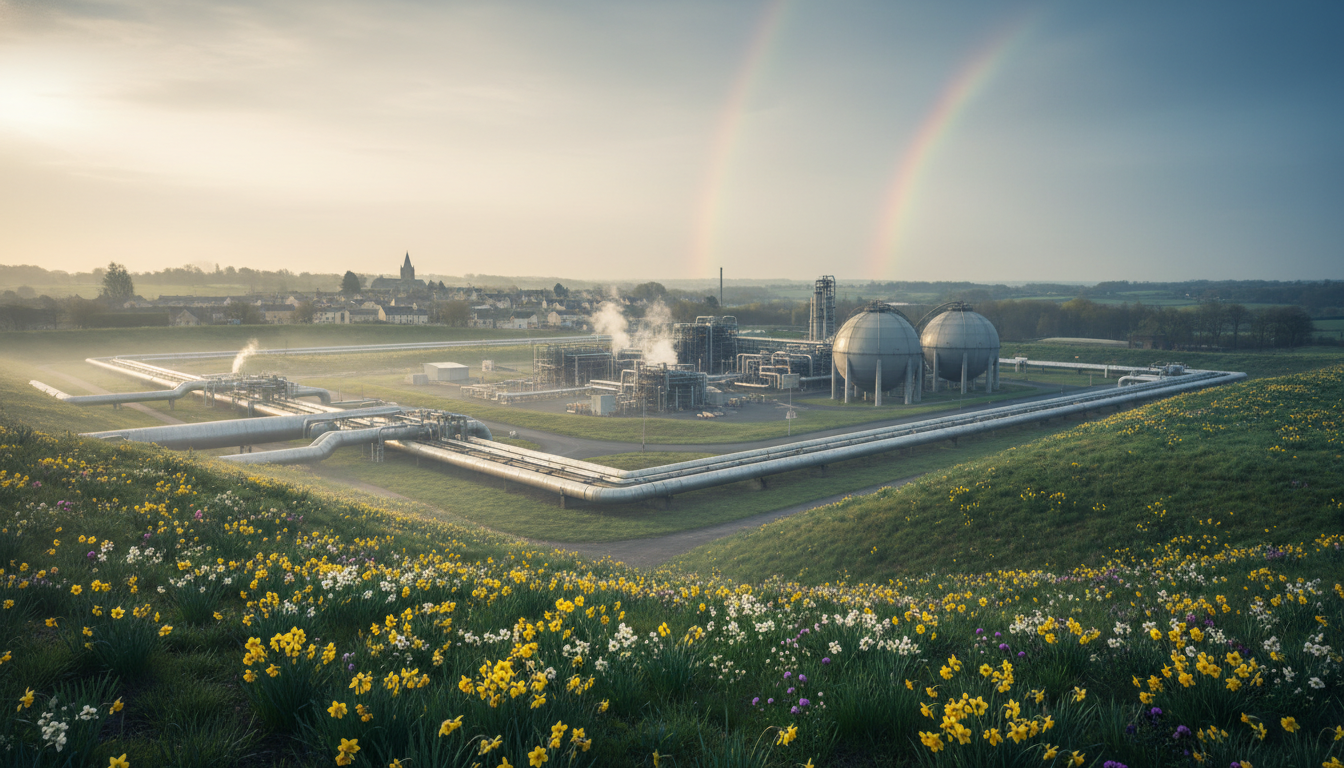
Early Spring Indicators: A Wake-Up Call for Oil & Gas Investors on Climate Transition Risks and Opportunities
The United Kingdom is witnessing an unprecedented acceleration of seasonal changes, with early spring occurrences shattering long-standing records. While the immediate observations focus on blooming flora and nesting fauna, savvy oil and gas investors recognize these biological shifts as potent indicators of broader climatic trends that directly impact energy markets, policy trajectories, and the long-term viability of fossil fuel assets. This year, Britain appears poised for its earliest spring this century, an ecological phenomenon laden with financial implications for the global energy sector.
Nature’s Calendar, a robust citizen science initiative, meticulously tracks seasonal shifts, and its data points to a consistent trend: spring is arriving earlier, year after year. For investors, this isn’t merely an environmental curiosity; it’s a quantifiable signal of warming trends that can influence heating demand, energy policy, and the accelerating transition to lower-carbon alternatives. Provisional figures highlight dramatic shifts: the average date for first frogspawn laying occurred on February 23rd, significantly earlier than the previous record of March 5th. Blackbirds were actively nesting by March 4th, and hazel was observed flowering as early as January 14th, eclipsing the previous earliest average of January 22nd recorded just last year in 2024. These shifting baselines underscore a rapidly evolving climate landscape that demands strategic reassessment from energy portfolios.
Accelerated Phenology and Energy Demand Implications
The ecological data provides compelling evidence of sustained warming. An 80-year study of great tits in Oxfordshire’s Wytham Woods documented their earliest egg-laying on record, March 23rd, a full three days ahead of the previous benchmark. This isn’t an isolated event; average egg-laying for these birds has advanced by a striking 16 days since the 1960s. Similarly, coal tits in Dunsford Woods, Devon, recorded their earliest egg-laying since 1955, with similar accelerations noted across the Netherlands. This synchronized shift across northern Europe points to widespread climatic influence.
From an energy perspective, these early spring markers are critical. Warmer winters directly translate to reduced demand for heating oil and natural gas in key consumption regions. An earlier onset of milder weather in the first quarter can significantly suppress energy consumption, impacting quarterly earnings for natural gas producers, heating oil distributors, and integrated energy companies operating in temperate zones. Oil and gas firms must strategically factor in these evolving seasonal demand patterns into their forecasting models, refining their supply chain and inventory management to mitigate risks associated with diminished off-take during traditionally peak heating periods.
Policy Drivers and Investment Strategy
The observed rapid advancement of spring, further bolstered by a comparatively warm winter and Britain’s joint 10th warmest March on record, fuels the narrative around climate change. While the Met Office notes that March remains a transitional month, capable of cold spells, the overarching trajectory is clear. This consistent ecological feedback loop serves as potent evidence for policymakers advocating for more aggressive climate action. Investors must anticipate increasing regulatory pressure, including heightened carbon pricing mechanisms, stricter emissions standards, and accelerated phase-out timelines for fossil fuel infrastructure. Companies demonstrating resilience through diversification into renewable energy, carbon capture technologies, or green hydrogen initiatives will likely find favor with investors navigating an increasingly climate-conscious capital market.
The “phenological mismatch” concept, traditionally referring to species failing to adapt to climate-induced changes, offers a parallel for energy investors. A failure by oil and gas companies to adapt their investment strategies to these fundamental climate shifts could lead to a “market mismatch,” where traditional assets become misaligned with evolving regulatory frameworks and investor expectations. Early emerging species like the orange-tip butterfly, first spotted on March 18th this year – weeks ahead of the typical April 16th emergence observed 50 years ago by naturalist Matthew Oates – serve as biological harbingers of this accelerating change.
Ecological Adaptation and ESG Imperatives
While some species, like the tits, appear to be adapting their reproductive cycles to align with early caterpillar emergence, other species demonstrate vulnerability. The stark decline of the willow warbler, directly attributed to climate change, is a poignant reminder of ecological fragility. For oil and gas investors, this underscores the growing importance of Environmental, Social, and Governance (ESG) considerations. Companies with robust ESG frameworks, particularly those actively managing their environmental footprint and investing in sustainable practices, are increasingly viewed as more resilient and attractive long-term investments.
Conversely, the enthusiastic response from naturalists to the “sensational displays of early spring flowers” – including violets, celandines, stitchwort, dandelions, and cowslips – fueled by last summer’s heat and heavy winter rains, highlights nature’s adaptive capacity. This duality presents both challenges and opportunities for the energy sector. It reinforces the urgent need for innovation in renewable energy and sustainable resource management, encouraging investment in solutions that support both economic growth and environmental preservation.
Navigating the Evolving Energy Landscape
The early spring of 2026, breaking records for frogspawn, blackbird nesting, and hazel flowering, offers more than just aesthetic beauty; it’s a tangible manifestation of a shifting global climate. For the discerning oil and gas investor, these biological markers are critical data points, signaling an undeniable acceleration in climate change. This trend necessitates a proactive re-evaluation of investment portfolios, emphasizing resilience, diversification, and a keen understanding of the interplay between environmental shifts and energy market dynamics. The imperative is clear: traditional energy companies must not only monitor these environmental signals but also integrate them into their strategic planning, ensuring their long-term value proposition aligns with an increasingly carbon-constrained and climate-aware world. Those who adapt swiftly to these evolving ecological and policy landscapes will be best positioned to thrive in the energy markets of tomorrow.


