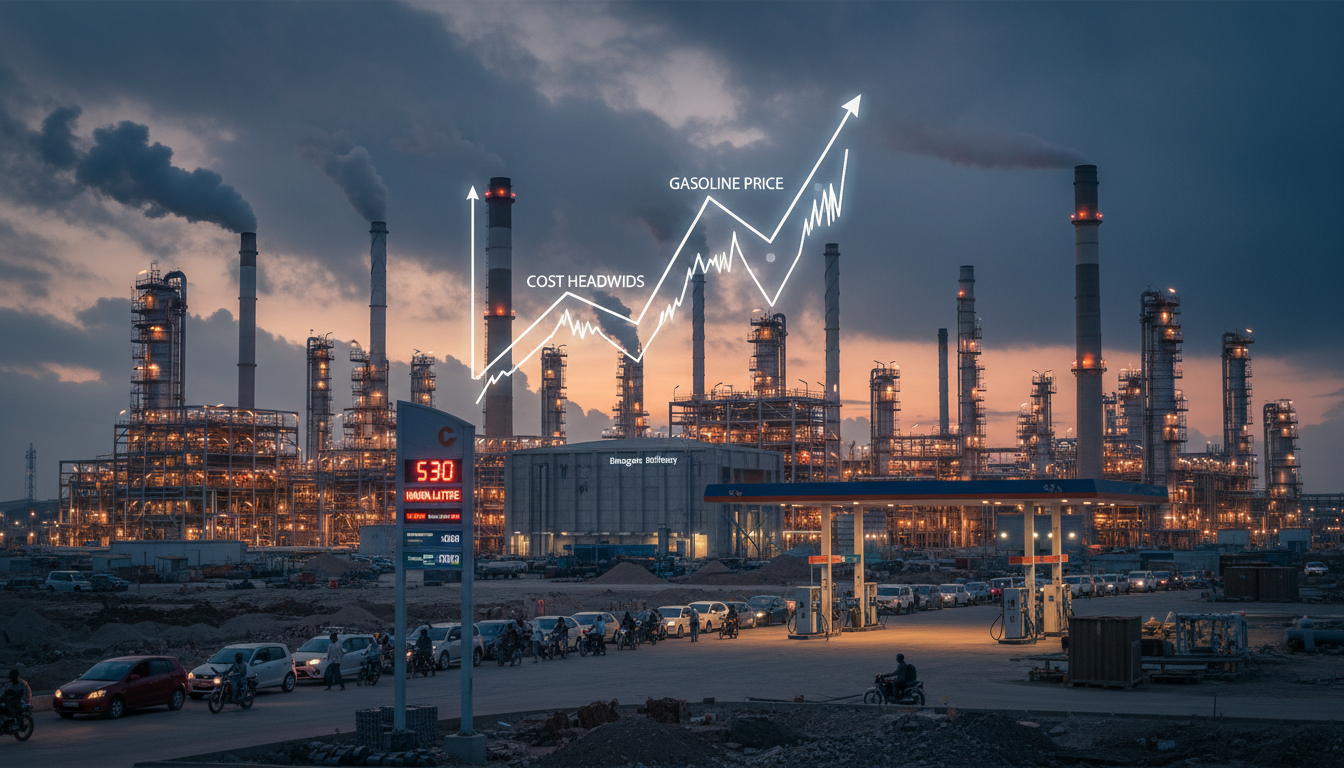
Nigeria, home to Africa’s largest oil refinery, paradoxically faces soaring domestic gasoline prices, creating a complex challenge for investors monitoring the continent’s energy landscape. Despite the much-anticipated startup of the Dangote Refinery in 2024, designed to transform Nigeria from a net fuel importer to a regional processing powerhouse, geopolitical tensions and critical supply chain deficiencies are driving fuel costs to unprecedented levels for consumers. This situation presents a fascinating, albeit concerning, case study for those assessing oil and gas investment opportunities in emerging markets, highlighting the intricate interplay of infrastructure, policy, and global dynamics.
Dangote Refinery’s Ambitious Start Meets Market Realities
The Dangote Refinery commenced operations in early 2024, marking a significant milestone for Nigeria’s energy independence aspirations. Its initial rollout saw the production of diesel and naphtha beginning in January 2024, swiftly followed by gasoline output in September 2024. The facility’s sheer scale and strategic location positioned it not only to serve West Africa but also to extend its fuel exports to broader international markets, signaling its potential as a pivotal player in global refining. Early statements from the refinery underscored an “unwavering commitment to serving as a stabilising force amid recent shocks in the international oil market,” a pledge now being rigorously tested by current events.
Investors initially viewed the Dangote Refinery as a de-risking asset for Nigeria’s downstream sector, promising to insulate the nation from volatile international product prices and the logistical complexities of importing refined fuels. Indeed, before the escalation of recent geopolitical conflicts, the refinery had already begun to make a substantial impact, supplying a remarkable 62% of Nigeria’s premium motor fuel. This achievement saw it overtake traditional fuel importers for the first time, demonstrating its capacity to reshape the domestic energy market and capture significant market share.
The Rising Cost of Crude: A Double-Edged Sword
However, the promise of localized refining has encountered formidable headwinds. A critical vulnerability has emerged: the Dangote Refinery’s substantial reliance on imported crude oil. As international crude oil prices surged, exacerbated by ongoing conflicts in the Middle East, the cost of feedstock for the refinery escalated dramatically. This direct exposure to global commodity markets undermines the very stability the refinery was designed to provide.
The situation is further compounded by a significant domestic supply failure. On March 5, Dangote’s management publicly stated, “The high crude cost is compounded by the fact that Nigeria upstream producers have failed to supply crude oil to the refinery as required under the PIA, forcing us to source a substantial portion through international traders who charge an additional premium.” This revelation points to a critical disconnect within Nigeria’s oil and gas ecosystem. The Petroleum Industry Act (PIA), a landmark piece of legislation aimed at revitalizing Nigeria’s energy sector, apparently includes provisions for domestic crude supply that are not being met by local upstream operators. This forces the refinery to procure crude internationally, often at a premium, directly impacting its operational economics and profitability margins.
Investor Implications: High Prices and Supply Chain Risks
For investors, the implications are clear and immediate. The lack of reliable domestic crude supply for Africa’s largest refinery underscores profound supply chain risks within Nigeria’s energy sector. Reuters reports that Nigerians are now experiencing a staggering 65% increase in gasoline prices, a direct consequence of the refinery’s exposure to elevated international crude costs and the additional premiums paid to international traders. This inflationary pressure on fuel costs has significant ramifications for consumer purchasing power, overall economic stability, and the investment climate in Nigeria.
David Bird, CEO of Dangote Refinery, shed further light on the issue in an interview with Arise TV last week. He revealed that the refinery currently receives a mere five local crude cargoes, a stark shortfall compared to the 13 to 15 cargoes previously agreed upon with domestic producers. Bird emphasized the pervasive impact of these external pressures, stating, “We try and maintain some stability within a commercially acceptable range… but all our cost inputs—from crude to freight and insurance—are impacted.” This candid assessment highlights how global energy market volatility and local operational shortcomings are directly influencing the refinery’s cost structure and, by extension, the final price of fuel for Nigerian consumers.
The scenario presents a complex risk assessment for energy investors. While the Dangote Refinery represents a monumental achievement in industrial infrastructure, its current operational challenges expose the broader structural issues within Nigeria’s crude oil production and distribution network. The failure of upstream producers to fulfill their obligations under the PIA raises questions about regulatory enforcement, contractual integrity, and the long-term viability of integrated energy projects that rely on domestic feedstock. Investors eyeing long-term positions in African refining assets must consider not just the plant’s capacity, but also the stability of local crude supply and the effectiveness of national energy policies.
Looking Ahead: Navigating Volatility and Securing Feedstock
Despite these significant hurdles, the Dangote Refinery continues to demonstrate its processing capabilities. The facility reportedly processed record volumes of crude per day in January 2026, indicating its potential efficiency when feedstock is available. However, the overarching challenge remains consistent: securing a stable, cost-effective supply of crude oil. The current international supply crisis has laid bare the refinery’s reliance on foreign crudes and the substantial price it must pay on the global market, undermining its primary goal of fuel price stabilization and domestic energy security.
For investors in the oil and gas sector, particularly those eyeing opportunities in African energy markets, the Dangote situation serves as a critical reminder of the multi-faceted risks involved. Beyond the impressive scale of infrastructure, success hinges on robust domestic supply chains, effective regulatory frameworks, and resilience to geopolitical shocks. Nigeria’s government and its upstream operators face immense pressure to address the crude supply deficit to the Dangote Refinery. Resolving this issue is not merely about supporting a single industrial project; it is fundamental to the nation’s energy security, economic stability, and its credibility as a destination for large-scale energy investments. The path forward demands urgent collaboration to align national policy with operational realities, ensuring that Africa’s largest refinery can truly deliver on its transformative promise.


