Geopolitical Shift: Trump’s Green Light for Russian Crude Reshapes Cuban Energy Crisis
A significant pivot in U.S. foreign policy has sent ripples through global oil markets, as former President Donald Trump recently indicated his administration would not obstruct the delivery of Russian crude to Cuba. This statement marks a notable reversal from Washington’s prior stance, which had effectively tightened an energy blockade on the Caribbean island nation, now grappling with its most severe energy crisis since the dissolution of the Soviet Union.
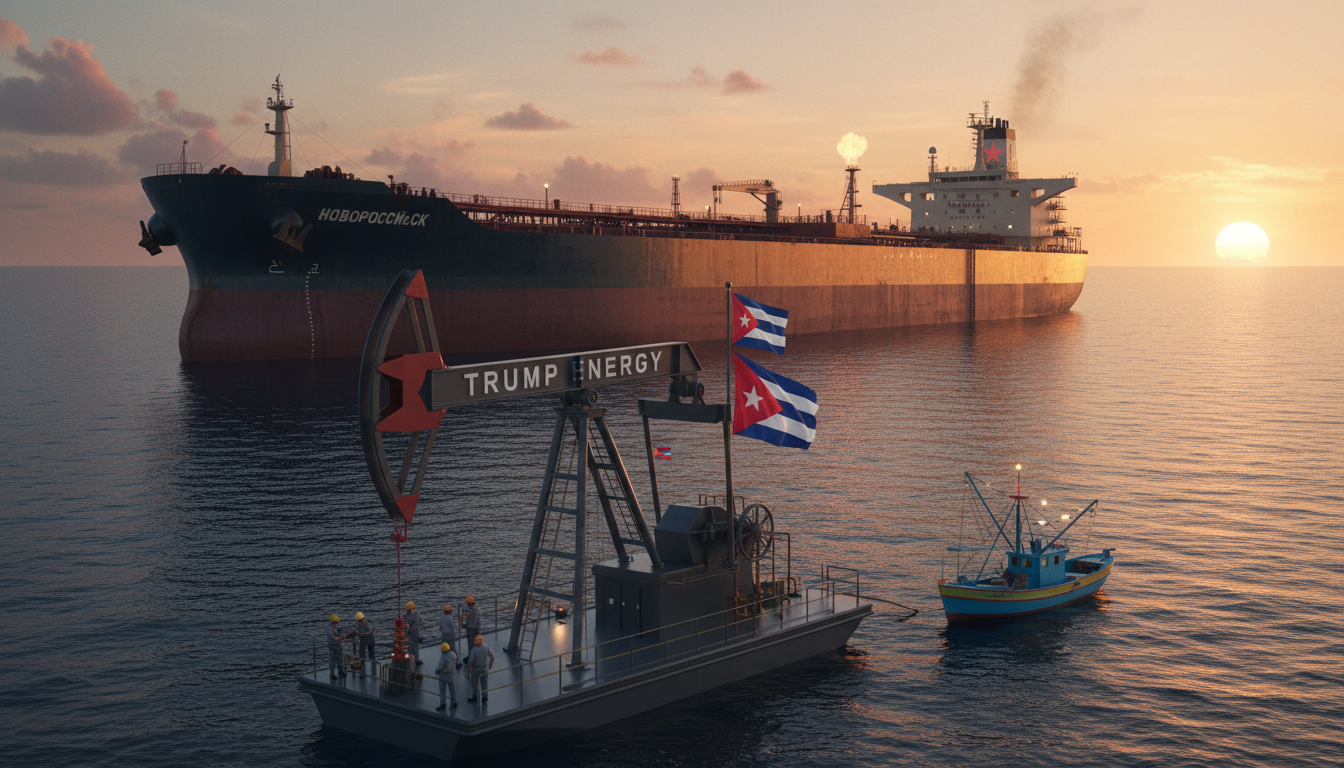
Speaking to reporters, Trump conveyed a surprising message: “If a country wants to send some oil into Cuba right now, I have no problem with that, whether it’s Russia or not.” This pronouncement comes amidst the journey of the Russian-flagged oil tanker, the Anatoly Kolodkin, reportedly carrying an estimated 730,000 barrels of crude oil towards Cuban shores. The tanker, previously subject to U.S. sanctions, is widely anticipated to reach port this week, offering a critical, albeit temporary, lifeline to the energy-starved island.
The Anatoly Kolodkin: A Symbol of Shifting Energy Dynamics
The journey of the Anatoly Kolodkin highlights the complex interplay of geopolitics and energy supply. For investors tracking global energy flows, this delivery is more than just a single shipment; it represents a potential chink in the armor of U.S. sanctions policy and Russia’s willingness to assert its influence in regions traditionally considered within the U.S. sphere. The 730,000 barrels of crude are a substantial volume for Cuba, but the long-term implications for consistent supply remain uncertain, especially given the island’s chronic energy deficit.
Cuba’s dire energy situation stems largely from the dramatic curtailment of oil shipments from Venezuela, its long-standing primary supplier. Since early January, when the U.S. initiated a concerted push to challenge the leadership of Venezuelan President Nicolás Maduro, Cuba’s access to discounted Venezuelan crude has been severely hampered. This abrupt cessation of supply has plunged the island into an acute energy shortage, leading to widespread power blackouts and significant disruptions to daily life for its population of roughly 10 million.
Cuba’s Deepening Crisis and Humanitarian Concerns
Cuban President Miguel Díaz-Canel recently confirmed the severity of the crisis, stating that the nation had not received any oil shipments for over three months. This prolonged drought of vital fuel has had devastating consequences, with the United Nations warning that Cuban hospitals are struggling to maintain essential services, including emergency and intensive care units. The lack of energy permeates every aspect of society, impacting everything from transportation to food production and residential power, underscored by visuals of Soviet-era vehicles alongside modern infrastructure.
In response to the escalating crisis, Cuba has been actively exploring alternative energy solutions, including a strategic push to dramatically increase its solar power generation capacity. While laudable, such initiatives require significant investment and time, offering little immediate relief for the current fuel shortage. The Cuban government has also reportedly engaged in discussions with the U.S., a sign of the immense pressure the country is under to secure energy resources.
U.S. Sanctions and International Responses
Previously, the Trump administration had adopted a hardline stance, threatening to impose tariffs on any nation supplying crude to Cuba. This aggressive posture successfully deterred several countries, including Mexico, from continuing their oil shipments to the island. However, the Kremlin had largely dismissed these threats, noting the minimal existing trade ties between Washington and Moscow, signaling a potential willingness to challenge U.S. economic coercion in strategic areas.
Trump’s recent comments suggest a more nuanced approach, balancing geopolitical pressure with humanitarian considerations. While reiterating his critique of Cuba’s “bad regime” and “corrupt leadership,” he acknowledged the fundamental need for energy: “I prefer letting it in, whether it’s Russia or anybody else, because the people need heat and cooling and all of the other things that you need.” This shift could be interpreted as a pragmatic concession, recognizing the limits of absolute enforcement when faced with humanitarian implications and the willingness of other major powers to circumvent sanctions.
Investment Outlook: What This Means for Global Energy Markets
For astute investors, this development warrants close monitoring. It raises critical questions about the future efficacy of unilateral sanctions, particularly when aimed at nations with strong alliances with non-U.S. powers. The willingness of Russia to openly defy U.S. pressures and deliver energy to a sanctioned nation could set a precedent for other geopolitical flashpoints, potentially complicating future U.S. foreign policy objectives.
Furthermore, the incident highlights the enduring role of energy as a geopolitical tool. Nations like Russia can leverage their hydrocarbon resources to project power and maintain influence, even in distant regions. While a single tanker shipment to Cuba may not fundamentally alter global oil prices, it underscores the inherent volatility and political risk embedded within the international energy trade. Investors should consider how such geopolitical maneuvering could impact regional supply dynamics, tanker routes, and the broader landscape of energy security. The long-term implications for Cuba’s energy resilience and its ongoing search for stable supply partners will also be a key area to watch, as the island navigates a future less reliant on its traditional Venezuelan lifeline.