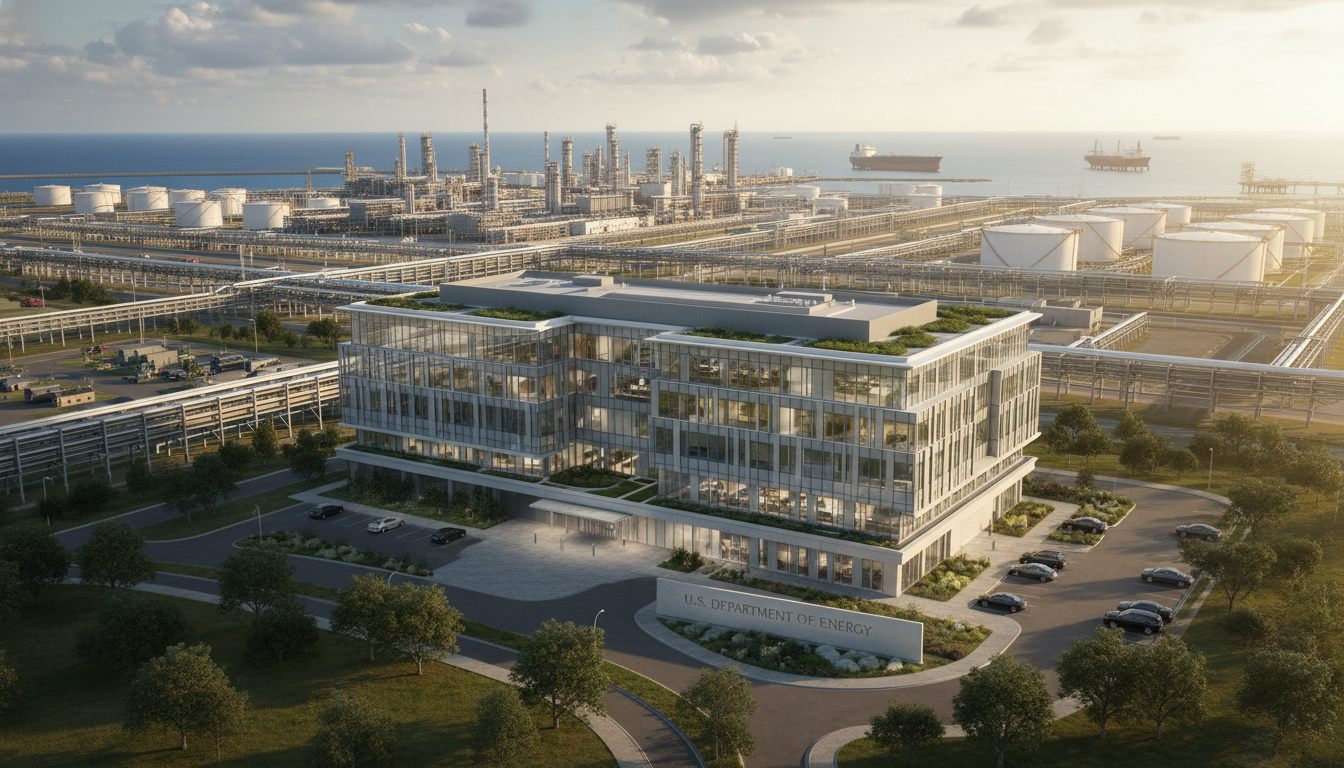
U.S. Department of Energy’s Strategic Headquarters Shift Signals Fiscal Discipline, Bolsters Sector Confidence
Washington D.C. — In a significant move impacting the strategic oversight of America’s energy landscape, the U.S. Department of Energy (DOE) is executing a headquarters relocation, transitioning from its long-standing base in the James V. Forrestal Building to the Lyndon B. Johnson (LBJ) building. This pivotal shift, undertaken in close collaboration with the U.S. General Services Administration (GSA), aims to unlock substantial taxpayer savings while modernizing the operational framework of a department central to the nation’s oil, gas, and broader energy sectors.
For energy investors, this internal restructuring within the federal government sends clear signals regarding fiscal responsibility and operational efficiency. The relocation to the LBJ building is projected to deliver an impressive savings exceeding $350 million by sidestepping critical deferred maintenance and modernization expenses at the Forrestal facility. This financial prudence aligns directly with the administration’s overarching directive to eliminate waste and foster greater efficiency across federal agencies, a principle that resonates positively with market participants seeking stable and predictable government interaction in the energy domain.
Strategic Relocation Underscores Operational Efficiency and Modern Mandate
The decision to consolidate operations within the LBJ building marks a strategic upgrade for the DOE. Currently housing the U.S. Department of Education, the LBJ facility has undergone comprehensive modernization, now boasting a Class A classification with minimal outstanding maintenance requirements. This state-of-the-art infrastructure is critical for a department tasked with navigating the complexities of energy policy, research, and development—including critical initiatives in oil and gas exploration, production, and sustainable energy transitions. A modern, efficient workspace facilitates collaboration and innovation, essential for supporting the evolving needs of the U.S. energy industry and maintaining America’s competitive edge.
Continuity of operations and expertise remains paramount during such transitions. The DOE has meticulously planned for the reassignment of all Forrestal-based staff. Personnel will be strategically integrated into the new LBJ headquarters, the DOE Germantown Campus, the Portals facility, or 950 L’Enfant. This careful distribution ensures that the vital work of the department—from regulatory oversight to strategic energy reserve management—continues uninterrupted, offering stability to an energy market sensitive to policy shifts and administrative effectiveness.
Leadership Voices Emphasize Prudence and Mission Delivery
Energy Secretary Chris Wright articulated the financial and strategic imperative behind the move, stating, “Relocating to the LBJ building will deliver significant taxpayer savings and will ensure the Energy Department continues to deliver on its mission.” This statement directly addresses the investor community’s interest in efficient governance, suggesting that resources freed from infrastructure spending can be better deployed towards the core mission of energy security and technological advancement, areas of direct relevance to the profitability and sustainability of oil and gas enterprises.
GSA Administrator Edward C. Forst underscored the collaborative effort, remarking on the partnership with both the Departments of Education and Energy. Forst emphasized the goal of aligning agency missions with optimal operational environments, stating, “This is the government working smarter for the American people.” He specifically acknowledged Secretary Wright’s “positive energy and collaboration” in executing a presidential directive aimed at fortifying the government’s real estate portfolio. Such inter-agency cooperation in streamlining operations can be interpreted by investors as a positive indicator of a unified and proactive approach to federal administration, potentially leading to more consistent and predictable regulatory frameworks for the energy sector.
Broader Administrative Strategy and Long-Term Energy Implications
This headquarters relocation is not an isolated event but rather a key component of a much broader administrative strategy. The current administration has consistently championed initiatives to streamline the federal government’s real estate footprint, curtail wasteful expenditures, and provide high-performing government workforces with facilities that meet contemporary standards for efficiency and accountability. For the oil and gas industry, a more agile and fiscally responsible federal apparatus could translate into several long-term benefits.
An efficiently run Department of Energy, operating from a modern and cost-effective facility, is better positioned to execute its mandate, which includes critical functions like overseeing domestic energy production, promoting energy security, and funding breakthrough research in areas such as carbon capture, enhanced oil recovery, and hydrogen technologies. These initiatives directly impact the operational landscape and investment opportunities within the oil and gas sector. Investors can find assurance in a government that prioritizes resource optimization, as it often correlates with a more stable and predictable regulatory environment, vital for long-term capital deployment in energy projects.
Ultimately, the DOE’s strategic relocation from the Forrestal Building to the modernized LBJ facility represents more than just a change of address. It symbolizes a commitment to operational excellence, fiscal responsibility, and a forward-looking approach to managing the nation’s energy future. For stakeholders across the oil and gas value chain, this administrative pivot signals a positive trajectory towards a more efficient and effective federal partner, fostering greater confidence in the long-term prospects of U.S. energy investments.


