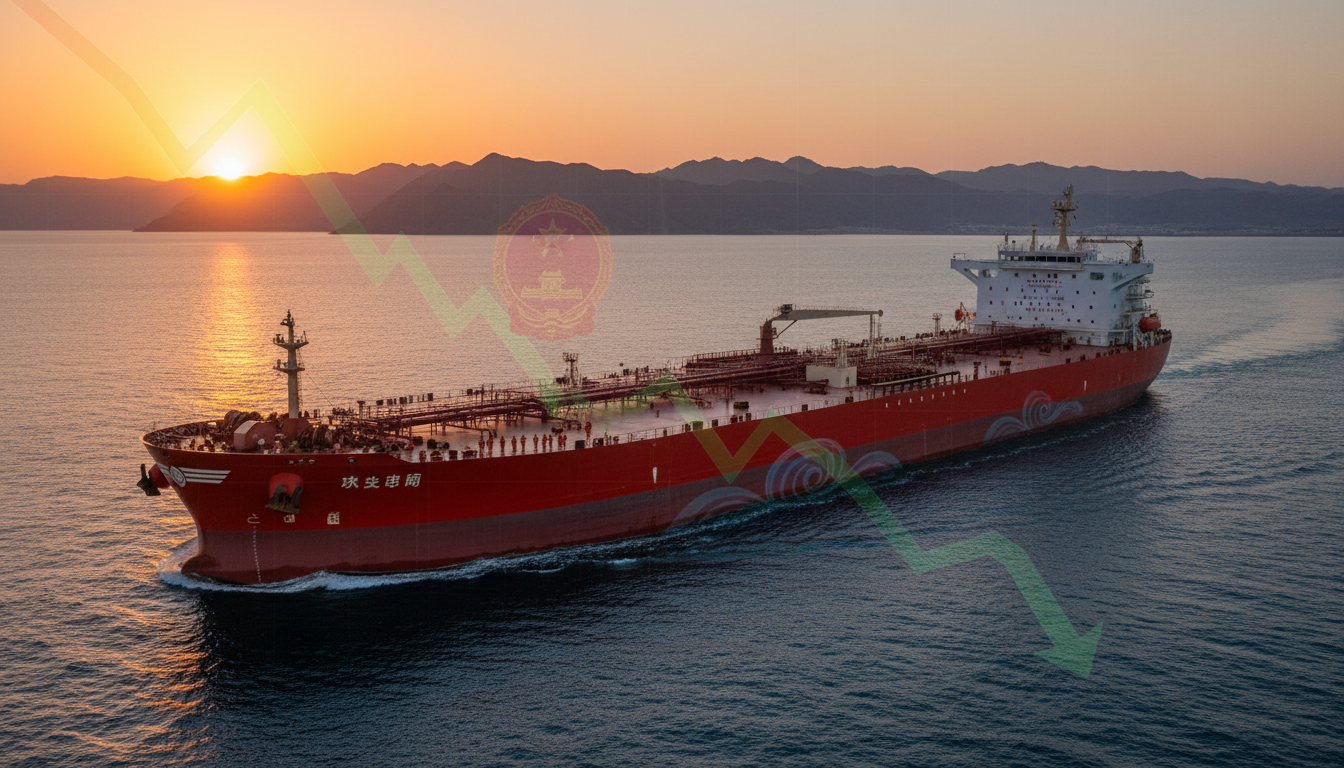
Strait of Hormuz Reopens: COSCO’s Bold Move Amidst Shifting Sands for Global Oil Markets
In a pivotal development for global energy markets, COSCO Shipping Lines, a titan in China’s maritime logistics sector, has officially reinstated booking services for container shipments originating from the Far East destined for key Middle Eastern ports. This critical resumption of service, after a period of significant disruption, covers Saudi Arabia, the United Arab Emirates, Bahrain, Qatar, Kuwait, and Iraq. The move arrives amidst a complex backdrop of reported ceasefire discussions between the United States and Iran, even as Tehran publicly dismisses such claims, asserting the U.S. is merely “negotiating with itself.” For investors tracking the volatile geopolitical landscape of the Middle East, this signals a potential, albeit fragile, pathway towards de-escalation in a region vital to the world’s oil and gas supply.
The strategic Strait of Hormuz, a choke point for roughly a fifth of global oil consumption, has been at the epicenter of recent tensions. COSCO’s decision follows a declaration to the International Maritime Organization (IMO) that “non-hostile vessels” from nations not involved in or supporting aggression against Iran would be granted safe passage. This declaration is a significant confidence booster, particularly given that all six nations now serviced by COSCO have previously been targets of Iranian missile and drone strikes aimed at their critical energy infrastructure and strategic facilities. The financial and operational implications of such attacks have consistently sent tremors through oil markets, driving up crude prices and shipping insurance costs.
Navigating Uncertainty: The Return to Gulf Waters and a Precarious Peace
Just three weeks prior, the situation was starkly different. COSCO had abruptly halted all new bookings and issued directives for vessels already in the Persian Gulf to seek “safe waters” as Iran effectively moved to restrict access through the Strait of Hormuz for much of the world’s maritime traffic. This sudden cessation underscored the extreme vulnerability of global supply chains to regional instability. The current reversal by COSCO reflects a burgeoning, if cautious, optimism surrounding ongoing ceasefire talks and reports of a comprehensive 15-point peace plan purportedly dispatched to Tehran by the U.S. administration. Investors must, however, remain acutely aware of the inherent fragility; COSCO itself has issued a stern caveat, cautioning that all booking arrangements and actual carriage remain subject to immediate change without notice, a testament to the Middle East’s persistently volatile security environment.
Iran’s “Transit Fee”: A New Tax on Global Energy Trade
Adding another layer of complexity, prior to this shipping resumption, reports had emerged detailing Iran’s controversial imposition of a $2 million “transit fee” on select oil tankers and commercial vessels traversing the Strait of Hormuz. This unilateral charge effectively transformed the critical international waterway into a private, pay-to-pass toll zone, distinct from established fees like those of the Suez Canal. Iranian officials have attempted to justify these levies as a “cost of war” or a necessary security tax, a move widely interpreted by maritime stakeholders and analysts as operating a de facto protection racket for passage through one of the world’s most vital maritime arteries. This development carries profound financial implications for the global energy sector.
The immediate consequence for oil and gas companies, particularly those involved in maritime logistics, has been a dramatic escalation in war-risk insurance premiums. A Very Large Crude Carrier (VLCC), for instance, now faces the prospect of incurring an additional $3.6 million to $6 million in insurance costs on top of the $2 million transit toll. This combined burden, potentially totaling up to $8 million per voyage for a single VLCC, translates directly into significantly higher global energy costs. Such surcharges inevitably feed into the price of crude oil, refined products, and ultimately, consumer prices worldwide. For investors, understanding these rising operational expenditures is crucial for accurately assessing the profitability and risk profiles of tanker companies, refiners, and integrated oil majors operating within or sourcing from the Middle East.
Beneath the Surface: Persistent Military Buildup and Investment Risks
Despite the optimistic signals from COSCO and the purported ceasefire talks, the underlying geopolitical tensions remain palpable, casting a long shadow over the durability of any truce. The United States continues a substantial military buildup in the Middle East, even as President Donald Trump publicly speaks of ongoing peace negotiations with Iran. Approximately 8,000 U.S. military personnel are currently being deployed to the region, with the total U.S. troop levels within the Central Command area projected to reach around 50,000 once these reinforcements are fully integrated. This significant military posture serves as a stark reminder of the potential for rapid escalation, irrespective of diplomatic overtures.
For savvy oil and gas investors, this dual narrative—diplomatic efforts alongside a military reinforcement—underscores the inherent unpredictability of the Middle Eastern energy landscape. While the reopening of the Strait of Hormuz to Chinese shipping brings a measure of relief and suggests reduced immediate supply chain risks, the long-term outlook remains clouded by the potential for renewed confrontation. Investment strategies in this environment must factor in not only the cost of Iranian “transit fees” and elevated insurance premiums but also the lingering threat of disruptions to crude oil flows, which can trigger sharp price spikes and impact global economic stability. Staying informed on these intricate geopolitical maneuvers is paramount for those looking to capitalize on, or hedge against, the volatility inherent in the global oil and gas markets.


