Geopolitical Crosscurrents: Is the Petrodollar’s Era Reaching Its End?
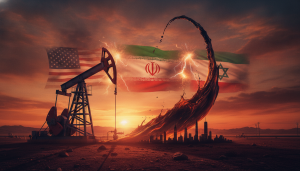
A prominent strategist from Deutsche Bank has issued a stark warning to investors, suggesting that escalating geopolitical tensions, particularly those emanating from the ongoing Iran conflict, could mark a profound turning point for the long-standing supremacy of the U.S. petrodollar. This assessment posits that while numerous underlying pressures on the dollar’s energy dominance were already in play, the fallout from the current hostilities threatens to accelerate a fundamental shift in how global energy transactions are settled. Such a transformation could usher in an era where alternative currencies, most notably the “petroyuan,” play an increasingly significant role.
For over five decades, the U.S. dollar has enjoyed an unparalleled position as the world’s reserve currency, a status intrinsically tied to the global oil trade. However, the intricate interplay of geopolitical instability, evolving security paradigms in the Middle East, and the accelerating global energy transition now presents formidable challenges to this entrenched financial system. Investors tracking global macroeconomic trends and energy markets must now keenly assess these shifting sands and their potential ramifications for capital flows and currency valuations.
The Foundation of Dollar Hegemony: The 1974 Pact
The bedrock of the petrodollar system traces its origins to a crucial, albeit often discreet, understanding forged in 1974 between the United States and Saudi Arabia. Under this landmark arrangement, Riyadh committed to pricing its vast crude oil exports exclusively in U.S. dollars. Crucially, the kingdom also pledged to reinvest its substantial accumulated oil surpluses into U.S. Treasury bonds. In exchange, Washington extended vital security assurances and robust military protection to the Gulf monarchy, cementing a powerful alliance.
This pact not only guaranteed a stable and continuous demand for the U.S. dollar on international markets but also provided a consistent stream of capital flowing into the U.S. financial system. Consequently, the agreement solidified the greenback’s indispensable position as the primary currency for international trade and finance. For decades, the vast majority of global oil production and transactions flowed through this dollar-denominated pipeline, cementing its critical role across world markets and underpinning the dollar’s global reserve status.
Cracks Emerge in the Security-for-Oil Arrangement
Recent events, particularly the heightened instability across the Middle East, have severely tested the resilience and viability of this decades-old security-for-oil-pricing compact. Gulf economies have increasingly faced direct threats, including sophisticated attacks on vital oil infrastructure, critical energy fields, and even U.S. military installations within the region. This escalating pattern of instability and vulnerability prompts a fundamental re-evaluation of the efficacy and scope of the U.S. security umbrella by key regional players.
Deutsche Bank’s analysis, spearheaded by FX strategist Mallika Sachdeva, highlights these mounting pressures as a potential catalyst for Gulf states to reconsider their substantial U.S. dollar savings. A strategic diversification of their immense sovereign wealth investments away from dollar-denominated assets could have significant implications. Such a move by major oil-producing nations would not only diminish demand for U.S. Treasuries but could also exert downward pressure on the dollar’s value and its overall global financial influence, prompting a rethink for fixed income investors worldwide.
The Green Shift: A Long-Term Headwind for USD Reserves
Beyond the immediate geopolitical flashpoints, a more profound and structural shift poses a long-term threat to the petrodollar’s dominance: the accelerating global investment in renewable energy. As nations worldwide intensify their efforts to achieve greater energy independence and reduce their reliance on fossil fuels, the future demand for traditional oil and gas supplies is poised for a gradual, yet inexorable, decline. This fundamental transition is not merely an environmental imperative but an economic one, reshaping future energy markets.
Sachdeva points out that a world becoming increasingly self-sufficient in its energy needs and defense capabilities would inherently require fewer U.S. dollar reserves for its international transactions. This progressive decoupling from fossil fuels signifies a fundamental reordering of global trade patterns and currency requirements, steadily eroding one of the core pillars supporting the dollar’s reserve status. Investors must closely monitor the pace and scale of this energy transformation, as its long-term implications for currency markets, commodity pricing, and capital allocation strategies are undeniably significant.
The Petroyuan’s Ascendance: Speculation and Strategy
Amidst these evolving geopolitical and energy dynamics, compelling reports have emerged concerning Iran’s negotiations with various nations. These discussions center on accepting yuan for oil payments in exchange for secure passage through the strategically critical Strait of Hormuz. While these reports remain largely speculative at present, their potential implications for the dollar’s entrenched role as the world’s energy currency are immense and cannot be overlooked by discerning investors.
The Strait of Hormuz serves as a vital choke point for a significant portion of the world’s seaborne oil trade. Should such an arrangement materialize, even on a limited scale, it would represent a tangible and symbolic step towards directly challenging the dollar’s long-held monopoly in crude transactions. Deutsche Bank underscores the profound strategic importance of the Middle East to the dollar’s global reserve currency status, stressing that any developments signaling a shift in payment mechanisms, however nascent, demand close scrutiny from market participants.
Navigating the Perfect Storm for Investors
The confluence of persistent geopolitical tensions, the questioning of historical security alliances, and the inexorable global march towards a greener energy future creates what Deutsche Bank’s strategist aptly describes as a “perfect storm” for the petrodollar. For sophisticated oil and gas investors, this complex scenario demands careful and strategic consideration. A potential decline in petrodollar dominance could usher in increased volatility in currency markets, impact commodity pricing mechanisms, and potentially alter the global flow of capital in unpredictable ways.
Companies heavily reliant on dollar-denominated oil sales or those with significant exposure to Gulf state investments could face new risks and opportunities as these macroeconomic forces play out. Monitoring these fundamental shifts in the global financial architecture will be absolutely crucial for navigating the evolving landscape of energy finance and international trade. The era of unchallenged petrodollar supremacy may indeed be entering its twilight, signaling the advent of a more multipolar currency environment for the global energy trade and beyond.