Energy markets have once again demonstrated their acute sensitivity to geopolitical shifts, with crude benchmarks experiencing a notable dip following unconfirmed signals of potential U.S.-Iran dialogue. This sudden market correction underscores the fragile equilibrium of global oil supply, where even the hint of diplomatic de-escalation can rapidly unwind a significant portion of the geopolitical risk premium baked into prices. For investors, this environment demands not only vigilance but also a nuanced understanding of how political whispers can translate into tangible market movements, even when official confirmation remains elusive.
The Geopolitical Whiplash: Unpacking the Iran Dialogue Rumors
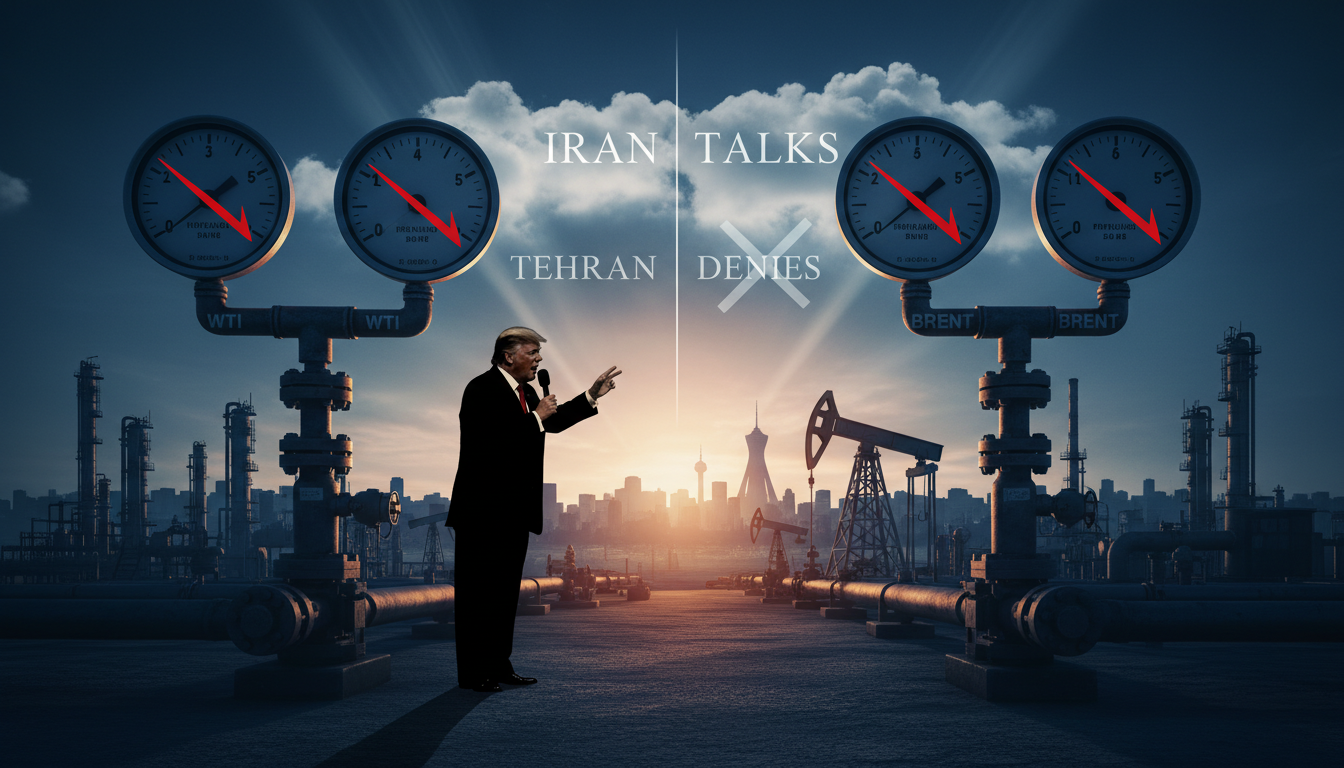
The immediate catalyst for the recent downturn was an unexpected declaration from U.S. President Donald Trump, who suggested that Washington and Tehran were “in negotiations right now” and that Iran was “keen to reach a peace agreement.” This statement, made from the Oval Office, instantly rattled the market. Despite a swift denial from the Islamic Republic, which refuted any direct talks with the U.S., the mere prospect of dialogue was enough to trigger a significant re-evaluation of risk. The market had been pricing in a substantial premium due to heightened tensions, including threats of strikes on Iranian energy infrastructure. Trump’s subsequent claim that his decision to retract these threats was “based on the fact we’re negotiating” further fueled speculative trading, implying a substantive engagement that market participants eagerly interpreted as a positive step towards stability. However, the lack of confirmation from Tehran injected a layer of skepticism, highlighting the inherently fragile nature of such diplomatic whispers and creating a highly volatile trading environment.
Further compounding the speculative atmosphere, reports emerged detailing a purported 15-point proposal conveyed by the U.S. to Iran via Pakistani channels, aimed at de-escalating the ongoing conflict. Citing unnamed officials, these reports acknowledged the ambiguity surrounding the proposal’s reception within Iranian authorities and raised questions about potential support from key regional players. This complex web of diplomatic maneuvers and unconfirmed disclosures illustrates the challenges investors face in discerning actionable intelligence from rumor. The swift market reaction proves that in today’s interconnected global economy, even contested narratives of de-escalation can trigger significant price adjustments, rewarding agility and punishing rigid positions.
Current Market Snapshot: Prices Reflect Lingering Uncertainty
The impact of these geopolitical developments on crude benchmarks has been clear and immediate. As of today, Brent Crude trades at $92.46 per barrel, down 0.84% within the day’s range of $91.39 to $94.21. This contrasts sharply with its previous settlement, indicating a continued downward pressure even after the initial shock. Similarly, U.S. West Texas Intermediate (WTI) Crude is currently priced at $88.72 per barrel, experiencing a 1.06% decline within its daily range of $87.64 to $90.71. These figures demonstrate that the market continues to price in the complex and often contradictory signals emanating from the diplomatic arena, with investors reacting to both the potential for easing tensions and the persistent uncertainty surrounding official confirmation.
Beyond the immediate daily fluctuations, a broader trend of price softening has been observed. Over the past 14 days, Brent crude has seen a decline from $101.16 on April 1st to $94.09 yesterday, representing a $7.07 drop or approximately 7%. This sustained movement suggests that while the recent Iran talk signals exacerbated the dip, the market was already seeking reasons to ease some of the higher-end pricing. Investors are keenly aware that geopolitical risk premiums, once built into prices, can erode quickly if the underlying threat perception changes, even marginally. The current price levels reflect a dynamic equilibrium, where the fundamental supply picture is weighed against the ever-present specter of geopolitical instability, demanding continuous re-evaluation of positions.
Navigating Investor Concerns: Supply, Demand, and the Path Ahead
The volatility spurred by these geopolitical developments directly addresses some of the most pressing questions we see from investors this week. Readers are frequently asking whether WTI is “going up or down” and what the “price of oil per barrel will be by end of 2026.” These questions underscore a pervasive uncertainty about market direction, a sentiment that is amplified by the kind of diplomatic ambiguity recently observed. While the immediate focus is on the geopolitical risk premium, astute investors recognize that the underlying supply and demand fundamentals will ultimately dictate longer-term price trends. The co-head of global commodities research at Goldman Sachs recently highlighted the “unprecedented level of uncertainty” and the ongoing disruption to oil supply as key factors, a perspective that remains highly relevant.
For investors seeking clarity amidst the noise, understanding the interplay between diplomatic progress (or lack thereof) and physical market realities is crucial. While a confirmed de-escalation with Iran could theoretically unlock additional supply or reduce the risk of disruptions, thereby impacting price forecasts, the current situation remains speculative. The market’s eagerness to price in potential relief, even on unconfirmed news, indicates how heavily geopolitical risk has been weighing on sentiment. Therefore, investors should remain cautious, recognizing that while the prospect of dialogue offers a potential downside to prices, the lack of official agreement means the geopolitical risk premium could just as swiftly re-assert itself, keeping oil and gas investing a high-stakes endeavor.
Forward View: Key Data Points and Upcoming Catalysts
Looking ahead, while geopolitical narratives will continue to capture headlines, a series of critical data releases and events are poised to provide fundamental insights for oil and gas investors. These upcoming calendar events will offer tangible information regarding supply, demand, and inventory levels, which are essential for grounding investment decisions amidst diplomatic uncertainty. Investors should mark their calendars for the EIA Weekly Petroleum Status Report on April 22nd, April 29th, and May 6th. These reports are pivotal for understanding U.S. crude oil and product inventories, refining activity, and demand indicators. Significant inventory builds or draws, particularly against the backdrop of geopolitical headlines, can trigger substantial market reactions.
Furthermore, the Baker Hughes Rig Count, scheduled for April 24th and May 1st, will provide crucial insights into North American drilling activity, offering a forward-looking indicator of potential future production. A consistent increase or decrease in active rigs can signal shifts in supply expectations. Preceding the EIA reports, the API Weekly Crude Inventory data on April 28th and May 5th often serves as an early indicator, sometimes moving markets even before the official EIA release. Finally, the EIA Short-Term Energy Outlook (STEO) on May 2nd will offer a more comprehensive forecast for global and U.S. energy markets, including production, consumption, and prices, providing a vital long-term perspective. These fundamental data points, while sometimes overshadowed by geopolitical drama, will be essential for investors to assess the true health and direction of the oil market, irrespective of the ongoing diplomatic whispers.