The Shifting Sands of Iran Sanctions: A Volatile Outlook for Oil Investors
Global energy markets are once again grappling with the intricate dance of geopolitics between the United States and Iran, a dynamic that profoundly influences crude oil prices and investor sentiment. Recent statements from President Trump hinting at ongoing negotiations with Tehran have introduced a layer of cautious optimism, yet this narrative is immediately complicated by Iran’s outright denial of any direct talks and the sustained presence of U.S. military operations in the region. For oil and gas investors, this confluence of conflicting signals creates an environment of heightened volatility, demanding meticulous scrutiny of every political utterance and strategic maneuver. The potential for a re-evaluation of Iran’s sanctions carries significant implications for global oil supply, the geopolitical risk premium, and the long-term stability of energy asset valuations, making this a critical juncture for strategic positioning.
Current Market Pulse: Navigating Uncertainty with Real-Time Data
The inherent tension between diplomatic overtures and geopolitical realities is clearly reflected in today’s market movements. As of this morning, Brent Crude trades at $92.37 per barrel, marking a 0.93% dip within a daily range of $91.39 to $94.21. Similarly, WTI Crude stands at $88.75, down 1.03%, with its daily fluctuation between $87.64 and $90.71. Gasoline prices also reflect this slight softening, currently at $3.1, a 0.96% decrease. This daily downtick follows a more pronounced trend over the past two weeks, where Brent has seen a notable decline from $101.16 on April 1st to $94.09 on April 21st, representing a significant 7% decrease. This broader retreat in prices prior to today’s slight dip suggests that the market has, to some extent, already begun to price in a reduction of the geopolitical risk premium, buoyed by the *prospect* of de-escalation. However, the immediate daily volatility underscores the fragility of this sentiment, highlighting how quickly prices can react to the latest headline or a shift in the perceived likelihood of a diplomatic breakthrough versus continued stalemate. Investors are keenly watching whether this downward pressure persists or if renewed regional tensions can quickly reverse the trend.
Diplomacy, Denial, and the Iranian Supply Conundrum
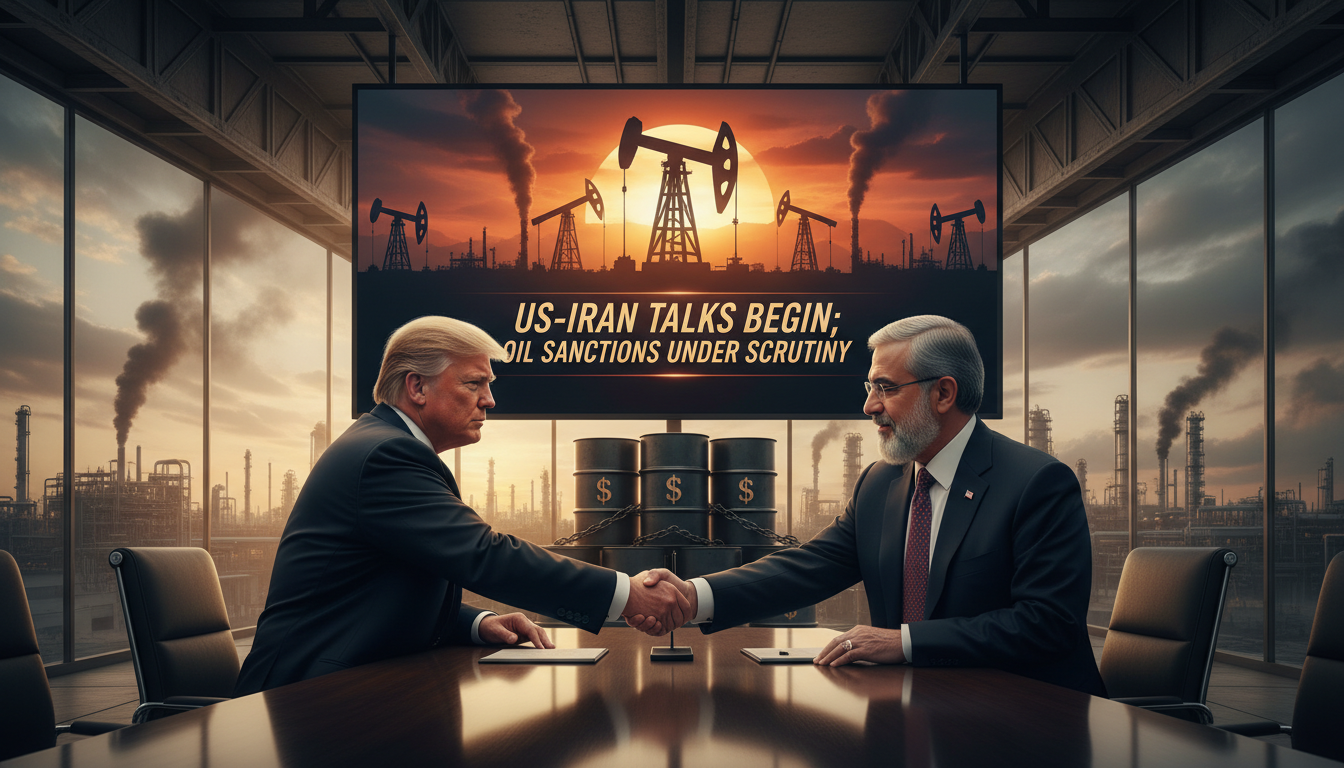
President Trump’s assertion on March 24, 2026, regarding direct negotiations with Tehran, and his linking of these talks to his decision to retract a previous threat against Iranian energy infrastructure, sent a palpable ripple through global markets. His statement that the Iranian side was “talking sense” was interpreted by many as a clear signal towards de-escalation, typically leading to a reduction in the geopolitical risk premium embedded in crude prices. The mere possibility of a diplomatic channel can soothe investor nerves, prompting a short-term softening of benchmarks like Brent and WTI. Such a development, if materialized into concrete agreements, could pave the way for a re-evaluation of international sanctions against Iran. The return of substantial Iranian crude oil production to global markets would represent a significant supply-side shock, potentially altering the global supply-demand balance and necessitating a fundamental re-assessment of long-term price forecasts for oil and gas assets. However, Tehran’s swift and public denial of any direct discussions injects a critical layer of uncertainty. This stark messaging disparity forces investors to weigh the optimistic outlook of a peaceful resolution against the tangible reality of ongoing regional instability and the potential for a miscalculation. The U.S. administration’s naming of high-profile officials like Vice President JD Vance, Secretary of State Marco Rubio, special envoy Steve Witkoff, and advisor Jared Kushner as being involved in these alleged talks signals Washington’s seriousness, yet without Iranian confirmation, the market remains in a state of suspended animation.
Investor Questions and Forward-Looking Catalysts
Our proprietary reader intent data reveals a consistent theme among investors this week: a fervent desire for clarity on oil price direction and long-term forecasts. Questions like “Is WTI going up or down?” and “What do you predict the price of oil per barrel will be by the end of 2026?” underscore the deep uncertainty pervading the market. Given the conflicting signals from the U.S. and Iran, providing a definitive short-term or year-end price target is exceedingly difficult. The trajectory of crude prices hinges precariously on whether genuine diplomatic progress emerges, leading to sanctions relief, or if the current state of geopolitical ambiguity persists, or even escalates. In this volatile environment, investors must closely monitor key upcoming energy events for additional supply-demand signals. The EIA Weekly Petroleum Status Reports, scheduled for April 22nd, April 29th, and May 6th, will provide crucial insights into U.S. crude inventories, refinery activity, and demand indicators. Similarly, the Baker Hughes Rig Count on April 24th and May 1st will offer a snapshot of drilling activity, while API Weekly Crude Inventory data on April 28th and May 5th will serve as leading indicators. Perhaps most critically, the EIA Short-Term Energy Outlook on May 2nd will offer updated projections for global supply and demand, which will be interpreted through the lens of the evolving Iran situation. These reports, while not directly addressing geopolitics, will inform the fundamental supply picture, providing critical context for assessing the potential impact of any future Iranian supply.
Strategic Implications for Oil and Gas Portfolios
For investors in the oil and gas sector, the current geopolitical tightrope walk demands a nuanced and adaptable investment strategy. The possibility of Iranian crude returning to the market presents a double-edged sword: while it could alleviate inflationary pressures in the broader economy, it also threatens to depress crude prices, impacting the profitability of exploration and production companies. Conversely, a breakdown in talks or an escalation of regional tensions would likely see the geopolitical risk premium surge, pushing oil prices higher and potentially benefiting producers, albeit at the cost of global economic stability. Long-term investors must consider the full spectrum of outcomes. Companies with robust balance sheets, diversified asset portfolios, and efficient production capabilities are best positioned to weather potential price swings. Furthermore, strategic hedging against extreme price movements, whether through futures contracts or options, could be a prudent consideration in such an unpredictable climate. The current environment underscores the importance of fundamental analysis, not just of company financials, but also of the broader geopolitical landscape and its tangible impact on global energy flows and market sentiment. As we move deeper into 2026, the resolution, or continued ambiguity, of the Iran sanctions issue will undoubtedly remain a dominant factor shaping the investment narrative in oil and gas.