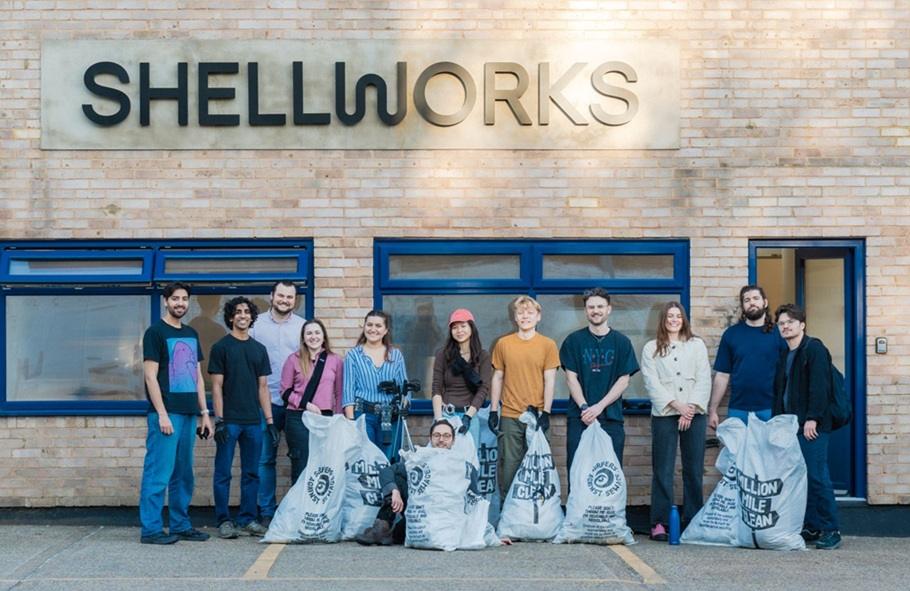
The landscape of materials science is rapidly evolving, bringing both innovation and potential disruption to established industries. A recent $15 million Series A funding round for biotech startup Shellworks underscores the growing investor appetite for sustainable alternatives, particularly in the packaging sector. While oil and gas investors typically focus on supply-demand dynamics for crude and refined products, developments like Shellworks’ plant-based plastic, Vivomer, represent a structural challenge to the petrochemical segment, a critical growth driver for future oil demand. This capital injection, led by French venture capital firm Alter Equity, aims to scale a technology that could gradually erode the dominance of fossil fuel-derived plastics, prompting a closer look at the long-term implications for the energy sector.
The Rising Tide of Bio-Alternatives and Their Investment Momentum
Shellworks, a UK-based company founded in 2019 by Insiya Jafferjee and Amir Afshar, is at the forefront of developing compostable packaging solutions. Their flagship material, Vivomer, is a polymer derived from waste biomass, fermented by microbes to create a material that behaves like traditional plastic but is microplastic-free and home-compostable. This innovative approach addresses a significant environmental concern and offers a compelling value proposition to brands seeking sustainable alternatives. The $15 million in new capital, with participation from NFDG, Press Reset Ventures, JamJar Investments, Kibo Invest, and existing investors, is earmarked for critical expansion into the U.S. market and forging partnerships with more consumer brands.
Crucially, Shellworks claims Vivomer is already cost-competitive with alternatives like aluminum, glass, and paper, even at a fraction of plastic’s current production scale. This claim, echoed by CEO Insiya Jafferjee, is a potent signal to the market. Current applications with major retailers such as Wild at Tesco and Target, and Phil’s at Whole Foods, demonstrate commercial viability and consumer acceptance. This funding round is not just about a single startup; it reflects a broader trend of significant capital flowing into bio-materials, signaling a long-term shift that could reshape demand for conventional petrochemical feedstocks.
Market Realities: Oil Prices and the Petrochemical Crossroads
While innovative bio-materials gain traction, the immediate economic environment for traditional plastics remains tied to crude oil prices. As of today, Brent Crude trades at $92.89 per barrel, reflecting a -0.38% dip, within a daily range of $92.57 to $94.21. Similarly, WTI Crude stands at $89.51 per barrel, down -0.18%, trading between $88.76 and $90.71. These figures follow a notable 14-day trend where Brent has declined by $7.07, or -7%, from $101.16 on April 1st to $94.09 on April 21st. Gasoline prices also show a slight decrease, currently at $3.11 per gallon, down -0.64%.
These fluctuations in crude prices directly impact the production costs of virgin plastics, derived primarily from oil and natural gas liquids. While a recent dip in crude might offer a temporary breather for petrochemical producers, the strategic threat from alternatives like Vivomer remains undiminished. The long-term trajectory of environmental regulations, corporate sustainability goals, and consumer preference continues to favor non-fossil-based solutions. Even if oil prices remain volatile or trend lower in the short term, the investment in scalable, cost-competitive bio-materials suggests a structural shift in demand that oil and gas companies cannot afford to ignore.
Investor Sentiment and the Long-Term Demand Outlook
Investors frequently engage with our platform, often asking about short-term market direction, such as “is WTI going up or down” or “what do you predict the price of oil per barrel will be by end of 2026.” While these questions highlight a focus on immediate price movements and annual forecasts, the emergence of technologies like Vivomer necessitates a broader, more strategic perspective. The petrochemical sector is widely considered a key pillar for future oil demand growth, especially as electrification impacts transportation fuels. Any significant dent in this segment, driven by sustainable alternatives, poses a direct threat to that growth narrative.
The scale challenge for bio-materials has historically been a barrier, but Shellworks’ funding and its claim of cost-competitiveness “at a fraction of plastic’s production scale” signal a turning point. As these companies expand, the cumulative effect on petrochemical demand could become increasingly material. For oil and gas investors, understanding this evolving competitive landscape is crucial. It’s not just about managing supply; it’s about anticipating demand destruction from innovative, environmentally preferable solutions. The long-term viability of petrochemical investments, particularly in single-use plastics, must now factor in the accelerating pace of bio-material adoption.
Navigating the Future: Upcoming Catalysts and Strategic Imperatives
For investors tracking the interplay between traditional energy markets and emerging green technologies, key upcoming data releases offer important context. The EIA Weekly Petroleum Status Reports, scheduled for April 22nd, April 29th, and May 6th, will provide crucial insights into crude inventories, refinery activity, and product demand, influencing short-term price dynamics. Similarly, the API Weekly Crude Inventory reports on April 28th and May 5th will offer leading indicators. These reports are vital for understanding the current supply-demand balance for crude oil, which underpins petrochemical feedstock costs.
However, for a deeper dive into the long-term outlook, the EIA Short-Term Energy Outlook, due on May 2nd, will be particularly insightful. This report often provides updated projections for various energy components, including petrochemical demand, and could offer initial indications of how quickly agencies expect alternative materials to penetrate the market. While the Baker Hughes Rig Count (April 24th, May 1st) focuses on future supply, the strategic implications of companies like Shellworks demand a re-evaluation of long-term demand assumptions. Oil and gas majors must increasingly consider diversifying into advanced recycling technologies, bio-based feedstocks, or other circular economy solutions to mitigate the growing threat to their petrochemical portfolio. Ignoring this shift risks ceding significant market share in a critical growth area for the industry.


