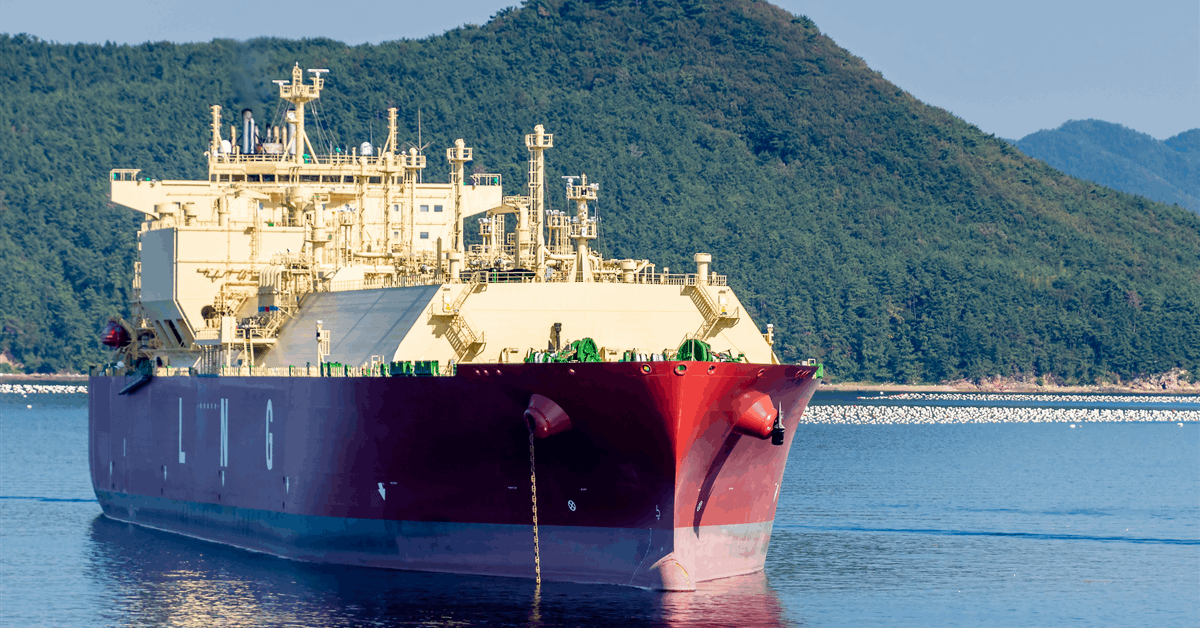
The strategic landscape of global energy markets continues to evolve at a rapid pace, with U.S. liquefied natural gas (LNG) exports playing an increasingly pivotal role. A recent decision by the United States Department of Energy (DOE) has significantly bolstered Cheniere Energy Inc.’s position, granting non-Free Trade Agreement (non-FTA) export authorization for its Mid-Scale Trains 8 and 9 Project at the Corpus Christi LNG terminal in Texas. This critical approval, following an FTA export authorization in July 2023, unlocks access to a wider array of international buyers and solidifies the terminal’s status as a cornerstone of America’s energy export strategy. For investors, this move underscores the long-term growth trajectory of U.S. natural gas and the strategic value of infrastructure connecting abundant domestic supply to global demand.
Cheniere’s Expanding Global Footprint and Capacity Dominance
The newly authorized non-FTA export volume for Trains 8 and 9 totals 3.28 million metric tons per annum (MMtpa), equivalent to 170 billion cubic feet (Bcf) of natural gas per year, or approximately 0.47 Bcf per day. This authorization, which extends until 2050 with a three-year grace period for continued exports of remaining volumes, is a game-changer for Cheniere, enabling it to serve countries without existing free trade agreements with the U.S. The DOE’s announcement confirms that this expansion elevates Corpus Christi LNG’s total authorized export capacity to 4.45 Bcf/d, firmly establishing it as the second-largest LNG export project in the United States. This substantial capacity increase directly reflects the broader U.S. commitment to leveraging its position as the world’s largest natural gas producer and LNG exporter, building on a policy shift that has seen over 18.2 Bcf/d of LNG export authorizations since 2016. For investors, this expansion signals robust, long-term demand for U.S. natural gas, providing a critical hedge against domestic market fluctuations and strengthening Cheniere’s revenue stability through diverse international contracts.
Navigating Market Volatility with Strategic LNG Investments
In a market characterized by persistent volatility, strategic investments in critical energy infrastructure offer a degree of stability. As of today, Brent crude trades at $93.57, up a modest 0.35% for the day, while WTI sits at $90.12, showing a 0.5% gain. However, the broader trend has seen some softening, with Brent declining approximately 7% over the past two weeks, moving from $101.16 on April 1st to $94.09 on April 21st. This recent trajectory naturally prompts questions from our investor community, with many asking about the future direction of crude prices and specific predictions for WTI by the end of 2026. While crude oil markets remain susceptible to geopolitical events and macroeconomic shifts, the expanding LNG export capacity, exemplified by Cheniere’s latest permit, provides a distinct and more predictable demand driver for natural gas. This permit essentially underwrites a significant portion of future U.S. natural gas production, mitigating risks associated with purely domestic demand fluctuations. For investors seeking long-term value in the energy sector, the growth of LNG exports represents a fundamental structural shift, offering an attractive proposition even amidst short-term crude market swings.
Project Momentum and Future Catalysts for Growth
The non-FTA authorization for Mid-Scale Trains 8 and 9 builds on significant progress already underway at Corpus Christi. Cheniere announced a positive Final Investment Decision (FID) for these trains on June 24, 2025, and issued a full notice to proceed to Bechtel Corp., signaling rapid construction. These new trains will rise adjacent to the under-construction Stage 3 Project, which itself is making substantial headway. As of late 2025, approximately 6 MMtpa of Stage 3 capacity was operational. Trains 1-4 of Stage 3 achieved substantial completion in March, August, October, and December 2025, respectively, with Train 5 producing its first LNG in February 2026. Trains 5-7 are on track for substantial completion by the end of 2026. Looking ahead, Cheniere has already filed an application with the Federal Energy Regulatory Commission (FERC) in December 2025 to increase the production capacity of both the Stage 3 Project and the Mid-Scale Trains 8 & 9 Project by an additional 5 MMtpa. This pending FERC decision represents a significant future growth catalyst for Cheniere. Investors should closely monitor upcoming energy events, such as the EIA Weekly Petroleum Status Reports (April 22, April 29, May 6) and the EIA Short-Term Energy Outlook on May 2nd. These reports will provide crucial updates on natural gas supply-demand balances and production forecasts, directly influenced by the increasing export capacity from projects like Cheniere’s. Additionally, Baker Hughes Rig Count reports (April 24, May 1) will offer insights into upstream activity, which will eventually need to align with this growing export demand.
Investment Outlook: Solidifying U.S. LNG Leadership
Cheniere’s latest non-FTA permit is more than just a regulatory approval; it’s a powerful signal to the global energy market and a clear indicator for investors. It underscores the continued ascendancy of U.S. LNG as a critical component of global energy security and transition efforts. By expanding its non-FTA access, Cheniere effectively diversifies its customer base and strengthens its competitive advantage, reducing reliance on any single market or political alignment. This strategic move de-risks future cash flows and provides a robust foundation for long-term earnings growth in a capital-intensive industry. As the U.S. continues to expand its LNG export infrastructure, companies like Cheniere are uniquely positioned to benefit from sustained international demand for natural gas, particularly from energy-hungry Asian markets and European nations seeking to diversify away from traditional sources. The confluence of abundant domestic supply, strategic infrastructure development, and expanding global market access makes Cheniere a compelling long-term investment in the evolving energy landscape.


