The global oil market is once again confronting the specter of significant disruption, as geopolitical tensions involving Iran reach an unprecedented and dangerous phase. For months, many market participants appeared to discount the likelihood of a major oil supply shock, with Brent crude averaging below $70 in real terms earlier this year. However, the current escalation, marked by direct Iranian actions and Washington’s explicit objective of regime change, necessitates a re-evaluation of previous assumptions. This is not merely a transient flare-up; it is a complex, multi-faceted conflict with the potential to fundamentally reshape global energy flows and prices. Investors must move beyond historical precedents and consider the true magnitude of the risks now at play, particularly concerning critical infrastructure and the world’s most vital maritime chokepoint.
The Evolving Risk Premium and Market Disconnect
Despite the intensifying geopolitical backdrop, recent market movements present a complex picture for oil investors. As of today, Brent crude trades at $93.92 per barrel, marking a modest gain of 0.73% within a daily range of $93.52 to $94.21. WTI crude similarly saw an increase, reaching $90.48, up 0.9% for the day. While these figures reflect a market still recognizing elevated prices compared to the $80 real-term average of the past decade, the underlying trend reveals a fascinating dynamic. Our proprietary data indicates that Brent has experienced a substantial retreat over the past two weeks, dropping nearly 20% from $118.35 on March 31st to $94.86 just yesterday, April 20th. This significant downward pressure, even amidst escalating regional instability, suggests a market grappling with competing narratives. While some may interpret this as a cooling of speculative fervor or a belief in the conflict’s containment, it equally poses a question: has the market truly priced in the full spectrum of potential disruption? The current gasoline price holds steady at $3.13, indicating some stability for refined products, but crude volatility remains the dominant concern for upstream investors.
Vulnerable Supply Chains and the Strait of Hormuz Chokepoint
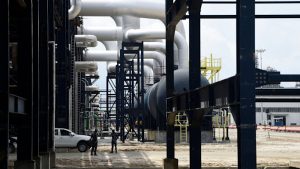
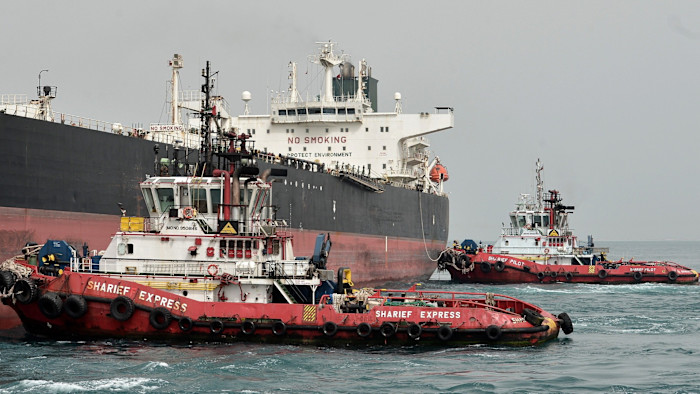
The physical infrastructure supporting global oil supply presents undeniable vulnerabilities in the face of expanded conflict. While individual oil wells are too dispersed to be effective military targets, the concentrated hubs of processing and export are critically exposed. Facilities like Saudi Arabia’s colossal Abqaiq processing center and Ras Tanura export terminal, alongside Iran’s Kharg Island loading terminal, collectively handle millions of barrels per day. Despite robust defenses, these sites represent high-value targets. Moreover, the conventional wisdom that Iran’s crude exports, typically under 2 million barrels per day (b/d) and accounting for less than 2% of global supply, could be easily replaced is increasingly flawed. While OPEC members are estimated to hold more than 3 million b/d of spare capacity, the vast majority of this buffer resides in other Gulf nations. Should the conflict widen, this geographically concentrated spare capacity would itself become vulnerable, effectively diminishing its utility as a global safety net. The most profound risk, however, remains the Strait of Hormuz. This narrow waterway, through which approximately 20% of the world’s oil supply transits, is indispensable for seaborne exports from Iraq, Kuwait, and smaller Gulf producers. While Saudi Arabia and the UAE possess limited pipeline alternatives to bypass the Strait, these cannot compensate for a prolonged interruption to tanker traffic, making the chokepoint a strategic flashpoint with global repercussions for energy security.
Upcoming Catalysts and Investor Outlook
For investors navigating this uncertain landscape, forward-looking analysis tied to upcoming calendar events is paramount. The market is not just reacting to current events but constantly anticipating future shifts, a sentiment clearly reflected in common investor inquiries such as “What do you predict the price of oil per barrel will be by end of 2026?” and the more immediate “is WTI going up or down?” These questions highlight a deep desire for clarity amidst the volatility. We believe several key dates in the coming weeks will offer crucial insights. The OPEC+ Joint Ministerial Monitoring Committee (JMMC) Meeting scheduled for tomorrow, April 21st, will be closely watched. While OPEC stated on Sunday a plan to increase April production by 206,000 barrels a day, the JMMC’s tone and any further commitments will signal the cartel’s strategy in a heightened risk environment. Following this, the EIA Weekly Petroleum Status Reports on April 22nd and April 29th will provide vital data on U.S. crude inventories and demand trends, which could either exacerbate or mitigate price pressures. The Baker Hughes Rig Count on April 24th and May 1st will offer insights into North American supply dynamics. Furthermore, the EIA Short-Term Energy Outlook on May 2nd will be pivotal, offering an updated government projection on supply, demand, and prices through 2026. Each of these events serves as a potential catalyst, providing data points that could either confirm market fears of supply disruption or offer reassurances of stability, thereby directly influencing investor sentiment and the trajectory of oil prices for the remainder of the year.
Beyond Historical Precedents: A New Era of Risk
While some analysts might draw parallels to past conflicts, the current situation demands a recognition that this is a fundamentally different and potentially more dangerous confrontation. The 12-day Israel-Iran conflict in June 2025, which saw Brent prices briefly spike above $80 before quickly receding, offered a false sense of security regarding the market’s resilience to regional tensions. That was a short, contained engagement with limited aims. Today’s conflict is characterized by broader regional engagement, direct strikes on U.S. allies, and a stated objective of regime change by Washington following the killing of Iran’s supreme leader. This elevates the stakes considerably, moving beyond proxy skirmishes to a phase of direct and unpredictable confrontation. Iran’s historical use of mines and fast attack craft in the Strait of Hormuz during the Iran-Iraq War in the 1980s, which prompted international convoying systems, pales in comparison to its modern capabilities, including deployed anti-ship missile batteries and sophisticated swarm tactics. The market’s previous underestimation of major oil market disruptions, with Brent averaging less than $70 in February despite rising tensions, now appears dangerously complacent. Investors must internalize that the current geopolitical climate is less about short-term price fluctuations and more about a sustained re-pricing of systemic risk in the global energy complex.