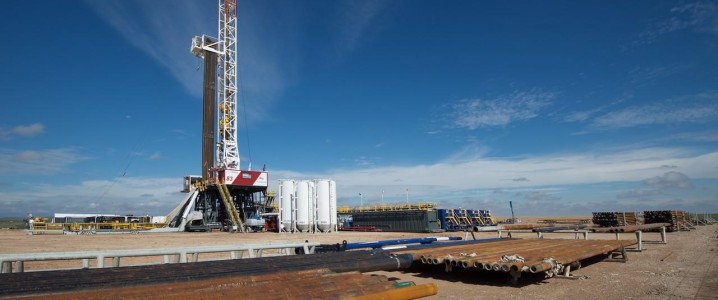
The US oil and gas sector is presenting a nuanced picture for investors, with recent data painting a clear trend of cautious drilling activity despite a robust pricing environment. Our proprietary market insights reveal that while crude benchmarks are trading significantly higher than just a few months ago, the operational response from producers, particularly in the critical US shale plays, remains muted. This disconnect between strong price signals and restrained drilling is creating a unique dynamic in the global supply landscape, demanding careful consideration from those positioned in energy equities.
Stalled Drilling Footprint Signals Production Headwinds
The latest available industry figures from February indicated a striking stagnation in US drilling activity. The total number of active drilling rigs across the United States remained flat at 551, a significant 41 rigs fewer than the same period last year. Diving deeper, the count of active oil rigs held steady at 409, marking a substantial decline of 79 rigs year-over-year. While gas rigs saw an increase to 133, up 34 from the previous year, the overarching narrative is one of a decelerating oil drilling machine.
This cautious approach is particularly evident in key basins. In the Permian, often considered the engine room of US production growth, the rig count saw only a marginal increase of 1 rig, reaching 239. This modest gain, however, pales in comparison to the 65 rigs lost in the basin over the last twelve months. The Eagle Ford remained static at 40 rigs, 8 fewer than a year ago. While weekly US crude oil production did see a modest uptick of 22,000 barrels per day (bpd) in the week ending February 13, reaching 13.735 million bpd, this figure still sits 127,000 bpd below the all-time high. The rise in Primary Vision’s Frac Spread Count, which measures well completion crews, by 8 crews in the same week suggests that producers are focusing on bringing existing drilled-but-uncompleted (DUC) wells online, rather than significantly expanding new drilling initiatives. This strategy allows for short-term production boosts without committing to long-term capital expenditure on new drilling, a hallmark of capital discipline.
The Paradox: High Prices, Muted Drilling Response
The current market environment presents a stark contrast to the drilling data. As of today, Brent crude trades at $93.86 per barrel, showing a robust 3.79% gain on the day, with WTI crude not far behind at $90.63 per barrel, up 3.67%. These are significantly higher price points than seen in the weeks leading up to the rig count data released in February, where Brent was around $71.40 and WTI at $66.15. The question for investors is clear: why aren’t US producers responding more aggressively to these elevated price signals?
Part of the answer lies in market volatility and investor demands. Our proprietary data indicates that Brent crude has experienced a notable swing over the last 14 days, declining from $118.35 on March 31st to $94.86 on April 20th – a nearly 20% drop. While current prices are strong, this recent historical volatility likely reinforces a cautious stance among E&P companies, who are under pressure from shareholders to prioritize free cash flow and returns over aggressive production growth. This capital discipline, coupled with potential supply chain bottlenecks, labor constraints, and inflationary pressures on drilling costs, means that even attractive crude prices may not immediately translate into a surge in rig activity. The implied message is that producers are looking for sustained price strength, not just transient spikes, before committing to substantial new drilling programs.
Navigating Near-Term Catalysts: Upcoming Events and Future Trajectories
The coming weeks are packed with critical events that will further shape the outlook for crude prices and, by extension, US drilling decisions. Tomorrow, April 21st, the OPEC+ Joint Ministerial Monitoring Committee (JMMC) meeting is slated. Any indications regarding production quotas or adherence to current cuts will have an immediate impact on global supply expectations and price stability. Should OPEC+ maintain its disciplined approach, it could provide a supportive floor for crude prices, potentially encouraging more US drilling activity in the medium term, assuming producers overcome their current hesitancy.
Domestically, the EIA Weekly Petroleum Status Reports on April 22nd and April 29th will offer crucial insights into US crude inventories and demand trends, which directly influence WTI pricing. The subsequent Baker Hughes Rig Counts on April 24th and May 1st will be closely watched for any shifts in the drilling landscape, offering the most current snapshot of producer sentiment. Furthermore, the EIA Short-Term Energy Outlook on May 2nd will provide updated official forecasts for US and global supply and demand, offering a macro perspective that could guide investment strategies. Investors should monitor these releases for signals on whether the current pricing strength is translating into a more robust drilling response or if the cautious stance persists, further tightening the market.
Addressing Investor Concerns: WTI Direction and Long-Term Outlook
Our proprietary intent data reveals that investors are keenly focused on the direction of WTI crude, a sentiment reflected in frequent questions about its future trajectory. With WTI currently trading at $90.63, the immediate outlook is influenced by geopolitical developments, global demand signals, and the ongoing tug-of-war between OPEC+ supply management and US shale’s response. The stalled US drilling activity, despite current strong prices, suggests that the supply side from the world’s largest producer may remain constrained, providing underlying support for WTI values.
Looking further out, a common question among our readership concerns the price of oil per barrel by the end of 2026. Projecting this requires considering a confluence of factors: continued capital discipline from US producers, the evolving geopolitical landscape, the pace of global economic growth, and the energy transition’s impact on long-term demand. Given the current lack of an aggressive drilling response even at $90+ WTI, it’s plausible that US production growth will remain more subdued than in previous boom cycles. This could lead to a tighter supply-demand balance globally, potentially supporting elevated prices well into 2026, barring a significant global economic downturn or a major policy shift from OPEC+. For investors, this implies that companies demonstrating strong operational efficiency, low lifting costs, and a commitment to shareholder returns in this constrained supply environment are likely to outperform.