Airlines and Energy Majors Double Down on Sustainable Aviation Fuel: What It Means for Investors
The recent capital raise by LanzaJet, securing $47 million with a target of $135 million for its equity round, marks a pivotal moment in the sustainable aviation fuel (SAF) sector. Co-led by aviation giant International Airlines Group (IAG) and energy major Shell, this investment underscores a growing conviction among industry leaders that SAF is not merely a niche solution but a critical component of future energy infrastructure. Valuing LanzaJet at a $650 million pre-money enterprise value, this funding is earmarked for accelerating the commercial deployment of its innovative “Alcohol-to-Jet” technology, which transforms waste-based ethanol into low-carbon jet fuel. For oil and gas investors, this development signals a significant strategic shift, highlighting areas of growth and diversification within the broader energy transition narrative.
Strategic Investments Illuminate the Path for Decarbonized Aviation
The strong backing for LanzaJet, with existing investors like Groupe ADP, LanzaTech, and Mitsui also participating, speaks volumes about the perceived potential of its technology. IAG, parent company to major airlines including British Airways and Iberia, and Shell, a global energy behemoth, are not just passive investors; their leadership in this round suggests a deep strategic alignment with LanzaJet’s mission. The “Alcohol-to-Jet” process is particularly appealing due to its feedstock flexibility, capable of utilizing diverse sustainable ethanol sources such as low-carbon sugarcane, energy crops, forest residuals, and agricultural and organic wastes. This adaptability is crucial for scaling SAF production, addressing one of the primary hurdles in widespread adoption. The commitment from these industry titans reflects a broader understanding that aviation’s decarbonization will require substantial investment in advanced fuel technologies, creating new value chains and investment opportunities for those looking beyond conventional fossil fuels.
LanzaJet’s Operational Momentum Amidst Shifting Market Dynamics
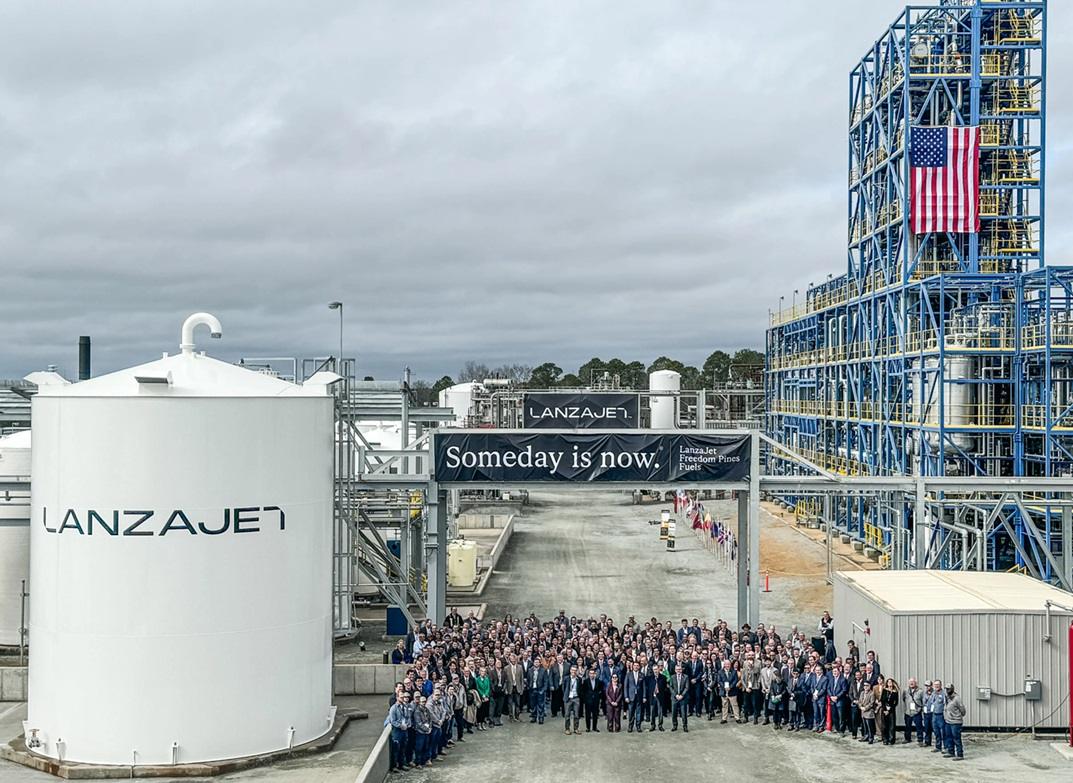
LanzaJet’s operational achievements provide tangible evidence of its progress. The company’s Freedom Pines Fuels facility in Soperton, Georgia, has been fully operational since November 2025, representing an investment exceeding $300 million. This facility boasts an impressive capacity to produce up to 10 million gallons per year of SAF and renewable diesel, with robust off-take agreements already secured for the next decade. Furthermore, the introduction of a new tolling structure at Freedom Pines, leveraging domestically produced low-carbon, waste-based ethanol and regional renewable natural gas, ensures a stable feedstock supply and guaranteed production off-take. This operational stability and long-term contracting are critical de-risking factors for investors eyeing the nascent SAF market. Amidst these developments, the broader energy market continues to exhibit its characteristic volatility. As of today, Brent Crude trades at $93.86, marking a significant +3.79% increase within a daily range of $89.11-$95.53. This upward movement comes after a notable 14-day decline of nearly 20%, having fallen from $118.35 on March 31st to $94.86 on April 20th. This illustrates the dynamic backdrop against which SAF investments are being made, where the long-term decarbonization imperative increasingly competes for capital with the short-term swings of traditional oil markets. LanzaJet’s recent grant from the UK Department for Transport’s Advanced Fuels Fund for Project Speedbird in Teesside further solidifies its international expansion plans, adding another layer to its growth trajectory.
Investor Focus: Navigating Volatility and Charting Future Energy Trends
Our proprietary reader intent data reveals a keen investor focus on immediate market direction, with queries like “is WTI going up or down” and predictions for “the price of oil per barrel by end of 2026” dominating discussions. While traditional crude price movements remain a critical concern, the significant investment in LanzaJet signals a growing recognition that long-term portfolio strategies must account for the energy transition. Investors are increasingly looking beyond the short-term commodity cycles to identify companies poised to capitalize on structural shifts in energy demand and supply. The strategic commitments from IAG and Shell indicate a proactive approach to future-proofing their businesses against regulatory pressures and evolving consumer preferences for lower-carbon alternatives. This shift is not just about compliance; it’s about competitive advantage in a world striving for net-zero emissions.
Forward Outlook: SAF’s Role in a Dynamic Energy Landscape
The trajectory of SAF development, exemplified by LanzaJet’s expansion, will continue to gain prominence, even as the broader oil and gas sector navigates immediate market catalysts. While upcoming events such as the OPEC+ JMMC Meeting on April 21st, EIA Weekly Petroleum Status Reports on April 22nd and 29th, and Baker Hughes Rig Count updates on April 24th and May 1st will undoubtedly influence short-term crude market sentiment, the underlying momentum towards sustainable fuels remains robust. The EIA Short-Term Energy Outlook on May 2nd will offer critical insights into broader energy trends, potentially reinforcing the long-term shift away from conventional fuels and towards sustainable alternatives like SAF. Investors should view LanzaJet’s capital raise as a bellwether, signaling that serious capital is flowing into advanced biofuel technologies that promise significant decarbonization for hard-to-abate sectors like aviation. This trend suggests that while traditional energy market analysis remains essential, integrating insights into the burgeoning SAF market is becoming increasingly crucial for a comprehensive investment strategy.


