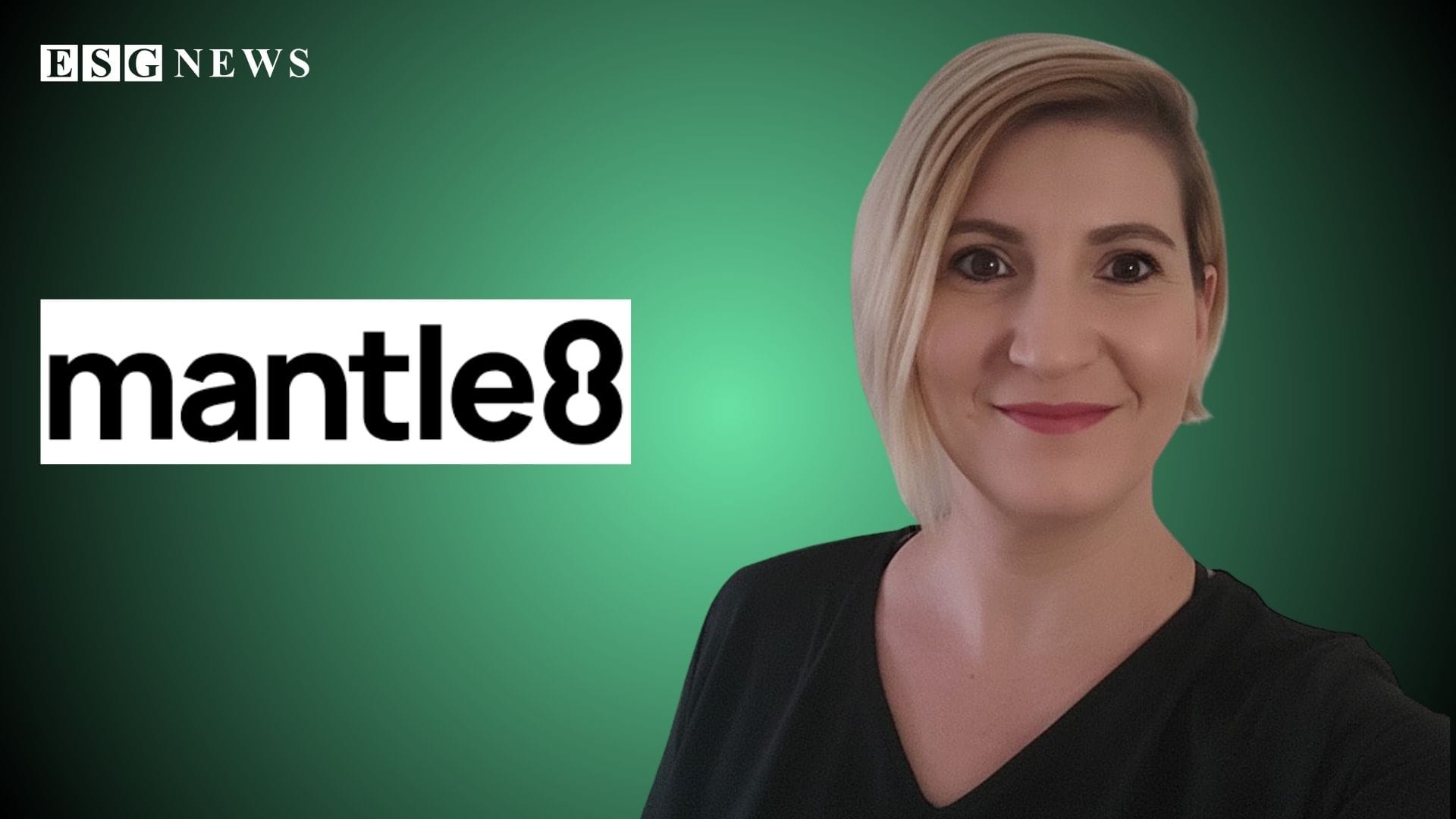
In an energy landscape characterized by persistent volatility and an accelerating drive towards decarbonization, the strategic development of human capital within nascent deep-tech sectors is paramount. Mantle8, a prominent player in natural hydrogen exploration, recently underscored this crucial insight with the appointment of Laurence Tiberghien-Portaz as Human Resources Director and the establishment of a new office in Grenoble. These moves signal a deliberate shift from foundational validation to robust operational execution and global scale-up. For investors monitoring the evolving energy transition, these organizational enhancements represent more than just internal restructuring; they are critical enablers for de-risking innovative technologies and attracting the specialized talent essential for unlocking novel energy resources.
Strategic Human Capital for Deeptech Scaling
The appointment of Laurence Tiberghien-Portaz to Mantle8’s leadership team, following the earlier addition of Chief Commercial Officer Sylvain Marcant, signifies a clear intent to fortify the company’s internal capabilities for an aggressive growth trajectory. Tiberghien-Portaz brings a wealth of experience from senior roles within the global mining sector, notably with Rio Tinto, where she managed complex international environments demanding the integration of advanced geoscience, industrial execution, and diverse multicultural teams. This background is particularly pertinent for Mantle8, which aims to pioneer the exploration and development of natural hydrogen, a field requiring both deep scientific expertise and significant operational scalability.
Building a workforce capable of tackling the unique challenges of deeptech geoscience is no small feat. Mantle8’s existing team already spans nine nationalities and boasts an impressive 80% of staff holding PhDs in geoscience or related disciplines, demonstrating a profound commitment to scientific rigor. The company’s target to increase female representation from 35% to 50% by the end of 2027 further highlights a progressive approach to talent acquisition, recognizing that diversity fuels innovation. These investments in human capital are direct indicators of Mantle8’s readiness to transition from theoretical proof to tangible, market-ready solutions, a critical phase that often dictates success or failure in high-tech ventures.
Leveraging Europe’s Deeptech Ecosystem for Exploration Advantage
Mantle8’s strategic relocation and expansion into Grenoble, France, is another calculated move designed to accelerate its operational capabilities. Grenoble is not merely a geographic location; it is a vibrant deeptech ecosystem, home to a dense concentration of world-class research and engineering institutions such as CEA Grenoble, CNRS, Grenoble INP, and Université Grenoble Alpes. This environment provides Mantle8 with unparalleled access to collaborative research, cutting-edge talent, and shared infrastructure—a crucial advantage for a company focused on subsurface exploration.
Furthermore, the geological setting of the Alps surrounding Grenoble offers a natural laboratory for studying mountain formation, glaciology, and geophysics, directly aligning with Mantle8’s mission. This synergy between academic excellence, industrial innovation, and natural geological conditions positions Mantle8 to significantly strengthen its research and development pipeline. In the broader context of Europe’s clean energy and energy sovereignty ambitions, Mantle8’s advancements in natural hydrogen exploration become particularly relevant, potentially offering a domestic, low-carbon energy source that aligns with strategic national priorities.
Navigating Energy Transition Amidst Market Volatility: A Long-Term View
For investors, evaluating companies like Mantle8 requires a nuanced understanding of its long-term potential against the backdrop of immediate energy market dynamics. As of today, Brent Crude trades at $92.45, reflecting a +2.23% increase within a day range of $89.11 to $94.68. WTI Crude similarly saw gains, standing at $88.85. However, this rebound comes after a significant downturn; our proprietary data shows Brent declined by 19.8% from $118.35 on March 31st to $94.86 on April 20th. This stark volatility in conventional oil markets directly influences investor sentiment and capital allocation across the entire energy spectrum.
This persistent market uncertainty feeds into questions from our readership, with many asking about the future trajectory of WTI prices and predictions for the price of oil per barrel by the end of 2026. While short-term fluctuations dominate headlines, Mantle8’s focus on natural hydrogen represents a strategic pivot towards energy sources less susceptible to geopolitical shocks and conventional supply-demand imbalances. Investing in deeptech geoscience, particularly for novel resources like natural hydrogen, is a long-term play, offering diversification from the cyclical and often unpredictable nature of fossil fuel markets. It’s about securing future energy independence and sustainability, rather than chasing immediate price swings.
Upcoming Catalysts and the Path to Execution
Mantle8’s recent organizational enhancements are perfectly timed as the company moves into what CEO Emmanuel Massini describes as a “new stage of development,” from validation to execution. While Mantle8’s specific project milestones will be key internal catalysts, the broader energy calendar over the next 14 days provides critical context for the industry at large. Investors will be keenly watching the OPEC+ JMMC Meeting today, April 21st, which could signal shifts in production policy impacting global supply. The EIA Weekly Petroleum Status Reports on April 22nd and April 29th, along with API inventory data, will offer insights into U.S. demand and inventory levels. Furthermore, the Baker Hughes Rig Count on April 24th and May 1st will provide a pulse check on conventional exploration and production activity.
These macro-level events, while not directly related to Mantle8’s operations, shape the overall investment climate for energy. A stable or clearly defined path for traditional oil and gas can free up capital for innovative ventures, while continued uncertainty might further accelerate the shift towards alternative energy investments. For Mantle8, the internal catalysts of successful talent integration, project advancements stemming from the Grenoble office’s enhanced capabilities, and progress in natural hydrogen resource assessment will be the primary drivers of investor value as the company executes its ambitious scale-up strategy. We anticipate these strategic hires and expansions will significantly de-risk Mantle8’s operational journey, providing a more robust platform for future announcements and market deployments in the burgeoning natural hydrogen sector.


