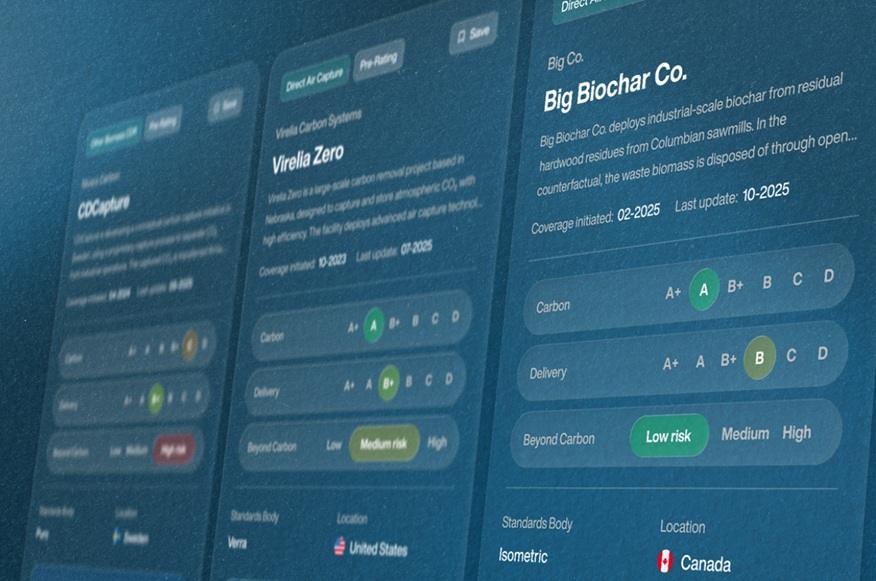
The voluntary carbon market, long viewed with a mix of skepticism and cautious optimism by many energy investors, is poised for a significant transformation. Climate solutions provider ClimeFi recently unveiled its Due Diligence Coverage platform, a development that could fundamentally de-risk investments in carbon removal projects. For seasoned oil and gas investors navigating a complex landscape of fluctuating crude prices and increasing decarbonization mandates, this platform offers a crucial pathway to more transparent, verifiable, and ultimately, more investable carbon assets. Our proprietary data suggests a growing investor appetite for clarity in sustainable finance, making ClimeFi’s move particularly timely as companies worldwide grapple with ambitious net-zero targets and the practicalities of achieving them.
De-Risking the Untamed Carbon Frontier
For years, the voluntary carbon market has been characterized by its fragmentation and a pronounced information asymmetry. Investors, particularly institutional players and large corporations seeking to offset emissions or diversify into climate solutions, have faced significant hurdles in identifying credible, high-integrity carbon removal projects. The risks of “phantom credits” or projects failing to deliver promised carbon sequestration have been a persistent deterrent. ClimeFi’s new platform directly addresses this challenge by providing qualified buyers with unparalleled access to its extensive database of carbon removal project assessments. By tracking over 500 suppliers and having already conducted due diligence on more than 100, ClimeFi is tackling the sheer scale of the market’s opacity. This level of granular assessment is critical for investors looking to allocate capital effectively in a rapidly expanding, yet still maturing, asset class. The move from fragmented data to structured insights represents a pivotal step towards building investor confidence and attracting substantial capital into verifiable carbon removal solutions.
ClimeFi’s Framework: A New Standard for Verifiable Carbon Integrity
At the core of ClimeFi’s offering is a robust due diligence methodology built upon three critical pillars: Carbon Integrity, Delivery Risk, and Beyond Carbon considerations. This comprehensive approach moves beyond simple quantification, assessing the true permanence of carbon removal, the likelihood of a project successfully delivering its stated objectives, and the broader environmental and social co-benefits. The assignment of an Analyst Rating provides a structured, comparable framework, empowering buyers to make informed, multi-year procurement decisions with a level of confidence previously unavailable. This standardization is a game-changer for the voluntary carbon market, transforming it from a “buyer beware” environment into one where quality and reliability are paramount. For energy companies and investors under increasing pressure to demonstrate tangible progress on ESG metrics, a platform that vouchsafes carbon credit quality is not just a convenience; it’s an essential tool for mitigating reputational and financial risks associated with greenwashing claims.
Market Volatility Underscores Diversification with De-Risked Assets
The imperative for diversified and de-risked portfolios is particularly acute in today’s energy landscape. As of today, Brent Crude trades at $92.45, showing a 2.23% increase within a daily range of $89.11-$94.68. WTI Crude stands at $88.85, up 1.64%, with a daily range of $85.5-$91.45. Gasoline prices are also up at $3.11, a 2.31% rise from a $3-$3.15 range. While these gains might offer short-term relief, the broader trend over the past two weeks reveals significant volatility, with Brent crude having declined by nearly 20% from $118.35 on March 31st to $94.86 just yesterday. This kind of price swing fuels investor uncertainty, as evidenced by questions our readers are asking, such as “is wti going up or down” and “what do you predict the price of oil per barrel will be by end of 2026?” In an environment where traditional fossil fuel markets are prone to such fluctuations, the appeal of a de-risked carbon asset class grows stronger. High-quality carbon removal projects, validated by platforms like ClimeFi, offer a tangible way for investors to hedge against commodity volatility, meet sustainability mandates, and position portfolios for the long-term energy transition, regardless of short-term oil price movements.
Navigating Future Shifts: Carbon Markets and Upcoming Energy Events
The interplay between traditional energy market dynamics and the burgeoning carbon economy is critical for investors to monitor. Upcoming events will continue to shape both landscapes. For instance, the OPEC+ JMMC Meeting on April 21st holds the potential to influence crude supply strategies, directly impacting price trajectories. Similarly, the EIA Weekly Petroleum Status Reports on April 22nd and April 29th, alongside the API Weekly Crude Inventory reports on April 28th and May 5th, will provide crucial insights into short-term supply and demand fundamentals. Looking slightly further ahead, the EIA Short-Term Energy Outlook on May 2nd will offer critical forecasts that inform strategic planning across the energy sector. While these events directly address fossil fuel markets, their broader impact reverberates into the carbon sphere. Sustained high oil prices might spur greater investment in carbon capture and removal as companies seek to mitigate emissions while maintaining production. Conversely, a softening oil market could accelerate diversification into renewables and carbon projects. ClimeFi’s de-risking platform arrives at a crucial juncture, enabling companies to confidently integrate carbon removal into their long-term strategies, irrespective of short-term energy market turbulence, and to better anticipate potential shifts in carbon pricing and regulatory frameworks that could follow these broader energy trends.
Investor Implications: Capitalizing on Transparency in Carbon Markets
For investors accustomed to rigorous due diligence in traditional asset classes, the emergence of platforms like ClimeFi is a welcome development for the carbon market. This increased transparency and standardization can unlock significant institutional capital, previously hesitant due to perceived risks. Oil and gas majors, as well as diversified energy funds, can now more confidently integrate carbon removal credits into their net-zero strategies, knowing that the underlying projects have been thoroughly vetted for integrity and delivery. This facilitates more efficient capital allocation, reduces transaction costs, and creates a more liquid and reliable market for carbon assets. Furthermore, for investors asking about robust data sources, ClimeFi’s model mirrors the value we place on proprietary, deeply analyzed data for market intelligence. By providing a clear lens through which to evaluate carbon projects, ClimeFi is not just supporting corporate climate goals; it is actively transforming carbon removal into a credible, investable asset class, offering a compelling opportunity for long-term growth and portfolio diversification in the evolving global energy landscape.


