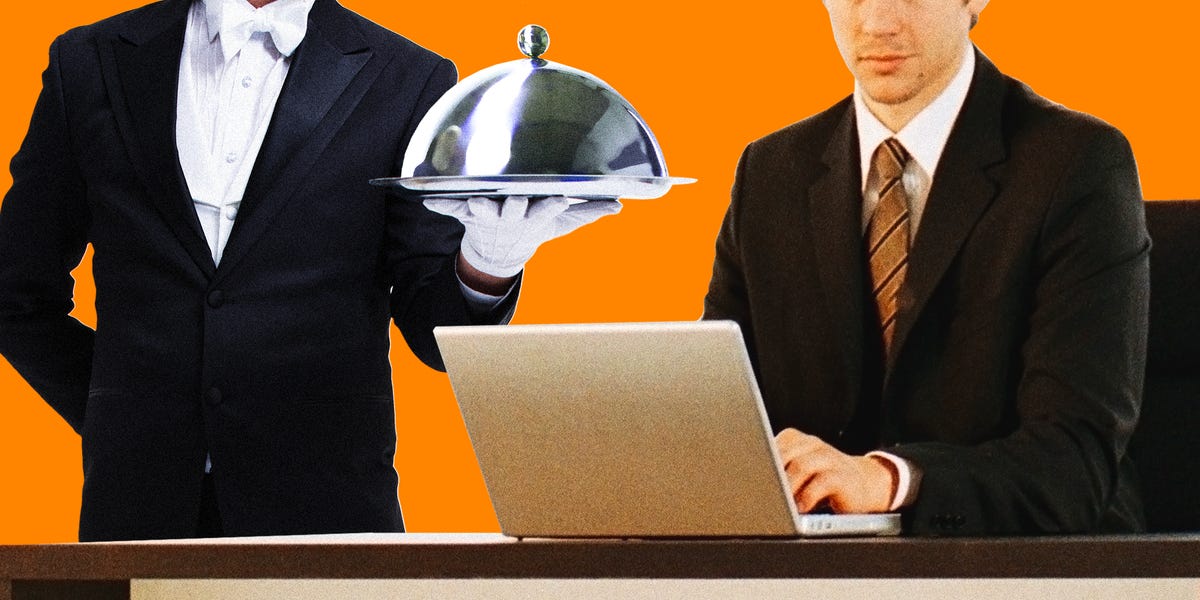
At Meta’s Manhattan office, employees line up for Mediterranean lamb loaded with mint and pomegranate molasses and dessert options like cassis and pear mousse. At KKR’s headquarters nearby, staff at the private equity firm order from a rotating lunch menu and have access to a full-service barista counter and a smoothie and juice bar.
The competition over who does lunch best isn’t confined to the office. A recent debate on X pitted Anthropic’s pre-plated meals against OpenAI’s self-serve setup.
“The glib answer is, it’s still cheaper than giving bonuses, stock options, and ownership.
Against a backdrop of widespread corporate austerity, at Big Tech, hedge funds, and A-list companies, the office cafeteria is the last great workplace indulgence. The “hardcore era” of layoffs, tightened performance standards, and demands for more productivity from leaner teams has continued into 2026. Many companies are cutting back on wellness perks like gym memberships, stipends for work travel, and meals consumed on a worker’s own time. Free lunch is one of the few perks that’s not only surviving, but growing.
Nearly half of caterers identified corporate catering as their primary source of revenue, according to a 2023 industry survey by the International Caterers Association, while the leading companies say the demand in recent years has shifted from occasional treats for employees to regular meals.
The employer-provided upscale lunch, after all, offers a remarkably good return on investment for companies: it delivers an instant morale boost, and encourages workers to show up in person, stay longer, and interact more across teams.
“The glib answer is, it’s still cheaper than giving bonuses, stock options, and ownership,” says Scott Steinberg, CEO of the consulting firm FutureProof Strategies. “They’re recurring benefits. They’re visible.”
As companies compete for top talent, food has become a strategic calling card. Tech firms, hedge funds, and other corporations prominently feature culinary benefits in their recruiting materials. And at a time when LinkedIn feeds are clogged with layoff announcements and bleak predictions about the future of work, photos of enticing plates of food offer companies a welcome dose of good publicity — and maybe even a leg up in the talent wars.
Google famously set the standard years ago with free, high-quality meals at the office. The company trimmed its dining budget in 2023, scaling back the hours of cafés and consolidating its microkitchens, but the offerings are still impressive. “You’ll end up having food from almost every cuisine over the span of a month,” says one Google employee in Seattle. Recent standouts have included jerk chicken, butter paneer, and artisanal pizza.
The trend expanded to more workplaces. In the 2000s, Michael Bloomberg’s terminal and media company stirred up envy among its competitors with its wide variety of free snacks, which also kept workers from wasting precious time grabbing coffee or a late-afternoon pick-me-up.
There are outliers, of course. At Microsoft, most locations don’t offer free food, with the Bay Area being an exception. Apple offers food at subsidized prices. Amazon also doesn’t offer complimentary meals, though it does give out free bananas. When Elon Musk bought Twitter in 2022, he eliminated the company’s free lunch program.
Corporate catering companies are benefiting from the trend.
A 2024 report from Dinova and Technomic found that corporate catering orders surpassed weddings in revenue in 2023, and are expected to be the main driver behind the catering services market exceeding $103 billion by 2027.
Aramark’s Business & Industry division, which serves food, beverage, and hospitality programs to a range of workplaces, has reported consistent growth in the post-pandemic years as more companies have leaped onto the catered lunch trend.
Diane Pancoski, a vice president of marketing strategy and innovation at Aramark’s workplace experience group, says that workplaces are focused on fostering collaboration and boosting employee well-being.
“Growth in corporate dining is being fueled by the way organizations increasingly view food and hospitality as a strategic component of the workplace experience,” she says. In particular, she’s seen increased demand for high-end catering offerings from corporate clients.
Doubling down on lunch also reflects a broader reality of the AI era: Nearly everyone is competing with tech companies for top talent, and that means creating an office environment that more closely resembles Google’s.
“In order to attract and retain top talent, especially top technical talent, these organizations have to make in-office perks enticing,” says Candice Pokk, a senior consultant in organizational effectiveness at HR and benefits consultancy Segal. Companies are doing more in-person events and investing in fancier options, Pokk says.
Employees often prefer food perks and social programming over health benefits and gym memberships.
And who doesn’t love free food? A University of South Florida study published last September found that employees prefer food perks and social programming over health benefits and gym memberships. Programs that fostered interactions among colleagues led workers to feel more valued, boosting their sense of company loyalty, it said.
Even as companies lean into the free-lunch trend, experts note that companies are cutting back on other food-related perks. A recent SAP Concur survey found that 42% of travel managers reported plans to cut travel costs.
For companies, the real value of in-office lunch lies in culture. Shared meals create what Steinberg calls “serendipitous collisions” — moments when colleagues bump into one another, sparking conversations that lead to collaboration.
Free food, on its own, doesn’t necessarily lead to colleagues engaging more with one another. Pokk says the ideal scenario is when companies create an experience around the food that is integrated into an engagement strategy. When a company offers an exciting perk like a Michelin-starred chef, employees talk about it with others and take pride in the organization they work for.
“It doesn’t do anybody good if you just grab your food and leave,” says Pokk.
When KKR opened an additional full-service café this past fall to support its expanding workforce, its goal was to facilitate teamwork, says Grace Koo, the firm’s global head of human capital. “The firm’s café is intentionally designed as a central hub for collaboration, encouraging employees to step away from their desks and connect with colleagues over meals,” Koo says.
Enticing food options can also encourage longer hours and better compliance with return-to-office mandates.
Goldman Sachs just increased its nightly dinner allowance from $30 to $35 for employees working in the office past 8 p.m.
Gap’s corporate headquarters in San Francisco began requiring corporate employees to work from the office five days a week in September, and says roughly 70% of that workforce gets lunch on campus every day.
You have a whole new generation of workers who have different demands and expectations for their work experience. Many of these younger employees want elevated experiences.
The high engagement rate underscores how central food is to the company’s approach to experience and culture, a Gap spokesperson said. The company has an elaborate campus culinary program, though it doesn’t come free.
At the Gapeteria, with its communal wooden tables and sweeping views of the Golden Gate Bridge and downtown San Francisco, menu options include hangar steak with sweet potato fries and a grilled burrata sandwich with pine nut salsa macha.
The addition of smoothie stands, espresso bars, and in-office events with impressive catering is also in response to the tastes of younger employees, who place a premium on over-the-top benefits. These employees are more likely to respond to a barista who brews lattes with the company logo than to a traditional, self-service coffee set-up.
“You have a whole new generation of workers who have different demands and expectations for their work experience,” says Pokk. “Many of these younger employees want elevated experiences.”
That demand has helped fuel a boom in the catering industry, with stricter return-to-office mandates and increased corporate demand driving that growth.
When celebrity chef Daniel Boulud launched Cuisine Boulud, his bespoke catering company, at One Madison Avenue in New York, part of its model was to provide catering to companies based in the building. Employees at Fox are among the first to enjoy the perk, a spokesperson said. Employees can also enjoy the convenience of a variety of other Boulud culinary offerings located in the high-rise, including Le Jardin Sur Madison, a gourmet French restaurant on the roof.
“The venture was launched to meet the robust demand for larger-scale social and corporate events, daily office catering, and is also the exclusive caterer for venues Le Jardin Sur Madison,” says a spokesperson for the project, which is a joint venture with Aramark and the Dinex Group.
Among the workers Business Insider interviewed for this story, most say they appreciated the free meals, but that the perk isn’t a priority when they’re evaluating job offers.
One outlier, an employee for Microsoft in the Bay Area, says the promise of a high-quality, company-provided lunch would be a “very important” factor.
At Microsoft, he gets multiple free meals daily, snacks, and access to a juice bar, and he eats lunch with his team nearly every day — which he believes makes them more productive and more connected to one another. For him, the perk says a lot about company culture, including that it wants to recruit the best people and treat them well.
“That’s a genuine factor in which company to join, because it’s like a litmus test for how they treat their employees,” he says.
“If somebody paid me $10,000 more and said you wouldn’t have food, I would not take that job.”
Ana Altchek is a reporter on Business Insider’s careers and leadership desk.
Business Insider’s Discourse stories provide perspectives on the day’s most pressing issues, informed by analysis, reporting, and expertise.


