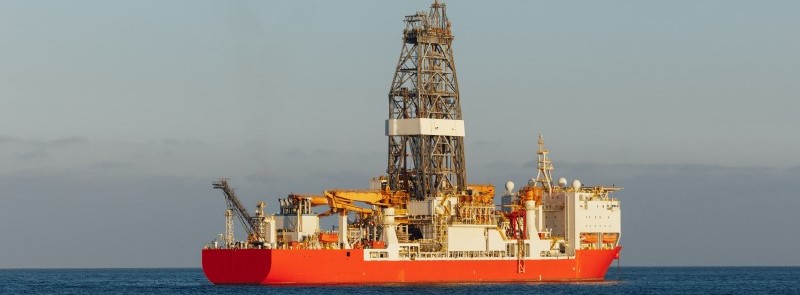
MOL Group’s recent move to secure a 20% interest in Libya’s offshore O7 exploration block marks a significant strategic maneuver for the Hungarian energy giant. Partnering with Repsol as operator (40%) and Türkiye Petrolleri A.O. (TPAO, 40%), MOL is entering a frontier deepwater basin that holds both immense potential and considerable geopolitical complexities. This venture, part of Libya’s first licensing round in 17 years, initiated by the National Oil Corporation (NOC) in March 2025, signals a renewed push for international investment in a region critical for global energy supply. For investors, this bold expansion warrants a deeper look into its strategic rationale, the prevailing market conditions, and the forward-looking implications for MOL’s portfolio and the broader energy landscape.
Strategic Deepwater Expansion Amidst Portfolio Diversification
MOL Group’s entry into the Libyan offshore sector is a clear manifestation of its long-term strategy to diversify supply sources and bolster regional energy security. The O7 block, spanning over 10,300 square kilometers in water depths exceeding 1,500 meters, approximately 140 kilometers northwest of Benghazi, represents a significant deepwater challenge. This aligns with the partners’ existing offshore expertise and Libya’s broader ambition to revitalize exploration in its Mediterranean waters following years of underinvestment and political disruption. This venture comes on the heels of a strategic cooperation agreement signed between MOL and NOC, establishing a framework for collaboration across exploration, production, technology deployment, crude trading, and oilfield services, indicating a broader commitment beyond just this single block.
For MOL, which currently holds upstream assets across nine countries with production in eight, including Croatia, Azerbaijan, Iraq, Kazakhstan, Pakistan, and Egypt, the Libyan addition enhances its geographical spread and resource base. The company has articulated a production target of at least 90,000 barrels of oil equivalent per day (boed) over the next five years, and successful deepwater discoveries in Libya could be instrumental in achieving, or even exceeding, this goal. This exploration-heavy play, while carrying inherent risks, positions MOL for potential long-term growth in a region with historically proven hydrocarbon potential, reinforcing its commitment to maintaining a robust upstream portfolio.
Navigating Volatility: Market Signals and Investor Concerns
This strategic investment by MOL unfolds against a backdrop of considerable volatility in global crude markets. As of today, April 21st, 2026, Brent Crude is trading at $93.25, reflecting a daily gain of 3.12%, while WTI Crude stands at $89.67, up 2.57%. However, recent weeks have seen significant downward pressure. Our proprietary data shows Brent crude experienced a substantial correction over the past 14 days, falling from $118.35 on March 31st to $94.86 by April 20th, a nearly 20% drop. This sharp decline underscores the unpredictable nature of energy markets, influenced by global demand trends, supply dynamics, and geopolitical developments.
Against this turbulent canvas, investors are keenly focused on price direction and its implications for E&P companies. Our internal analytics reveal a prominent question among our readers: ‘is WTI going up or down?’ This highlights the pervasive uncertainty and the immediate need for clarity on short-term price movements. Furthermore, the active interest in Repsol’s potential performance for April 2026 underscores the market’s granular focus on how individual players navigate this climate, especially those taking leading roles in new ventures like the O7 block. Another frequently asked question, ‘what do you predict the price of oil per barrel will be by end of 2026?’, demonstrates the broader investor quest for long-term oil price outlooks, which will critically shape the financial viability of deepwater projects that require substantial upfront capital and long development cycles.
Upcoming Catalysts and the Long-Term Libyan Outlook
While the MOL Group’s entry into Libya is a long-term play, the immediate market environment and upcoming events will shape the broader sentiment for such frontier investments. Today, April 21st, the OPEC+ Joint Ministerial Monitoring Committee (JMMC) meeting is a critical event. Any signals on supply policy emerging from this gathering could directly impact crude prices, influencing the investment calculus for long-term projects like O7. A decision to maintain current production cuts, for instance, could provide a floor for prices, while an unexpected increase could add further downward pressure, potentially impacting future capital allocation for exploration.
Looking ahead, the EIA Weekly Petroleum Status Reports (April 22nd and April 29th) and the Baker Hughes Rig Count (April 24th and May 1st) will offer granular insights into US supply and demand dynamics, which often serve as a bellwether for global trends. Of particular importance for long-term investors will be the EIA Short-Term Energy Outlook scheduled for May 2nd. This report often provides updated projections for global oil demand and supply, offering crucial context for evaluating the multi-year potential of deepwater assets in regions like Libya. Libya’s reopened licensing round, offering 22 exploration areas, represents a strategic pivot by NOC to attract international partners, but the success and pace of this revitalization will depend on sustained political stability, attractive fiscal terms, and a global market environment supportive of significant capital expenditure in deepwater exploration.
Risk-Reward Profile for Investors
MOL Group’s strategic foray into the Libyan offshore market presents a compelling, albeit complex, risk-reward profile for investors. On the reward side, the O7 block offers access to a geologically prospective deepwater basin that has seen limited modern exploration due to historical underinvestment and political disruptions. A significant discovery here could be transformative for MOL, providing substantial reserves and production capacity, thereby helping to achieve or surpass its 90,000 boed target. The partnership with experienced deepwater players like Repsol and TPAO mitigates some of the technical risks associated with such challenging acreage.
However, the risks are equally significant. Deepwater exploration is inherently capital-intensive, with long lead times before any production comes online. The geopolitical landscape in Libya, despite recent efforts to attract investment, remains dynamic, posing potential operational and security challenges. Furthermore, the 20% stake, while providing exposure, means MOL will rely heavily on Repsol’s operational execution. Investors must weigh the long-term growth potential and diversification benefits against these substantial geopolitical, operational, and financial risks. The success of this venture will ultimately hinge on successful exploration, stable operating conditions, and a sustained favorable long-term oil price environment that justifies the significant investment required for deepwater development.


