A new survey of U.S. manufacturing leaders shows that the skilled labor shortage remains the industry’s biggest challenge heading into 2026.
What’s Related
According to CADDi’s 2026 Manufacturing Outlook Study, 79% of manufacturing executives say the lack of skilled workers is their top barrier to growth. The research is based on a survey of more than 200 U.S. manufacturing professionals and was produced in tandem with the Society of Manufacturing Engineers.
The labor crunch is hitting hardest on the shop floor. Ninety percent of respondents said manufacturing departments are the most impacted by labor shortages, followed by operations (48%) and design and engineering (40%).
Labor issues are only part of the pressure manufacturers are feeling. Nearly half of respondents (47%) said tariffs and unclear trade policies are making long-term planning more difficult. Thirty-eight percent said geopolitical instability could lead to supply chain disruptions, while 61% pointed to rising costs and inflation as another major obstacle.
“Manufacturing teams are facing shrinking headcounts despite rising volatility and pressure,” said Yushiro Kato, CEO and Co-Founder of CADDi. “To ease the labor shortage’s impact, companies need faster answers, stronger cost visibility, and data that lets them act with confidence. Our work is focused on giving engineers, buyers, and operations teams the ability to answer these challenges with information they already have but cannot easily access due to limited labor hours and poor visibility.”
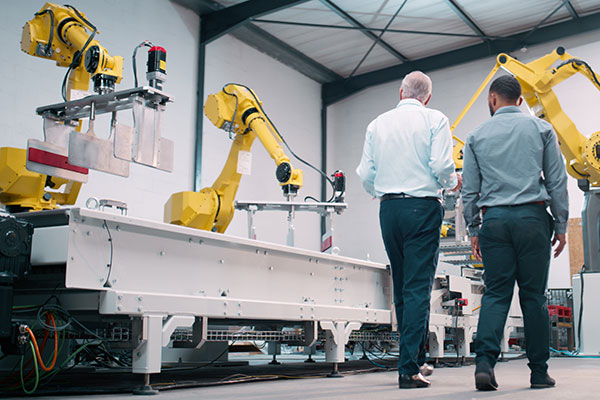
To cope with these challenges, manufacturers are shifting where they spend their money. Sixty-nine percent of companies plan to invest in physical assets such as robots and equipment in 2026, a 9% increase from last year. At the same time, investment in operational systems like ERP and MES dropped to 33%, down from 60% in 2025.
The data suggests manufacturers are prioritizing tools that deliver visible output on the shop floor, rather than broad system upgrades. Sixty-two percent of respondents also said they are focusing on improving recruitment, training, and retention to address the labor gap.
“Our research shows manufacturing growth in 2026 will not come from broad expansion,” Kato said. “Instead, it will come from the ability to extract more value from the assets companies already own. Smarter use of parts data can help leaders automate inventory tracking, streamline procurement, and keep production moving throughout the labor shortage, global turbulence, and beyond.”