Close Menu
  • Home
  • Market News
    • Crude Oil Prices
    • Brent vs WTI
    • Futures & Trading
    • OPEC Announcements
  • Company & Corporate
    • Mergers & Acquisitions
    • Earnings Reports
    • Executive Moves
    • ESG & Sustainability
  • Geopolitical & Global
    • Middle East
    • North America
    • Europe & Russia
    • Asia & China
    • Latin America
  • Supply & Disruption
    • Pipeline Disruptions
    • Refinery Outages
    • Weather Events (hurricanes, floods)
    • Labor Strikes & Protest Movements
  • Policy & Regulation
    • U.S. Energy Policy
    • EU Carbon Targets
    • Emissions Regulations
    • International Trade & Sanctions
  • Tech
    • Energy Transition
    • Hydrogen & LNG
    • Carbon Capture
    • Battery / Storage Tech
  • ESG
    • Climate Commitments
    • Greenwashing News
    • Net-Zero Tracking
    • Institutional Divestments
  • Financial
    • Interest Rates Impact on Oil
    • Inflation + Demand
    • Oil & Stock Correlation
    • Investor Sentiment

Subscribe to Updates

Subscribe to our newsletter and never miss our latest news

Subscribe my Newsletter for New Posts & tips Let's stay updated!

What's Hot

WTI Oil prices jump on fears Iran attack will lead disruption

March 1, 2026

OPEC+ Approves Modest Output Hike as Iran War Jolts Oil Markets

March 1, 2026

Oil tankers attacked near Strait of Hormuz as Iran conflict disrupts shipping

March 1, 2026
Facebook X (Twitter) Instagram Threads
Oil Market Cap – Global Oil & Energy News, Data & Analysis
  • Home
  • Market News
    • Crude Oil Prices
    • Brent vs WTI
    • Futures & Trading
    • OPEC Announcements
  • Company & Corporate
    • Mergers & Acquisitions
    • Earnings Reports
    • Executive Moves
    • ESG & Sustainability
  • Geopolitical & Global
    • Middle East
    • North America
    • Europe & Russia
    • Asia & China
    • Latin America
  • Supply & Disruption
    • Pipeline Disruptions
    • Refinery Outages
    • Weather Events (hurricanes, floods)
    • Labor Strikes & Protest Movements
  • Policy & Regulation
    • U.S. Energy Policy
    • EU Carbon Targets
    • Emissions Regulations
    • International Trade & Sanctions
  • Tech
    • Energy Transition
    • Hydrogen & LNG
    • Carbon Capture
    • Battery / Storage Tech
  • ESG
    • Climate Commitments
    • Greenwashing News
    • Net-Zero Tracking
    • Institutional Divestments
  • Financial
    • Interest Rates Impact on Oil
    • Inflation + Demand
    • Oil & Stock Correlation
    • Investor Sentiment
Oil Market Cap – Global Oil & Energy News, Data & Analysis
Home » Half of world’s CO2 emissions come from just 32 fossil fuel firms, study shows | Fossil fuels
Climate Commitments

Half of world’s CO2 emissions come from just 32 fossil fuel firms, study shows | Fossil fuels

omc_adminBy omc_adminJanuary 21, 2026No Comments4 Mins Read
Share
Facebook Twitter Pinterest Threads Bluesky Copy Link


Just 32 fossil fuel companies were responsible for half the global carbon dioxide emissions driving the climate crisis in 2024, down from 36 a year earlier, a report has revealed.

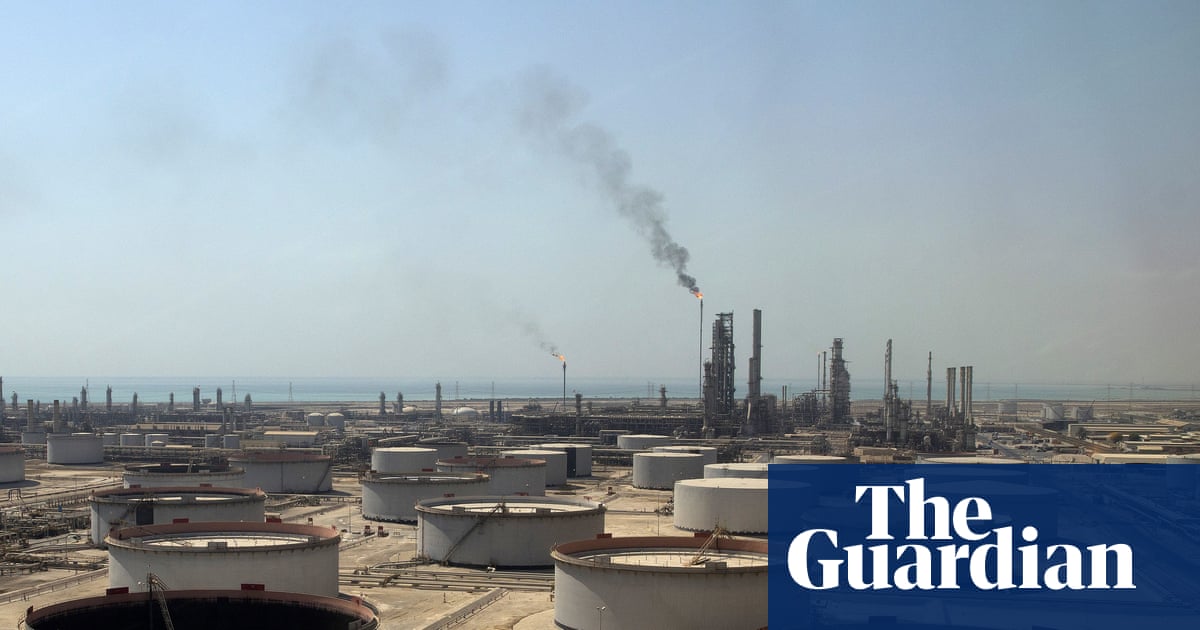
Saudi Aramco was the biggest state-controlled polluter and ExxonMobil was the largest investor-owned polluter. Critics accused the leading fossil fuel companies of “sabotaging climate action” and “being on the wrong side of history” but said the emissions data was increasingly being used to hold the companies accountable.

State-owned fossil fuel producers made up 17 of the top 20 emitters in the Carbon Majors report, which the authors said underscored the political barriers to tackling global heating. All 17 are controlled by countries that opposed a proposed fossil fuel phaseout at the Cop30 UN climate summit in December, including Saudi Arabia, Russia, China, Iran, the United Arab Emirates and India. More than 80 other nations had backed the phaseout plan.

Saudi Aramco was responsible for 1.7bn tonnes of CO2, much of it from exported oil. If it were a country, Aramco would be the world’s fifth biggest carbon polluter, just behind Russia. ExxonMobil’s fossil fuel production led to 610m tonnes of CO2 – it would be the ninth biggest polluter, ahead of South Korea.

Since a blip during the Covid pandemic, continued fossil fuel burning has led to carbon emissions resuming their annual rise to record levels each year. Emissions would have to fall by 45% by 2030 to meet the Paris agreement’s goal of 1.5C, a target now seen as impossible. But limiting the overshoot is vital, say experts, as every fraction of a degree of heating worsens the climate impacts on communities.

Emmett Connaire, of the thinktank InfluenceMap, who led the report, said: “Each year, global emissions become increasingly concentrated among a shrinking group of high-emitting producers, while overall production continues to grow.”

Recent oil sector mergers have included ExxonMobil acquiring Pioneer Natural Resources and Chevron acquiring Hess.

Tzeporah Berman, of the Fossil Fuel Non-Proliferation Treaty Initiative, said: “This latest analysis reinforces a stark reality: a powerful, concentrated group of fossil fuel corporations are not only dominating global emissions but are actively sabotaging climate action and weakening government ambition.”

The initiative aims to deliver international cooperation that halts fossil fuel expansion and starts a just transition away from coal, oil and gas. Berman said an April meeting in Colombia of the 80 countries backing a fossil fuel phaseout was a critical step towards securing a sustainable future.

Christiana Figueres, a former UN climate chief, said: “The latest Carbon Majors data shows once again that large emitters are on the wrong side of history. While clean energy and electrification is already receiving nearly twice the investment of fossil fuels globally, carbon majors are clinging on to outdated, polluting products. But data provides a tool for the growing majority who are coming together to champion science-backed solutions and accountability.”

The Carbon Majors database underpinned recent analysis that directly linked carbon emissions from the world’s biggest fossil fuel companies to dozens of deadly heatwaves that otherwise would have been virtually impossible. The data also enabled another study to attribute trillions of dollars in economic losses related to extreme heat to individual fossil fuel companies.

The database has also provided evidence in legal cases, such as Lliuya v RWE, a landmark German climate litigation case, and climate superfund laws in New York and Vermont that require large fossil fuel companies to pay for projects to protect citizens against climate impacts such as flooding and extreme heat.

Rebecca Brown, the head of the Center for International Environmental Law, said: “The evidence just keeps mounting. The international court of justice and courts around the world are increasingly connecting the dots between fossil fuel production and climate destruction, making clear that big polluters must phase out fossil fuels and pay up. And when the facts are plain and the law is clear, accountability must follow.”

Saudi Aramco declined to comment and ExxonMobil did not respond to a request for comment.



Source link

Share. Facebook Twitter Pinterest Bluesky Threads Tumblr Telegram Email
omc_admin
  • Website

Related Posts

Winter getting shorter in 80% of major US cities, new data shows | US weather

February 27, 2026

Trump officials move to kill system that protects US from chemical disasters | US Environmental Protection Agency

February 27, 2026

US ‘bullying’ could scupper carbon levy on shipping, warn experts | Shipping emissions

February 26, 2026
Add A Comment
Leave A Reply Cancel Reply

Top Posts

Federal Reserve cuts key rate for first time this year

September 17, 202513 Views

Inflation or jobs: Federal Reserve officials are divided over competing concerns

August 14, 20259 Views

Oil tanker rates to stay strong into 2026 as sanctions remove ships for hire – Oil & Gas 360

December 16, 20258 Views
Don't Miss

Oil tankers attacked near Strait of Hormuz as Iran conflict disrupts shipping

By omc_adminMarch 1, 2026

(Bloomberg) – Two tankers were attacked near the mouth of the Persian Gulf, increasing the…

OPEC+ to boost oil production 206,000 bpd as Iran conflict threatens supply

March 1, 2026

Oil markets on edge after Trump strike on Iran threatens Hormuz flows

March 1, 2026

How will strikes on Iran affect global energy flows?

February 28, 2026
Top Trending

ESG Today: Week in Review

By omc_adminMarch 1, 2026

Winter getting shorter in 80% of major US cities, new data shows | US weather

By omc_adminFebruary 27, 2026

Trump officials move to kill system that protects US from chemical disasters | US Environmental Protection Agency

By omc_adminFebruary 27, 2026
Most Popular

The 5 Best 65-Inch TVs of 2025

July 3, 202515 Views

AI’s Next Bottleneck Isn’t Just Chips — It’s the Power Grid: Goldman

November 14, 202514 Views

The Layoffs List of 2025: Meta, Microsoft, Block, and More

May 9, 202510 Views
Our Picks

PDVSA, African Energy Chamber sign MoU to boost oil and gas investment

March 1, 2026

Talos Losses Deepen | Rigzone

March 1, 2026

Tankers Halt Near Hormuz After Attacks

February 28, 2026

Subscribe to Updates

Subscribe to our newsletter and never miss our latest news

Subscribe my Newsletter for New Posts & tips Let's stay updated!

Facebook X (Twitter) Instagram Pinterest
  • Home
  • About Us
  • Advertise With Us
  • Contact Us
  • DMCA
  • Privacy Policy
  • Terms & Conditions
© 2026 oilmarketcap. Designed by oilmarketcap.

Type above and press Enter to search. Press Esc to cancel.