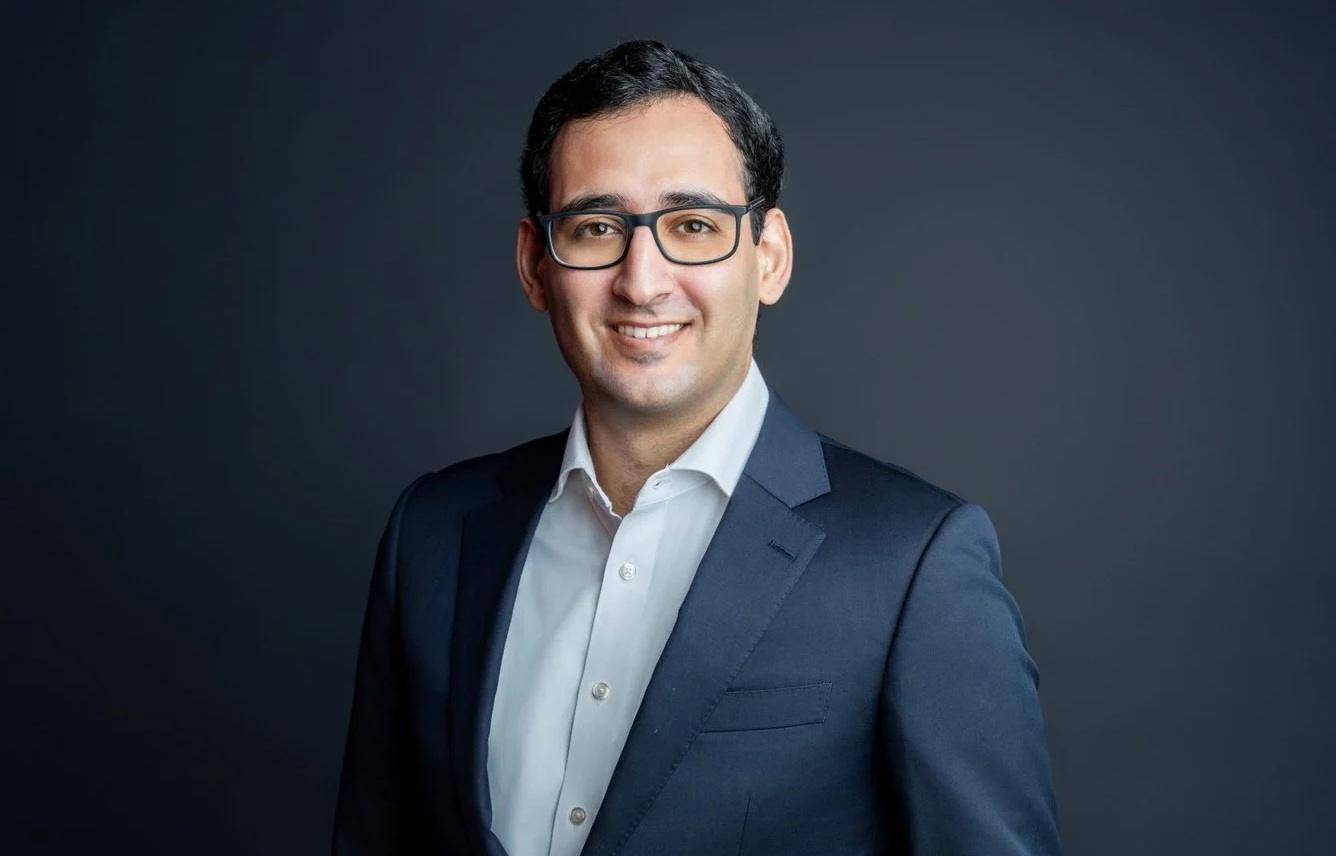
By: Sorouch Kheradmand, Global Head of Partner Sustainability, Schneider Electric
What is the business case for sustainability?
Corporate sustainability is still too often perceived as complex, non-core, and disconnected from business performance. Combined with growing regulatory pressure, heavy reporting requirements, and greenwashing risks, sustainability is frequently framed by executives as a compliance and risk-management burden rather than a value driver. As a result, it is commonly treated as a cost center, or worse, a box-ticking exercise aimed at delaying action while minimizing investment.
This approach fails on two fronts. First, it ignores the underlying systemic risks that will only intensify over time. Second, it overlooks competitive dynamics and market opportunities emerging from the transition to a low-carbon, resource-constrained world.
A Forbes study identified three major barriers to sustainability adoption: geopolitical uncertainty, economic volatility, and difficulty measuring return on investment. The common denominator is clear – many executives still do not see sustainability as revenue-generating. This misperception, however, creates a significant advantage for companies that get it right.
Climate Risk Is Now Business Risk
To understand why sustainability is fundamentally a business issue, we need to step back and look at planetary boundaries and climate change through an economic lens. In 2024, global warming surpassed the 1.5°C threshold for the first time. On the current trajectory, the world is likely to reach 2°C around 2040, a point associated with irreversible climate impacts and severe economic consequences.
These impacts are not abstract, they are very real. For example, Vietnam, the world’s leading rice exporter, could see yields drop by 10–15% because of climate change. Labor productivity could fall as low as 40% in countries like India and Pakistan by the end of the century due to climate change. And supply chains will face increasing disruption from extreme weather events, while energy prices will become more volatile due to resource constraints and market dynamics.
When combined with challenges around access to energy, water, and raw materials, climate risk directly threatens profitability and business continuity. For CEOs with a fiduciary duty to ensure long-term value creation, treating sustainability as a minimal compliance exercise is no longer just an ethical issue; it is a strategic mistake.
Businesses excel at solving problems profitably. The transition to a net-zero economy will demand exactly those capabilities: complying with stricter standards, improving operational efficiency and resilience, developing new business models, and offering solutions that help customers manage their own sustainability challenges. Sustainability, therefore, is not a side agenda, it is a core business strategy issue.
The Expanding Mandate of the Chief Sustainability Officer
This context raises a critical question: What should be the mandate of the Chief Sustainability Officer (CSO)? Traditionally, the role has focused on managing corporate footprints and ensuring regulatory compliance. While necessary, this scope represents only a fraction of what is required in the years ahead.
As sustainability reshapes markets, customer expectations, cost structures, and talent dynamics, companies must rethink where and how they compete. CSOs are uniquely positioned to interpret these shifts. With the right mandate, they can move beyond managing impacts to shaping strategy, helping companies reposition themselves, create differentiation, strengthen pricing power, and build long-term resilience.
This evolution requires breaking down silos. The CSO role must expand from operations and supplier management into corporate and business strategy, influencing capital allocation and growth priorities. In short, the CSO must transition from compliance manager to strategic advisor.
However, this expanded role demands new capabilities. Traditional approaches to materiality assessments, Scope 3 mapping, and scenario planning are often too slow and resource-intensive for today’s pace of change. This is where artificial intelligence, particularly generative AI, can act as a powerful accelerant.
AI as an Enabler for Sustainability
Generative AI learns from existing data to create new content, including text, images, video, and structured insights. Its adoption has been unprecedented: while television took 22 years to reach 100 million users, and smartphones four years, ChatGPT reached that milestone in just two months. The generative AI market is expected to grow 30–46% annually through 2030.
AI’s rapid expansion comes with legitimate concerns about energy use and emissions. By 2030, data centers used to power AI could account for up to 3% of global electricity consumption, and training large language models can emit hundreds of tons of CO₂. This is not an argument against AI, but a mandate to deploy it responsibly, using renewable energy, efficient infrastructure, and, critically, directing AI toward sustainability applications that generate positive impact.
To do so effectively, organizations must understand what AI can actually do. One useful lens is the “5A” framework:
Analysis: Data extraction, document summarization, sentiment analysis
Augmentation: Writing assistance, coding support, drafting
Authoring: Content generation across text, image, and video
Automation: Workflow orchestration, reporting, compliance monitoring
Agentic AI: Multi-step tasks executed with minimal human oversight
AI is ultimately a toolbox. Its value depends entirely on the agenda it serves, and the use cases it supports.
The Four Stages of Sustainability Maturity
Organizations typically fall into one of four sustainability maturity stages:
Compliance-driven: Sustainability is reactive and siloed, focused on avoiding fines and negative press. Activities include mandatory reporting, basic emissions tracking, and certifications. This stage offers no competitive advantage, it is simply the cost of entry.
Risk-mitigation driven: Companies recognize climate and resource constraints as material risks. They invest in efficiency, renewable energy, supplier engagement, and climate risk mapping. Value is unlocked through cost savings, energy price stability, improved access to capital, and operational resilience.
Market-anticipating: Sustainability becomes a source of competitive advantage. Companies embed sustainability within products, services, and business models, helping customers manage their own sustainability challenges. This enables revenue growth, differentiation, and pricing power.
Champions: Sustainability is inseparable from corporate identity. These organizations pursue regenerative practices, shape regulation, lead industry coalitions, and attract top talent and impact capital while setting the standards others must follow.
AI Use Cases Across the Journey
AI can accelerate progress at every stage, provided it is applied strategically.
At the compliance stage, AI excels at automating data collection, regulatory reporting, certification questionnaires, and Scope 3 assessments, freeing scarce resources for higher-value work. AI-driven benchmarking can also highlight priority gaps relative to competitors.
In the risk –mitigation stage, AI can analyze climate exposure, identify high-risk sites or suppliers, prioritize mitigation actions, and estimate returns on investment. For example, Blackstone uses AI-enabled sustainability platforms to track progress across its portfolio, achieving significant energy savings and emissions reductions.
At the market-anticipation and champion stages, AI supports trend analysis, customer materiality assessments at scale, product lifecycle analysis, eco-design recommendations, and go-to-market strategies. Here, sustainability shifts decisively from cost management to revenue creation, AI helps identify which customer segments will pay premiums for low-carbon and resource-efficient solutions.
Governance and Accountability
Despite its power, AI will never replace human expertise or accountability. Companies remain responsible for validating outputs, certifying results, and owning the consequences of decisions informed by AI. Strong governance, clear processes, and multidisciplinary expertise are essential to mitigate risks, including reputational risks from misuse or misinterpretation.
When deployed responsibly, AI can become a game changer, enabling organizations to move faster, operate more efficiently, innovate at scale, and embed sustainability into the core of their business models. In doing so, it empowers CSOs and executive teams to build resilient, future-ready organizations equipped for the challenges and opportunities ahead.


