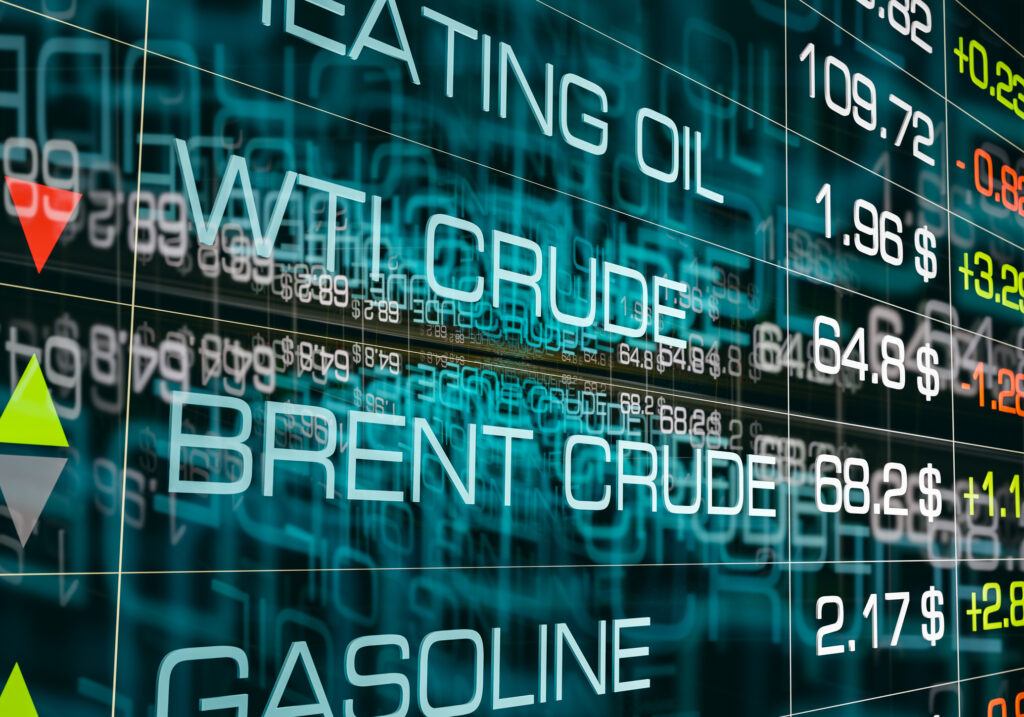
The global crude market is once again showcasing its inherent volatility, with recent trading sessions reflecting a complex interplay of geopolitical tensions and renewed demand optimism. As of today, Brent crude trades at $90.22, showing a marginal intraday dip of 0.23%, while West Texas Intermediate (WTI) stands at $86.67, down 0.86%. This recent price action, particularly the rebound from Friday’s declines, indicates a market grappling with conflicting signals. Investors are closely watching key developments, from stalemated peace talks to China’s economic policy, recognizing their profound implications for oil price trajectories after Brent shed nearly 20% of its value over the past two weeks, falling from $118.35 on March 31st to $94.86 just yesterday.
Geopolitical Risks Continue to Underpin Oil Prices
Geopolitical instability remains a primary driver for crude oil prices, providing a crucial floor against broader market downturns. Recent U.S.-led diplomatic efforts aimed at resolving the conflict in Ukraine have faltered, failing to achieve any significant breakthrough. This lack of resolution creates persistent uncertainty surrounding supply security from the region. Discussions between President Trump and Ukrainian counterpart Volodymyr Zelenskiy, while reportedly making progress on certain fronts like security guarantees, clearly indicate that core sticking points, such as the fate of the Donbas region, are far from resolved. The protracted nature of these negotiations implies that the geopolitical risk premium embedded in oil prices is unlikely to dissipate soon, offering continued support.
Beyond Eastern Europe, other flashpoints are also contributing to supply risk concerns. In Venezuela, the Trump administration has escalated its stance, implementing a partial maritime blockade backed by the largest U.S. military deployment to the region in decades. While official statements often link these actions to counter-narcotics efforts, any increased instability in a major oil-producing nation, even one currently under sanctions, introduces an element of supply disruption risk into the market. Similarly, ongoing tensions in other regions, from Nigeria to the Middle East, serve as a constant reminder of the fragile balance in global crude supply, preventing any significant long-term downward pressure on prices from geopolitical stability.
China’s Economic Stimulus: A Crucial Demand Catalyst
On the demand side, China, the world’s largest crude importer, is signaling a renewed commitment to economic growth, which offers a significant boost to market sentiment. The Ministry of Finance recently pledged to broaden its fiscal spending base for the upcoming year, indicating robust government support designed to invigorate the economy. This comes as China navigates headwinds from a property sector downturn and external trade pressures. For the oil market, this commitment translates directly into anticipated higher energy demand. Beijing’s strategic policy of robust crude stockpiling is also expected to continue, playing a critical role in absorbing global surpluses and maintaining a healthy demand profile.
Our proprietary data indicates that investor interest in China’s demand outlook is peaking, reflecting its critical role in shaping global oil consumption trends. The prospect of broad fiscal stimulus, coupled with sustained strategic purchasing, provides a strong counter-narrative to earlier concerns about a global demand slowdown. Should these stimulus measures prove effective in accelerating economic activity across China’s industrial and transportation sectors, the upward pressure on crude prices could intensify, reinforcing the current narrative of demand-led market support.
Navigating the Weeks Ahead: Key Events on the Investor Calendar
For discerning investors, the immediate future holds several pivotal events that will shape crude oil’s trajectory. Our upcoming events calendar highlights crucial dates to mark. Tomorrow, April 21st, the OPEC+ Joint Ministerial Monitoring Committee (JMMC) meeting will take center stage. This gathering will provide insights into the cartel’s production policy, with any signals regarding supply adjustments having immediate market implications. Given the recent price volatility and geopolitical landscape, the JMMC’s stance on current output levels will be closely scrutinized for clues on future supply tightness or looseness.
Further insights into the supply-demand balance will come from the EIA Weekly Petroleum Status Reports, scheduled for April 22nd and April 29th. These reports offer critical data on U.S. crude oil, gasoline, and distillate inventories, as well as production levels. Any unexpected builds or draws can significantly influence short-term price movements. Complementing these, the API Weekly Crude Inventory reports on April 28th and May 5th will provide an earlier, albeit unofficial, glimpse into inventory changes. Additionally, the Baker Hughes Rig Count on April 24th and May 1st will offer crucial intelligence on U.S. drilling activity, signaling future supply potential. Finally, the EIA Short-Term Energy Outlook on May 2nd will provide a comprehensive forecast for global supply, demand, and prices, offering a valuable macro perspective for year-end predictions.
Addressing Investor Concerns: WTI Direction and Long-Term Outlook
Our reader intent data reveals a consistent focus among investors on the immediate and long-term trajectory of crude prices, particularly WTI. Questions like “Is WTI going up or down?” are paramount, underscoring the need for clarity in a complex market. While WTI, currently at $86.67, exhibits daily fluctuations influenced by inventory reports and speculative trading, the underlying drivers suggest a robust baseline. Geopolitical risks, as discussed, provide a safety net, while China’s demand resurgence offers upward momentum. However, the persistent concerns about global oversupply, particularly from non-OPEC+ producers, remain a counterweight.
Regarding the broader question of oil prices by the end of 2026, a definitive prediction remains challenging. However, our analysis suggests that the interplay between sustained demand growth from emerging economies, ongoing geopolitical fragilities, and the disciplined supply management by OPEC+ will largely dictate the outcome. Any significant breakthroughs in peace talks or, conversely, escalations in regional conflicts, could dramatically shift the balance. Investors should prepare for a market that continues to be responsive to both macro-economic indicators and unforeseen geopolitical events, making active portfolio management and continuous data analysis critical for navigating future price movements.