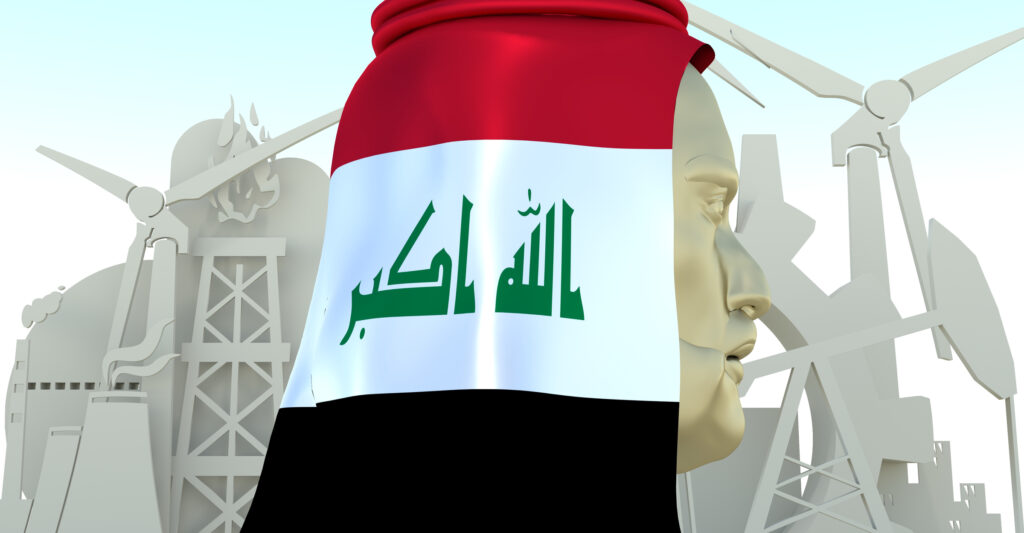
Iraq’s recent announcement to completely suspend natural gas imports from Iran marks a pivotal moment in the nation’s long-term energy strategy. While dramatic on its surface, this decision is less a sudden rupture and more the culmination of a carefully orchestrated process towards energy self-sufficiency. For investors in the global oil and gas sector, understanding this strategic shift is crucial. It signals a changing landscape in Middle Eastern energy dynamics, with implications for regional stability, the viability of major infrastructure projects, and ultimately, the broader energy market outlook. This analysis delves into the nuances of Iraq’s move, its impact on market sentiment, and what it means for the future of energy investment in a key producing region.
Iraq’s Strategic Decoupling: A Long Game, Not a Sudden Shock
The Iraqi electricity ministry’s confirmation of a full halt to Iranian gas imports, immediately removing between 4,000 and 4,500 megawatts from the national power grid, might suggest an abrupt crisis. However, this action represents the final phase of a well-telegraphed strategy. Baghdad has spent the past year systematically unwinding its reliance on external fuels, initially targeting gasoline, diesel, and kerosene. Natural gas, covering an estimated 30% to 40% of Iraq’s power generation, remained the most sensitive component of this import dependency. Iranian supply volumes had already been declining due to persistent payment disputes, the lingering pressure of U.S. sanctions, and Iran’s own domestic gas shortages. Therefore, this “complete suspension” is not an unexpected cut-off, but rather a formalization of an existing trend, allowing Baghdad to strategically manage its energy transition while demonstrating compliance with international pressures and its commitment to a national energy plan.
Market Resilience Amidst Geopolitical Shifts
Despite the significant geopolitical implications of Iraq’s move, global crude markets have shown a relatively muted reaction. As of today, Brent crude trades at $89.95 per barrel, reflecting a slight daily dip of 0.53%, with its day range between $93.87 and $95.69. Similarly, WTI crude is priced at $86.28, down 1.3% for the day, trading within a range of $85.50 to $87.47. This relative stability, particularly for crude, suggests that the market is either anticipating this development or views the immediate impact as contained. It’s noteworthy, however, that this stability follows a period of significant volatility; Brent crude experienced a sharp decline of nearly 19.8% over the past 14 days, plummeting from $118.35 on March 31st to $94.86 on April 20th. This broader downward trend indicates that macro-economic factors and overall supply-demand dynamics are currently exerting a stronger influence on crude pricing than region-specific geopolitical events related to natural gas. Investors, many of whom are keenly asking about WTI’s direction and the overall oil price outlook for 2026, are clearly weighing broader market signals more heavily than this localized, albeit strategic, energy shift.
Western Investment Fuels Iraq’s Energy Independence
The decision to halt Iranian gas imports is inextricably linked to Iraq’s aggressive pivot towards internal production and Western-backed energy projects. This strategic shift is critical for investors looking at long-term growth opportunities in the Middle East. Key initiatives are moving from conceptual stages to active production, fundamentally reshaping Iraq’s energy matrix. BP’s ambitious $25 billion, five-field development in Kirkuk, for instance, is now operational. A primary objective of this project is the extensive capture of associated gas, which historically would have been flared, converting it into a valuable resource for power generation. Concurrently, TotalEnergies’ multi-billion-dollar integrated gas project in southern Iraq is specifically designed to supply gas directly to Iraqi power plants. These large-scale developments are not merely about increasing output; they are about establishing a resilient, self-sufficient energy infrastructure that bypasses previous dependencies and creates a more stable investment environment. This direct pipeline to domestic power generation is central to Baghdad’s strategy to cut Iran out of its energy supply chain entirely, offering a clearer, albeit challenging, path to energy independence.
Navigating Future Challenges and Investor Outlook
While Iraq has signaled its clear intention to move beyond Iranian gas, the real test for its energy system lies ahead. The nation’s installed power capacity continues to struggle against soaring summer demand, and the full benefits of large-scale gas capture projects will take time to materialize. For investors, this creates both opportunity and risk, particularly regarding the long-term viability of these major infrastructure plays and the stability of the Iraqi grid. Looking ahead, the broader energy market will be shaped by several key events. The OPEC+ Joint Ministerial Monitoring Committee (JMMC) meeting on April 21st, for example, will offer crucial insights into global crude supply management, indirectly influencing the investment climate for all oil and gas assets. Subsequent data releases, such as the EIA Weekly Petroleum Status Reports on April 22nd and April 29th, and the Baker Hughes Rig Counts on April 24th and May 1st, will provide granular details on inventory levels and drilling activity, informing short-term price movements. Furthermore, the EIA Short-Term Energy Outlook on May 2nd will offer a more comprehensive forecast, addressing the very questions investors are asking about the predicted price of oil per barrel by the end of 2026. These upcoming events will collectively paint a clearer picture of market direction, influencing how investors perceive the long-term success of Iraq’s bold energy independence strategy and its impact on their portfolios.