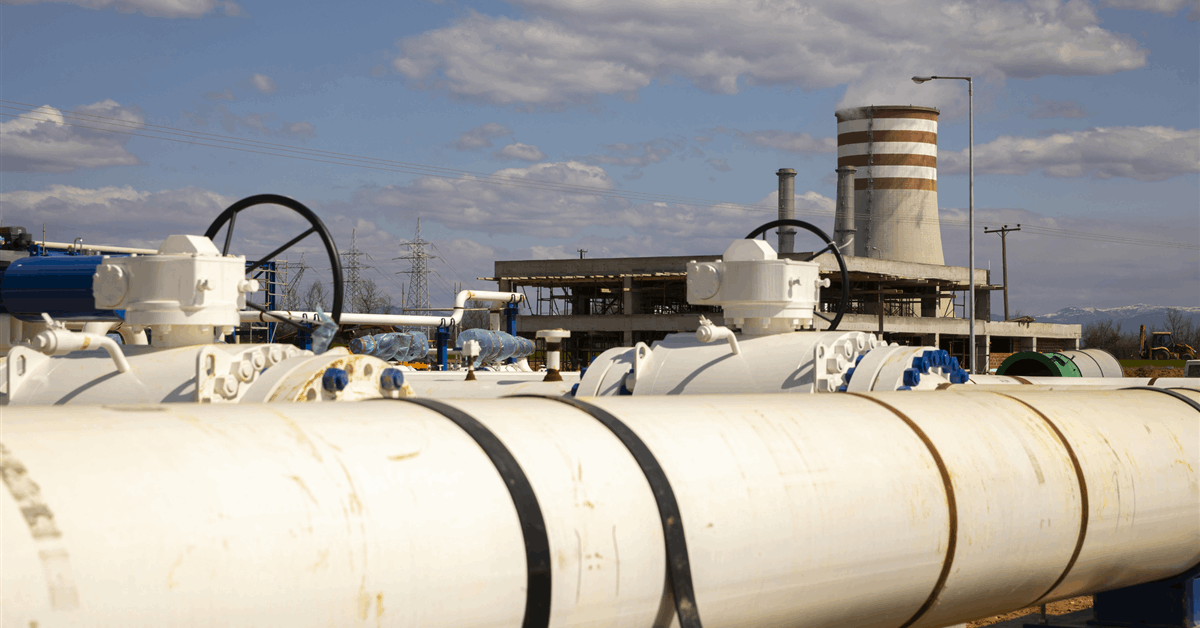
Energy Transfer LP’s recent decision to indefinitely pause its Lake Charles LNG project, pivoting instead to a sharper focus on natural gas pipeline infrastructure, marks a significant strategic recalibration for the midstream giant. This move is not merely a project deferral; it’s a profound statement on capital allocation priorities and risk assessment within a dynamic energy landscape. For investors, it signals a renewed emphasis on predictable, fee-based revenues and robust domestic demand drivers, potentially offering a more stable outlook amidst broader market uncertainties.
Strategic Reallocation: Prioritizing Pipelines Over LNG Export
Energy Transfer has made it clear: the capital previously earmarked for the Lake Charles LNG project will now be directed towards its “significant backlog of natural gas pipeline infrastructure projects” that the company believes offer “superior risk/return profiles.” While Lake Charles LNG, permitted for an annual export capacity of 851 billion cubic feet, had secured all necessary Federal Energy Regulatory Commission authorizations and even received a Department of Energy deadline extension from 2025 to 2031, its indefinite pause suggests a deeper re-evaluation of its long-term viability and immediate attractiveness compared to other opportunities. The company remains open to third-party development, but its internal investment focus has undeniably shifted.
Concurrent with this announcement, Energy Transfer underscored its commitment to pipelines by increasing the capacity of the Transwestern Pipeline’s Desert Southwest expansion project. The project’s mainline pipeline diameter will be upsized from 42 inches to 48 inches, boosting its capacity to an impressive 2.3 billion cubic feet per day, depending on final compression configurations. This expansion, targeting an in-service date by 2029, now carries an expected cost of up to $5.6 billion, excluding Allowance for Funds Used During Construction, and will incrementally increase Energy Transfer’s total growth capital expenditures for 2026 by approximately $200 million. This substantial investment highlights the company’s confidence in the sustained demand growth within the Desert Southwest region, particularly from the potential for coal-fired power plant conversions to natural gas.
Market Realities and the Midstream Advantage
Energy Transfer’s strategic pivot comes against a backdrop of fluctuating commodity prices and evolving energy market dynamics. As of today, Brent Crude trades at $90.18 per barrel, reflecting a 0.28% decline, while WTI Crude stands at $86.65, down 0.88%. This follows a notable 14-day Brent trend where prices have retreated from $118.35 on March 31st to $94.86 on April 20th, a significant 19.8% contraction. Such volatility in crude markets, alongside a complex global LNG supply-demand picture, reinforces the appeal of midstream assets like pipelines, which typically generate stable, fee-based revenues largely insulated from direct commodity price swings.
The decision to double down on natural gas pipelines, especially those serving domestic demand growth for power generation and industrial uses, reflects a more risk-averse, yet strategically sound, approach. While LNG projects offer exposure to global gas markets and potentially higher margins during periods of tight supply, they also entail massive upfront capital costs, extended development timelines, and exposure to geopolitical risks and international market competition. By contrast, expanding existing pipeline networks in regions with clearly identified and growing domestic demand, such as the Desert Southwest, offers a more predictable investment thesis with a clearer path to monetization. This move suggests Energy Transfer is prioritizing projects with a more robust and immediate demand pull, offering a superior risk-adjusted return profile in the current market environment.
Addressing Investor Concerns and Forward-Looking Catalysts
Our proprietary reader intent data reveals investors are keenly focused on future price direction, with questions like “what do you predict the price of oil per barrel will be by end of 2026?” and “is WTI going up or down?” frequently surfacing. Energy Transfer’s decision to shift capital away from a potentially more volatile LNG export venture towards the more stable, regulated pipeline segment can be interpreted as a strategic hedge against this very price uncertainty. By investing in infrastructure with long-term contracts and predictable cash flows, the company aims to de-risk its future earnings stream, making it a potentially more attractive proposition for income-focused investors.
Looking ahead, several upcoming energy events will provide crucial insights that could further validate Energy Transfer’s pipeline focus. The OPEC+ JMMC Meeting on April 21st will offer clarity on crude oil supply policies, indirectly influencing global energy prices and capital flows. More directly relevant to Energy Transfer’s natural gas strategy are the EIA Weekly Petroleum Status Reports on April 22nd and April 29th, which detail domestic natural gas inventories and demand trends. The Baker Hughes Rig Count reports on April 24th and May 1st will indicate domestic drilling activity, providing a leading indicator for future natural gas production. Furthermore, the EIA Short-Term Energy Outlook on May 2nd will offer comprehensive forecasts for natural gas supply, demand, and prices, potentially reinforcing the long-term fundamentals that underpin Energy Transfer’s significant pipeline investments. These events will help investors gauge the broader health of the natural gas market, which is now central to Energy Transfer’s growth strategy.
The Midstream Advantage in a Maturing Energy Transition
Energy Transfer’s strategic pivot underscores a broader trend in the energy sector: the increasing value placed on resilient, essential infrastructure. As the energy transition continues to unfold, natural gas is widely recognized as a critical bridge fuel, supporting renewable integration and providing reliable baseload power. This sustained, long-term demand for natural gas, particularly in growing domestic markets, fortifies the investment thesis for pipeline operators. By focusing on expanding and optimizing its existing network, Energy Transfer is positioning itself to capture consistent revenue streams from transportation and processing fees, regardless of the short-term fluctuations in commodity prices.
This disciplined capital allocation strategy, prioritizing projects with clearer demand signals and superior risk-adjusted returns, could serve as a blueprint for other midstream players. In an environment where capital is increasingly scrutinized and market volatility remains a constant, companies that can demonstrate a clear path to stable cash flows through essential infrastructure will likely garner stronger investor confidence. Energy Transfer’s move highlights a pragmatic approach to growth, emphasizing the bedrock of energy infrastructure over the more speculative ventures, solidifying its position within the crucial midstream segment of the energy value chain.


