Offshore Wind Halted: A Tailored Boost for Oil & Gas Investments
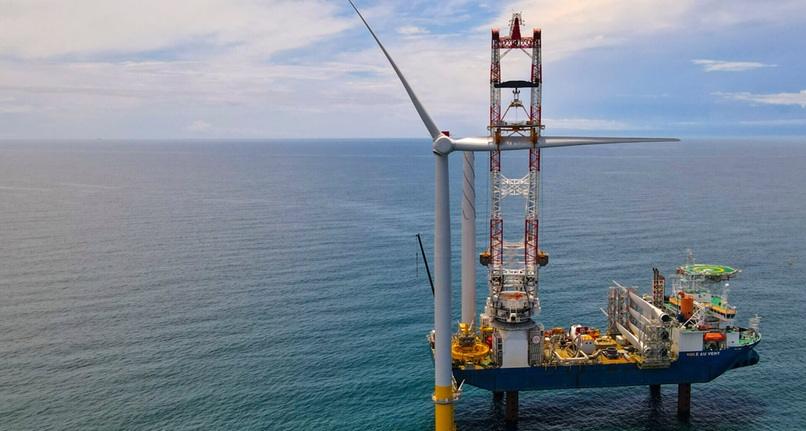
A recent and significant policy shift from the U.S. Department of the Interior has cast a new light on the American energy landscape, with profound implications for the oil and gas sector. The immediate pause on leases for all large-scale offshore wind projects currently under construction in the U.S., citing “national security risks,” effectively freezes the development of nearly 6 GW of planned renewable energy capacity. This unexpected setback for the burgeoning offshore wind industry creates an undeniable energy vacuum, extending the reliance on traditional hydrocarbon sources and presenting a compelling, albeit perhaps controversial, investment thesis for crude oil, natural gas, and related infrastructure. For investors navigating the complex energy transition, this development provides a tangible boost to the medium-term outlook for conventional energy assets.
The Immediate Energy Gap and Bolstered Hydrocarbon Demand
The Interior Department’s directive has directly halted five major offshore wind projects along the U.S. East Coast, which were slated to enter commercial operation between 2026 and 2027. These include key developments like Vineyard Wind 1, Revolution Wind, Coastal Virginia Offshore Wind (CVOW), Sunrise Wind, and Empire Wind 1. With projects like CVOW alone representing 2.6 GW, the cumulative 6 GW pause is substantial. The stated reason for the halt — “national security risks” stemming from radar interference caused by massive turbine blades and reflective towers — underscores a deep-seated challenge for large-scale renewable integration. This policy pivot means that the anticipated displacement of fossil fuel-generated electricity by these projects will not occur as planned, thereby sustaining or even increasing demand for natural gas in power generation and crude oil for other energy needs. Dominion Energy’s warning about threats to grid reliability and potential energy inflation highlights the immediate and critical role conventional energy sources will continue to play in meeting growing demands for military, AI, and civilian assets.
Market Dynamics and Investor Sentiment: A Fundamental Tailwind
Even as broader market forces continue to influence daily trading, this policy shift offers a fundamental underpinning for oil and gas valuations. As of today, Brent crude trades at $90.06, experiencing a slight dip of 0.41%, while WTI crude stands at $86.5, down 1.05%. Gasoline prices also saw a minor decline to $3.03. This current snapshot follows a more significant 14-day trend where Brent crude moved from $118.35 on March 31st to $94.86 by April 20th. While this recent downward trajectory reflects various market pressures, the offshore wind halt provides a robust counter-narrative, suggesting a stronger floor for crude prices than might otherwise exist. Our internal analytics indicate that investors are actively seeking clarity on the future direction of oil prices, with common inquiries centering on “what do you predict the price of oil per barrel will be by end of 2026?” This policy change directly impacts that outlook, extending the period of reliance on hydrocarbons and reducing future competition from new utility-scale renewables, thus supporting a more optimistic, or at least stable, price environment for crude and natural gas into the medium term.
Upcoming Events and Future Demand Projections
The implications of this offshore wind pause will ripple through upcoming market events, influencing global supply and demand discussions. The OPEC+ Joint Ministerial Monitoring Committee (JMMC) Meeting on April 21st will be a critical juncture, where decisions on production levels will undoubtedly consider global demand trends, now with a slightly more favorable outlook for conventional fuels due to the U.S. policy shift. Domestically, the EIA Weekly Petroleum Status Reports on April 22nd and April 29th, alongside the API Weekly Crude Inventory data on April 28th and May 5th, will provide crucial insights into current inventory levels and refinery runs. These reports will reflect ongoing demand patterns that are now less likely to be offset by new offshore wind capacity in the coming years. Furthermore, the EIA Short-Term Energy Outlook, due on May 2nd, will offer updated forecasts for the energy market, and investors should scrutinize this report for any adjustments to demand projections for crude oil and natural gas that account for this significant policy reversal. Such data points will be instrumental in gauging the sustained demand for fossil fuels as the U.S. energy grid seeks to maintain reliability without the planned influx of offshore wind power.
Strategic Investment Positioning in a Shifting Landscape
For investors focused on the oil and gas sector, this policy decision underscores the enduring importance of hydrocarbons in the energy mix, particularly in the face of complex geopolitical and logistical challenges for renewables. The pause in offshore wind development reinforces the investment case for companies involved in crude oil exploration and production, natural gas supply, and midstream infrastructure. Regions like the U.S. East Coast, where several of these projects were located, will likely see sustained or increased demand for natural gas to ensure grid stability and meet energy needs. Companies with robust domestic footprints, strong operational capabilities, and commitments to gas-fired power generation stand to benefit. Investors asking about specific company performance, such as Repsol, should analyze how broader policy shifts of this magnitude can influence the entire energy value chain, from upstream producers to downstream refiners and power generators. This environment favors a strategic focus on firms demonstrating resilience, strong cash flow generation, and a clear role in providing reliable, dispatchable power in an increasingly complex energy transition.


