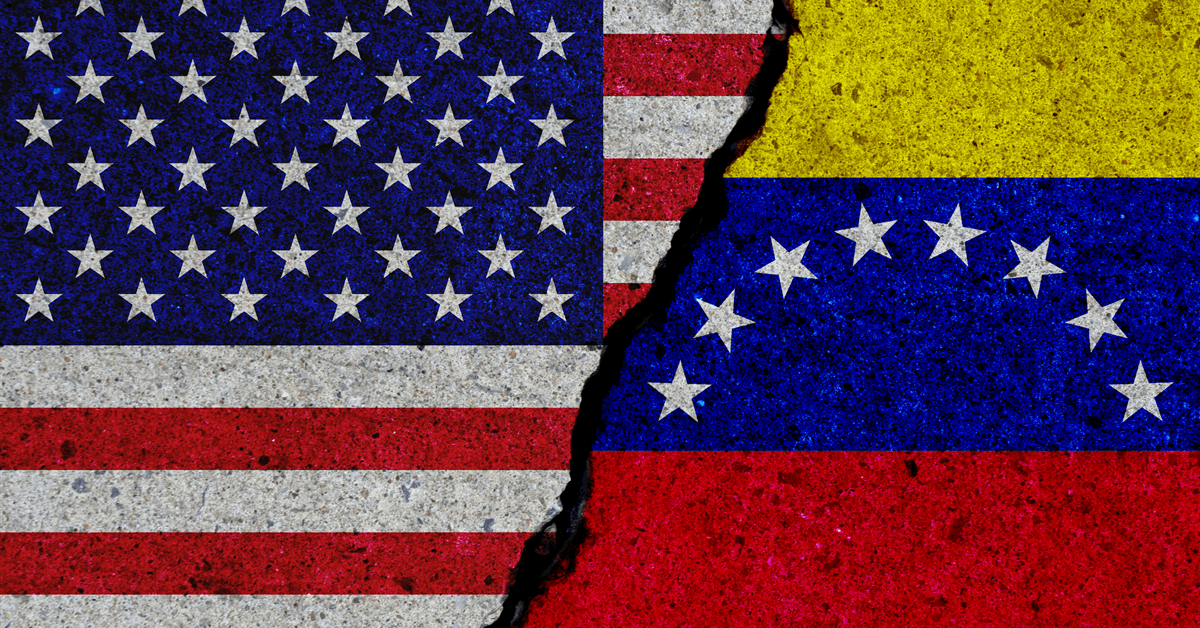
The United States has significantly escalated its maritime enforcement actions off the coast of Venezuela, signaling a concerted effort to sever a critical economic lifeline for the government of President Nicolás Maduro. Recent interdictions of oil tankers, including the Bella 1, Centuries, and Skipper, represent an intensifying blockade aimed at isolating Caracas. For oil and gas investors, this geopolitical maneuver, while targeting a relatively small global producer, adds another layer of complexity to an already volatile market. Understanding Washington’s strategic calculus, the market’s reaction, and the forward implications for global supply dynamics is crucial for navigating the evolving energy landscape.
Escalation of Maritime Interdictions Targets Venezuela’s Oil Lifeline
In a dramatic shift, US forces have intensified their pursuit and boarding of vessels suspected of carrying Venezuelan crude, with three distinct incidents unfolding in recent weeks. The tanker Bella 1 was reportedly chased en route to Venezuela, while the Centuries, a Hong Kong-owned vessel, was boarded on April 13th, marking a notable expansion as it was not previously under direct sanctions. This followed the interception of the very large crude carrier Skipper on December 10th. These actions signal a more aggressive posture from Washington, moving beyond traditional sanctions to direct maritime enforcement. The strategy aims to directly disrupt the operations of Petróleos de Venezuela SA (PDVSA), which increasingly relies on a network of “dark-fleet” tankers – older vessels with opaque ownership – to transport its crude, primarily to China, often via intermediaries. This tightening blockade extends to imports vital for Venezuela’s heavy crude, such as diluents from Russia. Analysts like Bob McNally of Rapidan Energy Group observe that Washington perceives growing leverage due to loosening global balances and falling prices, intensifying pressure on the Maduro regime. Francisco Monaldi, an energy expert at Rice University, echoes this, suggesting that these “critical days” will likely lead to a decline in Venezuelan export volumes.
Current Market Volatility Amidst Geopolitical Tensions
While Venezuela’s oil exports have dwindled to less than 1% of global demand, the principle of intensified geopolitical blockades resonates across the market, contributing to underlying volatility. As of today, Brent crude trades at $90.38, marking a significant 9.07% decline in a single day, having ranged between $86.08 and $98.97. WTI crude is similarly down 9.41% at $82.59, with a daily range of $78.97 to $90.34. Gasoline prices have also seen a substantial drop, trading at $2.93, a 5.18% decrease, within a range of $2.82 to $3.1. This sharp downturn comes after a broader 14-day trend where Brent shed over 18.5%, falling from $112.78 on March 30th to $91.87 just yesterday. The market’s reaction to the Venezuela escalation, though initially modest as noted in the source material, is now overshadowed by these broader, more substantial price movements. This suggests that while Venezuela adds a layer of geopolitical risk, current market sentiment is driven by a complex interplay of supply, demand, and macroeconomic factors that are exerting significant downward pressure on prices, even as specific supply disruptions emerge.
Forward-Looking Analysis: Key Events Shaping Investor Outlook
Our proprietary reader intent data reveals a heightened focus among investors on future price trajectories, with many asking about the predicted price of oil per barrel by the end of 2026, and specific questions regarding OPEC+ current production quotas. These forward-looking concerns are directly impacted by upcoming energy events that deserve close attention. This weekend, the market will intently watch the OPEC+ Joint Ministerial Monitoring Committee (JMMC) meeting on April 18th, followed by the full Ministerial Meeting on April 19th. Any adjustments to production quotas from these critical gatherings will directly influence global supply balances and address lingering questions about the cartel’s strategy in a volatile market. Further insights into supply and demand dynamics will come from the API Weekly Crude Inventory report on April 21st and the EIA Weekly Petroleum Status Report on April 22nd, with subsequent reports on April 28th and 29th, respectively. These data points offer crucial clarity on US inventory levels, a significant global indicator. Additionally, the Baker Hughes Rig Count on April 24th and May 1st will provide leading indicators for future drilling activity and potential supply growth. While the Venezuela blockade itself may not trigger a massive market swing due to its limited global share, its intensification contributes to an environment of geopolitical uncertainty that could amplify the impact of these scheduled events, making investor forecasting particularly challenging.
Strategic Implications for Energy Investments
The Trump administration’s deployment of military assets in the Caribbean, the largest in decades, underscores a determined effort to enforce its policy objectives against Venezuela. This strategic push aims to make all tankers in the waters around Venezuela susceptible to interdiction, essentially making the “dark fleet” operations riskier and more costly. For investors, this amplifies geopolitical risk in specific shipping corridors and raises the operational costs for any entity involved in sanctioned oil trade. China’s condemnation of these US maneuvers and its stated support for Caracas’ “legitimate rights and interests” highlights the broader geopolitical chess match at play, suggesting potential counter-measures or increased support for alternative supply chains. While the direct impact on global oil prices from Venezuela’s diminished output is contained, the precedent of intensified maritime blockades carries significant long-term implications for the security of global energy trade routes and the viability of “dark fleet” operations often used by other sanctioned producers like Iran and Russia. Investors should consider the potential for increased shipping insurance premiums, re-routing of vessels, and the broader ramifications for companies with exposure to regions prone to such geopolitical interventions. The ongoing situation in Venezuela serves as a potent reminder of how political will can directly impact physical supply chains, influencing global energy security and, consequently, investment strategies in the oil and gas sector.


