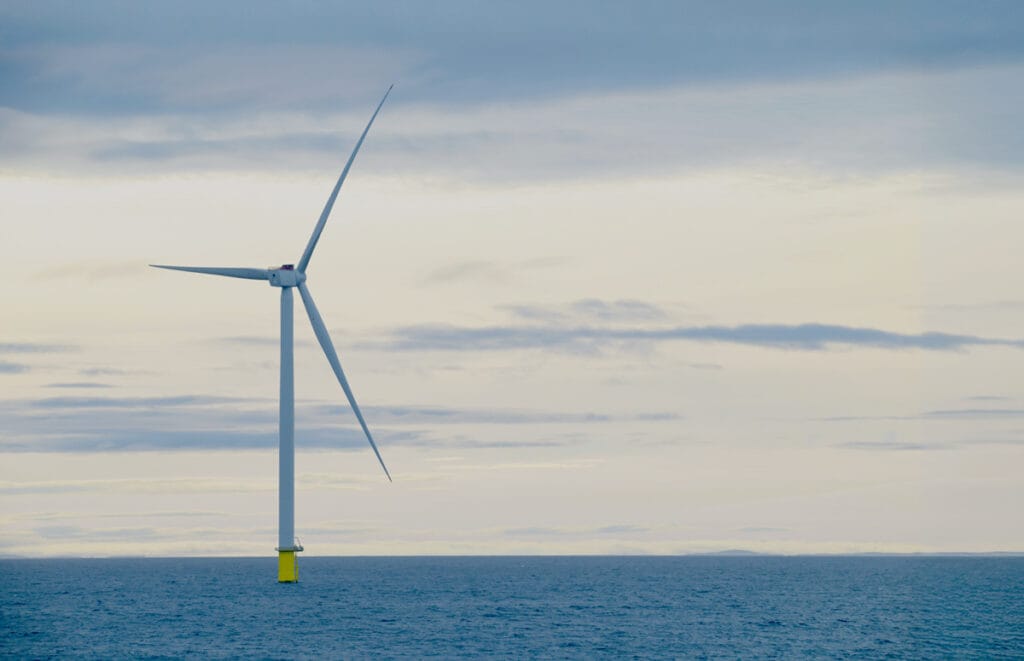
The announcement that the 1.3 GW High Sea Wind project off the coast of Gippsland, Victoria, is moving forward with its initial metocean data collection campaign marks a significant milestone for Australia’s nascent offshore wind sector. For astute energy investors, this isn’t just a procedural step; it’s a critical de-risking phase that underpins future capital allocation, project finance, and the long-term viability of renewable energy infrastructure. As traditional energy markets grapple with volatility, projects like High Sea Wind offer a compelling narrative for diversification and sustainable growth.
Data-Driven De-Risking: The Foundation of Offshore Wind Investment
The commencement of Ocean Winds’ comprehensive offshore wind and metocean measurement campaign is a testament to the imperative of data-led development in large-scale infrastructure projects. This initiative, leveraging an EOLOS floating LiDAR buoy and expertise from TGS, is designed to gather high-quality wind, wave, current, and environmental data. For investors, this translates directly into reduced uncertainty. Accurate metocean data is not merely a technical requirement; it is a foundational element that informs turbine selection, foundation design, precise capital expenditure forecasts, and crucially, long-term performance projections. This granular, site-specific information is indispensable for securing environmental approvals under Australia’s evolving regulatory framework and building robust financial models that attract institutional capital. By grounding project decisions in verified offshore data, developers aim to mitigate risks, enhance transparency for regulators and local communities, and ultimately bolster investor confidence in the substantial upfront investment required for a project expected to power up to one million Victorian homes annually and offset 5.3 million tonnes of CO₂ emissions each year.
Navigating Energy Market Swings: Offshore Wind as a Portfolio Stabilizer
The progression of projects like High Sea Wind occurs against a backdrop of dynamic and often volatile global energy markets. As of today, Brent crude trades at $91.87, representing a notable single-day decline of 7.57% from its range high of $98.97. This sharp movement follows a significant downward trend, with Brent prices having fallen by $20.91, or 18.5%, from $112.78 just 14 days ago. WTI crude mirrors this trend, currently at $84, down 7.86%, while gasoline prices have also retracted to $2.95. This marked volatility in fossil fuel markets underscores the investment case for stable, long-term energy generation assets. While offshore wind projects operate on different economic fundamentals than crude oil, the broader energy investment landscape is deeply interconnected. The relative stability of contracted renewable energy revenues offers a compelling counter-cyclical opportunity for investors seeking to diversify away from the inherent price fluctuations of traditional hydrocarbons. Projects that de-risk through meticulous data collection and robust planning, like High Sea Wind, become particularly attractive in periods where commodity price swings introduce significant uncertainty into energy portfolios.
Upcoming Catalysts and the Australian Energy Transition Outlook
Looking ahead, the next few weeks are punctuated by key events that will continue to shape the global energy narrative, though primarily focused on traditional energy sources. The OPEC+ Ministerial Meeting scheduled for April 18th, followed by weekly API and EIA inventory reports and Baker Hughes rig counts, will provide fresh insights into global oil supply and demand dynamics. While these events directly impact crude prices, their outcomes indirectly influence the perceived urgency and investment appetite for energy transition projects. A tighter oil market might accelerate renewable adoption, while an oversupply could shift capital flows. For the High Sea Wind project specifically, the successful completion and analysis of its metocean campaign will be a critical internal catalyst, paving the way for definitive turbine selection, foundation design, and environmental impact assessments. These are the immediate hurdles that, once cleared, will unlock further financing and procurement milestones. The project’s advancement is also a bellwether for Australia’s broader ambition to establish a domestic offshore wind supply chain, creating significant opportunities for local businesses in marine services, logistics, fabrication, and operations, which represents a substantial economic value proposition beyond just energy generation.
Investor Focus: Long-Term Value and Growth in the New Energy Frontier
Our proprietary reader intent data reveals a consistent investor focus on future market conditions, with questions such as “what do you predict the price of oil per barrel will be by end of 2026?” dominating queries. This forward-looking perspective, coupled with inquiries about specific company performance like “How well do you think Repsol will end in April 2026,” highlights the market’s demand for clarity on future value and risk. The High Sea Wind project directly addresses these concerns within the renewable sector. By undertaking a rigorous metocean campaign, the developers are actively mitigating long-term operational and financial risks, thereby enhancing the predictability of future returns for investors. This commitment to robust, data-driven planning provides a stark contrast to the inherent volatility in commodity markets, offering a pathway to stable, long-term capital appreciation. For investors seeking to align their portfolios with the global energy transition, projects of this scale, backed by meticulous groundwork and offering substantial environmental benefits, represent a cornerstone for sustainable growth and a powerful response to the evolving demands of the energy investment landscape.


