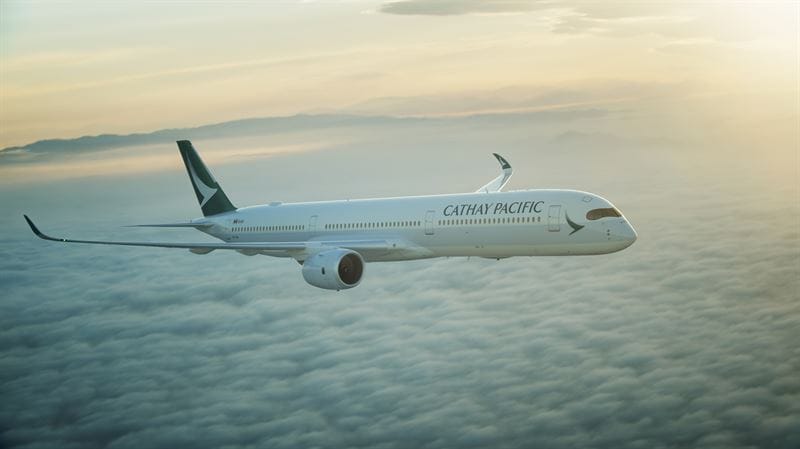
Neste Expands Global SAF Market Share with Cathay Deal
The recent agreement between Neste and Cathay Group marks a pivotal moment in the global push for aviation decarbonization, signaling a strategic shift from localized pilot projects to a multi-regional, scalable approach for Sustainable Aviation Fuel (SAF) adoption. This long-term partnership, spanning Europe, the United States, and Asia-Pacific, demonstrates how major carriers are actively integrating SAF into their core operations to mitigate environmental risk and meet tightening climate policies. For investors, this deal underscores the increasing maturity and investment potential within the SAF sector, positioning companies like Neste as critical enablers in the energy transition while providing airlines a clear path to reducing lifecycle emissions without disruptive infrastructure overhauls.
SAF as Aviation’s Immediate Decarbonization Lever
For the aviation industry, the pathway to significant emissions reductions has long been a complex challenge, particularly for long-haul routes where electrification or hydrogen propulsion remain decades away from widespread commercial viability. In this context, Sustainable Aviation Fuel stands out as the most practical and immediate solution available today. Neste MY Sustainable Aviation Fuel™, for instance, offers a compelling value proposition by reducing greenhouse gas emissions by up to 80 percent over its lifecycle compared to conventional jet fuel. Crucially, this is achieved without requiring any modifications to existing aircraft engines or airport fueling infrastructure. The Cathay Group’s commitment to deploying Neste’s SAF across major hubs like Amsterdam Schiphol, Los Angeles International, and Singapore Changi, including for its cargo operations via Air Hong Kong, exemplifies a strategic move to embed decarbonization directly into daily flight operations. This transition from symbolic gestures to scalable, repeatable use across a global network highlights the growing confidence in SAF technology and supply chain reliability as regulatory pressures continue to mount across key economic blocs.
Neste’s Strategic Positioning Amidst Market Volatility
Neste’s ability to facilitate a multi-region SAF rollout for a global airline like Cathay Group speaks volumes about its advanced production capabilities and extensive access to airport fuel systems worldwide. This global deployment strategy is a significant differentiator, allowing airlines to integrate SAF seamlessly into their existing operational frameworks. While the long-term trajectory for SAF is decidedly upward, the broader energy market continues to exhibit considerable volatility. As of today, Brent crude trades around $91.87, representing a significant 7.57% drop from yesterday’s close and a steep 18.5% decline from its March 30th high of $112.78. Similarly, WTI crude has seen an approximate 7.86% dip to $84 per barrel. This recent downturn in traditional crude prices, influenced by various global factors, could temporarily alleviate immediate fuel cost pressures for airlines. However, it does not diminish the strategic imperative for decarbonization. Instead, it highlights the dual challenge for energy investors: navigating the unpredictable swings of the fossil fuel market while simultaneously identifying and capitalizing on the stable, growth-oriented segments of the energy transition, where companies like Neste are building resilient, future-proof business models.
Investor Focus: Beyond Crude Prices to Sustainable Growth
Our proprietary reader intent data reveals a keen investor interest in the macro energy landscape, with frequent queries about the future price of oil by year-end 2026 and current OPEC+ production quotas. This underscores a market still largely focused on conventional energy dynamics and short-term commodity price movements. However, the Neste-Cathay agreement serves as a powerful reminder that while investors track immediate crude price fluctuations, the strategic long-term plays are increasingly found in decarbonization solutions like SAF. Companies enabling this transition are building business models that offer resilience against the sharper gyrations of the fossil fuel market. For Cathay Group, such long-term SAF supply partnerships are a critical tool for managing decarbonization risk, providing a predictable supply of lower-emission fuel and potentially hedging against future carbon taxes or penalties. For Neste, these agreements solidify market share and demonstrate scalable commercial execution, translating into sustained revenue growth opportunities in a rapidly expanding sector. Investors are increasingly evaluating companies not just on their current hydrocarbon output, but on their strategic positioning within the evolving energy mix, making sustainable fuel partnerships a key indicator of forward-looking value.
Forward Outlook: Policy, Production, and Upcoming Catalysts
The future trajectory of the SAF market will be heavily influenced by both policy mandates and the industry’s ability to scale production. Upcoming events on the energy calendar provide context for this evolving landscape. The OPEC+ Ministerial Meeting scheduled for April 18th, for instance, will be closely watched for any shifts in global crude production policy. While not directly related to SAF, its outcome will influence the overall energy cost environment, indirectly shaping the economic considerations for alternative fuels. Similarly, the API and EIA weekly crude inventory reports on April 21st and 22nd, respectively, offer vital snapshots of short-term supply and demand dynamics in the traditional oil market. These reports, alongside the Baker Hughes Rig Count on April 24th, contribute to the broader energy narrative that SAF is increasingly disrupting. Looking ahead, the expansion of SAF production capacity and the development of new feedstock sources, such as advanced agricultural pathways, will be crucial. As regulatory frameworks in Europe, North America, and parts of Asia continue to tighten, the demand for certified SAF is set to skyrocket. Companies with established global supply chains and diversified feedstock strategies, like Neste, are best positioned to capitalize on this inevitable growth, making the sector a compelling area for long-term investment.


