The Emergence of Hyper-Local Emissions Data: A New Lens for Oil & Gas Investors
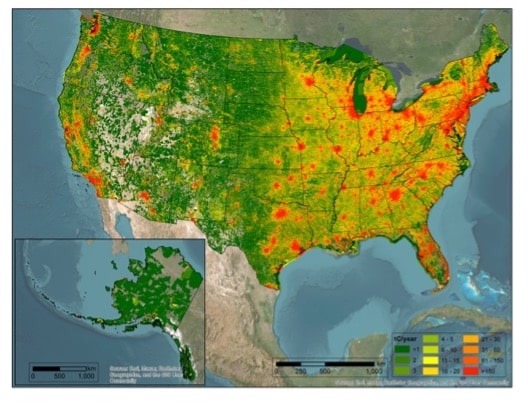
In an evolving energy landscape, robust data is the bedrock of sound investment decisions. A significant new development for oil and gas investors is the release of a comprehensive, high-resolution database of U.S. carbon dioxide emissions. This initial release, encompassing 13 years of CO2 data, marks the first in a series that promises unprecedented granularity down to individual city blocks, road segments, and industrial facilities. For an industry at the heart of global energy supply and, by extension, global emissions, this level of transparency is not merely academic; it represents a powerful new tool for understanding future regulatory risks, identifying strategic investment opportunities, and evaluating the long-term viability of assets in a carbon-constrained world. Investors must now integrate this hyper-local emissions intelligence into their due diligence, recognizing its potential to reshape policy, drive capital allocation, and redefine value across the entire energy complex.
Granular Emissions Data: Reshaping Risk and Opportunity for O&G Assets
The Vulcan system’s latest iteration provides a granular view of CO2 emissions from the combustion of coal, oil, and natural gas across the United States. This means investors can soon pinpoint emissions down to specific power plants, factories, and even road segments. This level of detail fundamentally alters the risk assessment for oil and gas assets. Historically, emissions data has often been aggregated, making it difficult to assess the precise carbon footprint or regulatory exposure of individual projects or local operations. With this new data, investors can identify specific assets or regions that are significant contributors to emissions, making them potential targets for future carbon pricing mechanisms, stricter local regulations, or community-led decarbonization initiatives. Conversely, it allows for the identification of areas with lower emissions intensity, or opportunities for targeted investment in carbon capture, utilization, and storage (CCUS) projects, or alternative energy infrastructure. Our proprietary reader intent data shows a consistent investor focus on future oil price predictions and the strategies of major players like Repsol, highlighting a clear demand for insights that can differentiate performance in a rapidly changing market. This granular emissions data provides exactly that, allowing for a more nuanced evaluation of how individual companies manage their carbon footprint and adapt to environmental pressures, directly influencing their long-term financial health.
Navigating Volatility: Emissions Data Amidst a Shifting Price Landscape
The release of this detailed emissions data comes at a time of notable volatility in the crude markets. As of today, Brent Crude trades at $91.87, representing a significant 7.57% downturn. WTI Crude mirrors this trend, settling at $84, down 7.86%. This recent weakness is part of a broader trend; Brent has shed $20.91, or 18.5%, over the past two weeks, falling from $112.78 on March 30th. While immediate price movements are often driven by short-term supply and demand dynamics, geopolitical events, or inventory reports, the structural shift towards decarbonization remains a powerful underlying current. This new emissions data reinforces the long-term pressures on fossil fuel demand by making carbon liabilities more transparent and actionable. Even as investors grapple with daily price swings and assess the impact of upcoming API and EIA weekly petroleum status reports on April 21st and 22nd, respectively, they must not lose sight of the increasingly stringent environmental policies that this data will empower. The ability to precisely quantify emissions at a local level will accelerate the push for cleaner energy sources and potentially lead to more targeted carbon taxes or subsidies, influencing the cost of doing business for oil and gas companies long after today’s market fluctuations subside.
Forward Outlook: Emissions Data and Upcoming Policy Catalysts
Looking ahead, the ongoing series of data releases, promising neighborhood- and city-specific emissions, road segment vehicular emissions, and industrial facility emissions, will continue to provide critical insights. These future releases, expected to follow the initial 13-year dataset, will enable policymakers, businesses, and communities to make even more informed decisions about where and how to cut emissions most effectively. This directly ties into the broader investment thesis for energy transition. While investors are keenly awaiting the OPEC+ Full Ministerial Meeting on April 18th for immediate supply-side guidance and monitoring the Baker Hughes Rig Count on April 24th for drilling activity, the implications of this emissions data play out on a longer, strategic timeline. The enhanced transparency will likely catalyze new environmental policies and market mechanisms, such as regional carbon trading markets, as suggested by the researchers. Companies that proactively leverage this data to reduce their localized emissions and invest in sustainable practices will gain a competitive edge. This forward-looking analytical framework is crucial for investors asking about long-term oil price predictions for the end of 2026 and beyond, as policy shifts driven by such granular data will profoundly shape future demand scenarios, operating costs, and access to capital for the entire oil and gas sector.
Investment Strategy in the Age of Hyper-Granular Carbon Data
For investors, the availability of hyper-granular CO2 emissions data presents both challenges and opportunities. On the challenge side, it elevates regulatory risk for high-emitting assets and regions, potentially impacting valuations and project approvals. On the opportunity side, it provides a powerful tool for identifying companies and assets that are genuinely leading in decarbonization efforts. Companies that actively engage with this data, integrating it into their operational planning and capital expenditure decisions, will be better positioned. This includes investments in advanced emissions reduction technologies, such as CCUS, or transitioning to lower-carbon energy sources within their portfolios. Furthermore, the data could facilitate the creation of new financial products, such as geographically targeted carbon credits or green bonds tied to specific emission reduction projects. Our proprietary reader intent data shows significant interest in the specifics of market data sources and APIs, indicating a sophisticated investor base eager to integrate new data streams. This new emissions data, therefore, isn’t just a compliance burden; it’s a strategic asset for investors looking to allocate capital towards resilient, future-proof energy investments, driving both economic growth and environmental stewardship in the years to come.