Shell plc is reinforcing its commitment to high-margin, long-life assets in the U.S. Gulf of Mexico with a significant final investment decision (FID) on the Kaikias waterflood project. This strategic move aims to extend the production lifespan of the venerable Ursa hub by several years, unlocking substantial additional recoverable resources. For investors, this signals a clear focus on maximizing value from existing infrastructure, a prudent strategy in a volatile energy landscape. Our analysis delves into the implications of this decision, considering current market dynamics, upcoming industry catalysts, and key investor concerns.
Strategic Value of Extending Ursa’s Deepwater Life
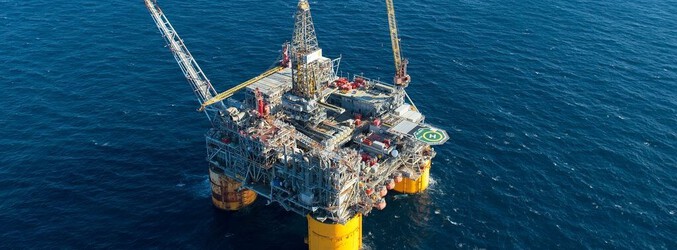
Shell’s decision to proceed with the Kaikias waterflood project at its wholly-owned Kaikias field represents a crucial phase of secondary recovery for the Ursa hub. By injecting water into the reservoir, Shell Offshore Inc. plans to displace additional oil towards existing production wells while simultaneously restoring vital reservoir pressure. This initiative, with first water injection targeted for 2028, promises to add approximately 60 million barrels of oil equivalent (P50) in recoverable resources, currently classified as 2P under industry standards. This directly extends the producing life of the Ursa platform, a long-standing deepwater hub in the prolific Mars Corridor, which Kaikias has been tied back to since 2018.
This investment aligns perfectly with Shell’s stated strategy of maximizing value from its core deepwater assets and focusing on high-margin production. The company had already increased its ownership stake in Ursa earlier this year, underscoring its long-term confidence in the asset. Furthermore, Shell has consistently highlighted that its U.S. Gulf production boasts some of the lowest greenhouse gas intensity barrels globally, making these projects attractive from an environmental, social, and governance (ESG) perspective. This reinforces Shell’s broader objective, as outlined at its 2025 Capital Markets Day, to sustain liquids production at around 1.4 million barrels of oil equivalent per day through 2030, a target that critical brownfield expansions like Kaikias are essential in achieving.
Deepwater Resilience Amidst Market Volatility
Shell’s long-term commitment to the Kaikias project comes at a time when the immediate crude oil market is experiencing significant price corrections. As of today, Brent crude trades at $91.87 per barrel, reflecting a sharp 7.57% decline within the day, having ranged between $86.08 and $98.97. Similarly, WTI crude is priced at $84 per barrel, down 7.86%, with its daily range between $78.97 and $90.34. This downturn is stark when considering the 14-day trend, where Brent has fallen from $112.78 on March 30th to its current level, representing an 18.5% drop. Gasoline prices have also followed suit, trading at $2.95, a 4.85% decrease today.
Despite these immediate headwinds, Shell’s investment in a secondary recovery project leveraging existing infrastructure highlights the inherent resilience of mature deepwater assets. Such projects typically boast competitive breakeven costs due to the absence of initial infrastructure build-out, making them less susceptible to short-term price fluctuations. For investors asking about the future trajectory of oil prices, particularly “what do you predict the price of oil per barrel will be by end of 2026?”, Shell’s move demonstrates a strategic focus on delivering stable, high-margin production that can withstand market volatility. This long-term perspective prioritizes resource recovery and asset optimization over reacting to daily price swings, a key characteristic of prudent deepwater investment.
Navigating Future Supply Dynamics and Investor Questions
Looking ahead, the energy market faces several near-term catalysts that will shape the future supply and demand landscape, impacting the investment outlook for companies like Shell. Tomorrow, April 18th, the full Ministerial OPEC+ Meeting is scheduled, a critical event that will likely influence global production quotas and, consequently, crude oil prices. Many investors are keenly following “what are OPEC+ current production quotas?”, recognizing the group’s pivotal role in market balancing. Following this, the market will absorb weekly insights from the API and EIA crude inventory reports on April 21st and 22nd, respectively, providing crucial demand signals. The Baker Hughes Rig Count on April 24th will offer a gauge of North American drilling activity.
Shell’s decision to greenlight the Kaikias waterflood, with its 2028 first injection date and multi-year production extension, signals a long-term confidence in the deepwater U.S. Gulf, irrespective of short-term OPEC+ decisions or weekly inventory data. This project contributes to future global supply stability, aligning with Shell’s ambition to sustain its liquids production through the decade. For investors monitoring the broader market, Shell’s proactive approach to enhancing existing assets underscores a strategy focused on sustainable production additions that are less exposed to the higher risks and longer lead times of entirely new greenfield developments. This forward-looking approach positions Shell favorably for predictable cash flows in the years to come, addressing the underlying need for long-term value creation that drives many investor inquiries.