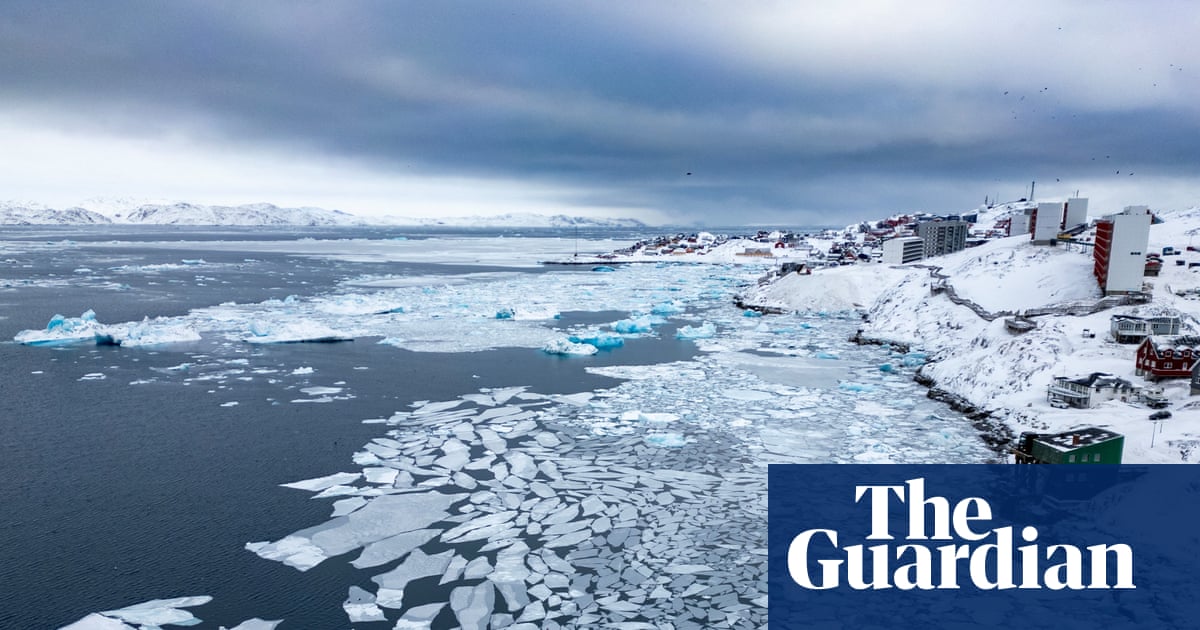
The Arctic, long viewed as a remote frontier for energy exploration and shipping, is undergoing a profound and rapid transformation, with critical implications for global oil and gas markets. Recent scientific reports confirm that the region experienced its warmest year on record from October 2024 to September 2025, marking the hottest period in 125 years of modern record-keeping. This unprecedented warming, occurring four times faster than the global average, is not merely an environmental concern; it represents a fundamental shift in operating realities, supply chain dynamics, and investment calculus for the energy sector. As sea ice extent shrinks to its lowest in 47 years and precipitation records are shattered, investors must critically re-evaluate their exposure and strategies in a region redefining the very concept of “winter.”
The New Operational Landscape in the High North
The stark reality of a rapidly warming Arctic presents immediate and long-term challenges for oil and gas operations. The period spanning October 2024 to September 2025 registered as the hottest in 125 years, with the last decade collectively holding the top ten warmest Arctic years on record. This accelerated warming is dismantling the region’s traditional ice-bound environment. Satellite data reveals that the maximum sea ice extent in 2025 was the lowest ever recorded, part of a trend seeing the oldest, thickest ice decline by over 95% since the 1980s. Furthermore, the Arctic experienced its highest-ever precipitation, with much of it falling as rain, even in winter months. June snow cover today is half of what it was six decades ago.
For energy companies operating or planning to operate in the Arctic, this means a dramatic increase in physical risks and operational complexities. Melting permafrost threatens existing infrastructure stability, impacting pipelines, drilling pads, and support facilities. Increased rain and reduced ice cover translate to more volatile and hazardous conditions for transport, construction, and exploration. The very season for ice-road construction is shrinking, while the unpredictable nature of ice-free waters demands new vessel technologies and logistical planning. These factors invariably lead to higher operational costs, increased safety risks, and potential delays, compelling a re-evaluation of project economics and feasibility in a region once seen as a vast untapped resource.
Market Volatility and Investor Scrutiny Amidst Arctic Shifts
Against the backdrop of these seismic shifts in the Arctic, the broader energy market continues to exhibit significant volatility, a factor that only amplifies the implications of a changing High North. As of today, Brent crude trades at $91.87 per barrel, reflecting a notable 7.57% decline, while WTI crude stands at $84, down 7.86%. This daily movement is part of a broader trend; Brent has seen a 12.4% drop over the last 14 days, falling from $112.57 on March 27th to $98.57 yesterday. Such price fluctuations naturally prompt intense investor interest and concern.
Our proprietary reader intent data reveals a consistent focus on market trajectory, with investors keenly asking about the future price of oil, including where Brent might settle by the end of 2026. This forward-looking perspective must now integrate the Arctic’s evolving reality. While a more accessible Arctic could theoretically open new shipping lanes, potentially reducing transit times and costs for certain routes, the increased operational challenges and investment required for Arctic energy extraction could equally offset any perceived benefits. Furthermore, the long-term impact on global supply stability, influenced by the viability of existing and future Arctic projects, adds another layer of complexity to price predictions. Investors are right to question how these unprecedented environmental changes will factor into the supply-demand equation and global energy security narratives.
Geopolitical Dynamics and Future Supply Signals
The strategic implications of an increasingly ice-free Arctic extend far beyond operational challenges, touching upon global geopolitics and future supply signals. The opening of new maritime routes, such as the Northern Sea Route, for longer periods each year has the potential to reshape global trade flows and shipping economics. While this might initially seem beneficial, it also intensifies geopolitical competition for access and resources in the region, adding a layer of risk and uncertainty for energy investors.
Upcoming energy events will provide crucial insights into the near-term supply landscape, which could be subtly influenced by these Arctic developments. The OPEC+ Joint Ministerial Monitoring Committee (JMMC) and the full Ministerial meetings scheduled for April 17th and 18th are pivotal for understanding global production quotas and market balance. While these discussions will primarily focus on traditional supply levers, the long-term viability and cost-effectiveness of Arctic production could become a more significant underlying factor in global supply narratives. Additionally, the weekly API and EIA inventory reports on April 21st and 22nd, and again on April 28th and 29th, coupled with the Baker Hughes Rig Count on April 24th and May 1st, will offer a granular view of current supply and demand dynamics. Any shifts in investment or operational activity in the Arctic, driven by the new climatic reality, could ultimately feed into these broader supply indicators, impacting the global energy balance and investor outlook.
Navigating Investment in a Redefined Arctic
For investors, the Arctic’s rapid transformation demands a sophisticated and nuanced approach to portfolio management within the oil and gas sector. The ‘redefinition of winter’ in the Arctic is not just a scientific observation; it is a direct challenge to the fundamental assumptions underpinning Arctic energy projects. Companies with significant existing or planned Arctic exposure must demonstrate robust strategies for adapting to unpredictable ice conditions, increased precipitation, and melting permafrost. This includes substantial investments in resilient infrastructure, advanced ice management technologies, and comprehensive environmental impact mitigation.
Successful investment in this new Arctic reality will hinge on identifying companies that prioritize innovation and adaptability. This means favoring operators with proven capabilities in extreme environments, strong balance sheets to absorb higher operational costs, and a clear long-term vision for sustainable resource development that accounts for accelerated climate change. As the region becomes rainier, less ice-bound, and more prone to extreme weather events, the risk-reward profile of Arctic energy projects shifts dramatically. Investors must look beyond traditional metrics and assess how companies are preparing for an environment that is fundamentally different from even a decade ago, ensuring capital is allocated to ventures that can genuinely thrive in a redefined High North.


