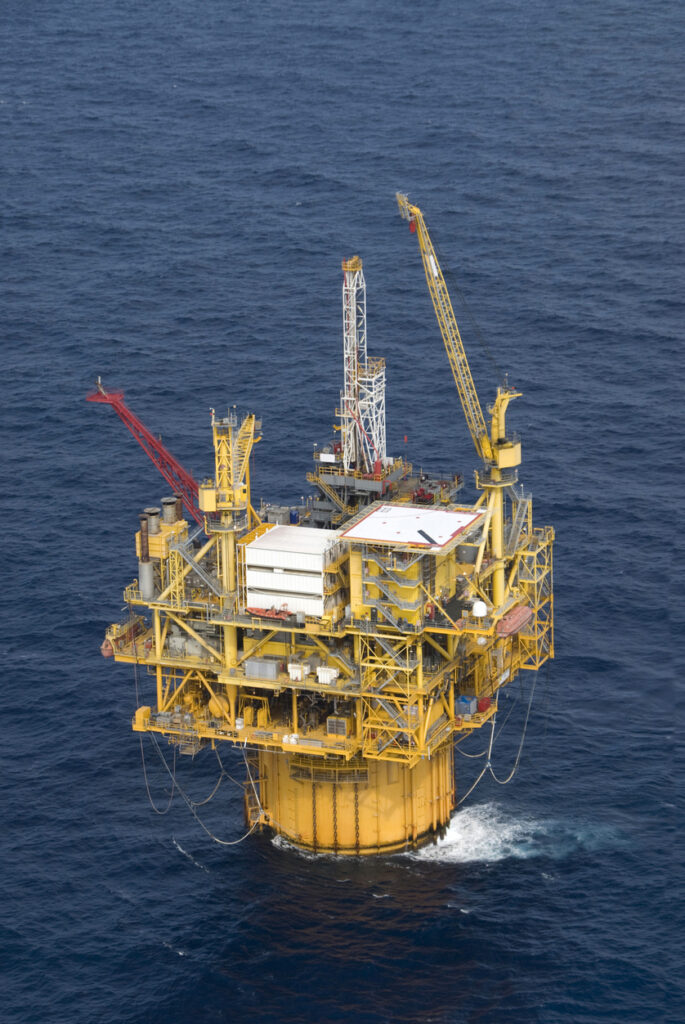
Shell’s Strategic Deepwater Play at Ursa: A Long-Term Value Anchor
In a move signaling a clear commitment to maximizing value from its deepwater portfolio, Shell has reached a final investment decision (FID) on the Kaikias waterflood project in the U.S. Gulf of America. This strategic initiative, centered around the Ursa hub, is poised to significantly extend the producing life of a key asset, adding an estimated 60 million barrels of oil equivalent (P50) in recoverable resources. For investors, this decision underscores Shell’s disciplined approach to capital allocation, focusing on high-margin production and leveraging existing infrastructure to deliver competitive barrels well into the next decade. As the global energy landscape continues to evolve, Shell’s investment in secondary recovery at Kaikias provides a crucial lens through which to examine the resilience and strategic depth of its upstream operations, particularly in a market often swayed by short-term volatility.
Capitalizing on Core Assets Amidst Market Fluctuations
Shell’s decision to proceed with the Kaikias waterflood project exemplifies a shrewd strategy to extract further value from mature, high-quality assets. The Kaikias field, discovered in 2014 and producing since 2018 via a subsea tieback to the Ursa tension-leg platform, represents a proven resource. By implementing water injection technology, Shell aims to restore reservoir pressure and displace additional oil, effectively extending the productive lifespan of the Ursa platform by several years, with first water injection anticipated in 2028. This approach is inherently capital-efficient, reducing the need for new, costly greenfield developments and maximizing returns on existing infrastructure investments. Shell, holding a 100% working interest in Kaikias and operating the Ursa platform, stands to capture full value from these additional 2P resources. This strategy reinforces the company’s stated goal of sustaining liquids production at approximately 1.4 million boed through 2030, a critical factor for investors closely monitoring long-term production profiles and cash flow generation.
The timing of such a long-term investment is particularly noteworthy given the current market dynamics. As of today, Brent crude trades at $91.87, reflecting a 7.57% decrease within the day, while WTI sits at $84, down 7.86%. This recent softness is part of a broader trend, with Brent having declined by approximately $14, or 12.4%, from its peak of $112.57 just three weeks ago on March 27th. Such rapid price movements highlight the importance of high-margin, low-cost production for investor confidence. Projects like Kaikias, which leverage existing hubs and aim for competitive breakeven costs, are designed to be resilient across a range of commodity price scenarios, offering a degree of insulation from the daily swings that can impact more marginal plays.
Strategic Foresight: Addressing Investor Concerns on Future Supply and Price
Our proprietary reader intent data reveals a consistent theme among investors: a keen interest in the future trajectory of oil prices and the stability of global supply. Questions such as “what do you predict the price of oil per barrel will be by end of 2026?” underscore the prevailing uncertainty and the desire for clarity on long-term market fundamentals. Shell’s Kaikias FID directly addresses this by securing future production through a cost-effective method. By adding 60 million barrels of oil equivalent, Shell is not just extending the life of an asset but also contributing to the stability of future supply, particularly in the deepwater U.S. Gulf, an area where Shell’s production boasts some of the lowest greenhouse gas intensity globally.
This initiative also speaks to a broader industry trend towards secondary recovery in mature deepwater fields. As easy-to-access conventional resources become scarcer, operators are increasingly looking to optimize existing assets. This strategy minimizes exploration risk, leverages established supply chains, and often comes with a lower environmental footprint compared to developing entirely new fields. For investors, this means more predictable production and potentially higher returns on capital employed, reinforcing the value proposition of integrated energy majors with extensive existing infrastructure.
Upcoming Events and the Long View on Deepwater Investment
The immediate horizon for the oil and gas market is punctuated by several key events that will undoubtedly influence short-term sentiment and pricing. The OPEC+ Joint Ministerial Monitoring Committee (JMMC) meeting today, April 17th, followed by the full Ministerial Meeting tomorrow, April 18th, will be critical in shaping the near-term supply outlook. Investors are closely tracking these discussions, particularly concerning current production quotas, a frequent query among our readership. Additionally, weekly data releases such as the API Crude Inventory on April 21st and the EIA Weekly Petroleum Status Report on April 22nd, along with the Baker Hughes Rig Count on April 24th, will provide real-time snapshots of market balances.
While these events can trigger significant intra-week volatility and influence short-term trading decisions, Shell’s Kaikias investment signals a longer-term perspective. The project, with first water injection years away in 2028, is designed to deliver sustained production well into the next decade. This commitment demonstrates that even amidst ongoing geopolitical complexities and shifting market fundamentals, strategic deepwater assets like Ursa remain foundational to Shell’s upstream portfolio. For investors seeking long-term exposure to high-quality oil production, Shell’s proactive approach in extending asset life and maximizing resource recovery in the U.S. Gulf of America offers a compelling case for sustained value creation, irrespective of near-term market fluctuations stemming from OPEC+ decisions or weekly inventory reports.