Close Menu
  • Home
  • Market News
    • Crude Oil Prices
    • Brent vs WTI
    • Futures & Trading
    • OPEC Announcements
  • Company & Corporate
    • Mergers & Acquisitions
    • Earnings Reports
    • Executive Moves
    • ESG & Sustainability
  • Geopolitical & Global
    • Middle East
    • North America
    • Europe & Russia
    • Asia & China
    • Latin America
  • Supply & Disruption
    • Pipeline Disruptions
    • Refinery Outages
    • Weather Events (hurricanes, floods)
    • Labor Strikes & Protest Movements
  • Policy & Regulation
    • U.S. Energy Policy
    • EU Carbon Targets
    • Emissions Regulations
    • International Trade & Sanctions
  • Tech
    • Energy Transition
    • Hydrogen & LNG
    • Carbon Capture
    • Battery / Storage Tech
  • ESG
    • Climate Commitments
    • Greenwashing News
    • Net-Zero Tracking
    • Institutional Divestments
  • Financial
    • Interest Rates Impact on Oil
    • Inflation + Demand
    • Oil & Stock Correlation
    • Investor Sentiment

Subscribe to Updates

Subscribe to our newsletter and never miss our latest news

Subscribe my Newsletter for New Posts & tips Let's stay updated!

What's Hot

Oil risk premium returns and what it means for energy investors – Oil & Gas 360

March 4, 2026

Argentina expands incentives to spur Vaca Muerta shale oil investment – Oil & Gas 360

March 4, 2026

Subsea7 announces CEO transition ahead of planned Saipem merger

March 4, 2026
Facebook X (Twitter) Instagram Threads
Oil Market Cap – Global Oil & Energy News, Data & Analysis
  • Home
  • Market News
    • Crude Oil Prices
    • Brent vs WTI
    • Futures & Trading
    • OPEC Announcements
  • Company & Corporate
    • Mergers & Acquisitions
    • Earnings Reports
    • Executive Moves
    • ESG & Sustainability
  • Geopolitical & Global
    • Middle East
    • North America
    • Europe & Russia
    • Asia & China
    • Latin America
  • Supply & Disruption
    • Pipeline Disruptions
    • Refinery Outages
    • Weather Events (hurricanes, floods)
    • Labor Strikes & Protest Movements
  • Policy & Regulation
    • U.S. Energy Policy
    • EU Carbon Targets
    • Emissions Regulations
    • International Trade & Sanctions
  • Tech
    • Energy Transition
    • Hydrogen & LNG
    • Carbon Capture
    • Battery / Storage Tech
  • ESG
    • Climate Commitments
    • Greenwashing News
    • Net-Zero Tracking
    • Institutional Divestments
  • Financial
    • Interest Rates Impact on Oil
    • Inflation + Demand
    • Oil & Stock Correlation
    • Investor Sentiment
Oil Market Cap – Global Oil & Energy News, Data & Analysis
Home » The Startup Taking Direct Aim at Nvidia’s AI Iron Grip
U.S. Energy Policy

The Startup Taking Direct Aim at Nvidia’s AI Iron Grip

omc_adminBy omc_adminDecember 10, 2025No Comments7 Mins Read
Share
Facebook Twitter Pinterest Threads Bluesky Copy Link


In Silicon Valley, where bold technical bets abound, few bets look bolder than trying to break the grip of Nvidia’s CUDA, a software stack that’s quietly become the operating system of the AI boom.

That’s what Modular, a startup founded by software gurus from Apple and Google, is trying to do.

Cofounders Chris Lattner and Tim Davis have spent decades building the software plumbing that sits beneath the modern tech industry. Lattner is famous for creating Apple’s Swift programming language. He also built the software underpinning Google’s TPU AI chips, with Modular cofounder Tim Davis.

They’re now aiming that expertise at CUDA itself. The attempt borders on madness, but it’s the kind of audacious project that could transform the AI industry.

“It’s seen by a lot of people as somewhat crazy,” said Kylan Gibbs, CEO of startup Inworld AI and a former product manager at Google DeepMind. “That’s where Chris has the advantage: He’s smart enough to actually know how to do it, and somewhat crazy enough to set out to do it.”

Alistair Barr, global tech editor of Business Insider, smiles at the camera while wearing a blue and white striped shirt.

Every time Alistair publishes a story, you’ll get an alert straight to your inbox!

Stay connected to Alistair and get more of their work as it publishes.

CUDA entrenched. Competition fragmented.

CUDA began life almost 20 years ago as a way to make graphics chips programmable. Today, it has grown into a multilayered software ecosystem — language, libraries, compilers, inference systems — that most AI companies rely on.

That success comes at a cost: Most of the industry is now optimized around a single vendor’s hardware. CUDA binds AI workloads to Nvidia GPUs. That is great for Nvidia, but deeply limiting for everyone else.

On the surface, there seems to be a ton of competition: AMD sells GPUs. Google has TPUs. Amazon created Trainium AI chips, and a host of startups are building similar hardware.

The problem is that each chip comes with its own software stack optimized just for that component. That means an endless reinvention of the wheel. Most of the time, it’s simpler to just stick with CUDA — and Nvidia’s GPUs.

And yet, AI developers crave portability: Being able to use any combination of GPUs from multiple providers without juggling different software stacks.

“Nobody is building portable stuff, because why would anyone work on software for more than one chip when the chip projects themselves are doing the software?” Lattner, Modular’s CEO, told me in an interview.

Nvidia could extend CUDA to run well on rival AI chips. But doing so would undermine Nvidia’s greatest moat: the closed-loop bond between its software and its chips. “Obviously, they don’t want portability,” he said.

Paradox = opportunity

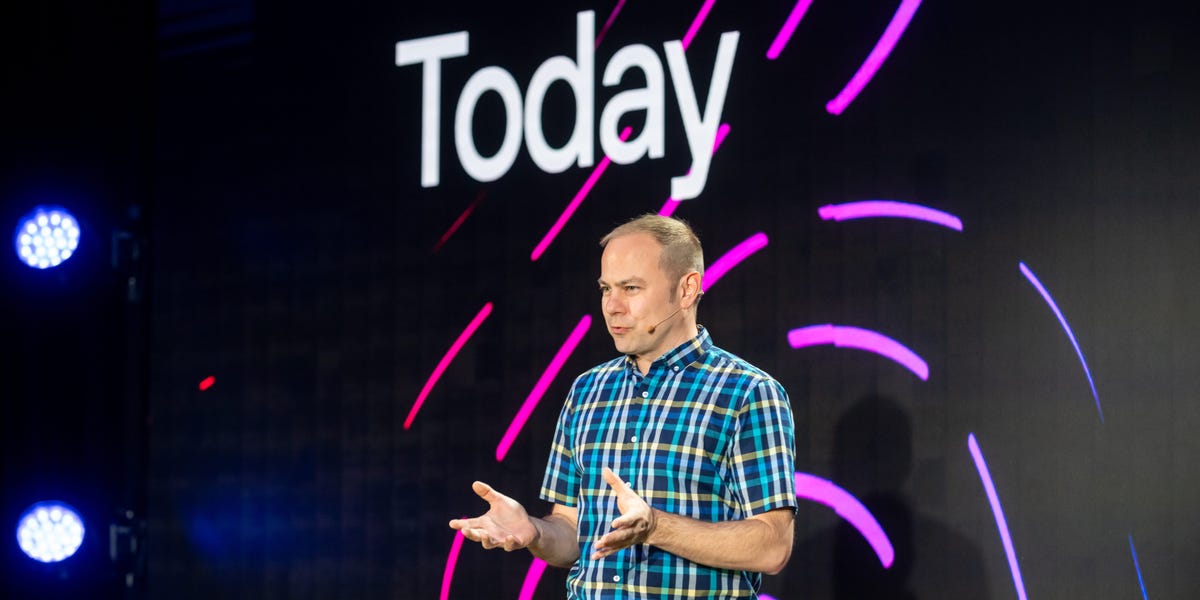
Modular cofounder and CEO Chris Lattner (left) on stage with Tim Davis (right), president and cofounder of the startup

Modular cofounder and CEO Chris Lattner (left) on stage with Tim Davis (right), president and cofounder of the startup

Chloe Jackman Photography/Modular


For Lattner, this paradox presents a big opportunity.

“We realized there’s nobody in the industry that’s actually incentivized to do this. It’s very expensive, very hard,” he said. “And at the same time, everybody wants it.”

That’s what inspired Lattner and Davis to leave Google and start Modular in 2022, the year ChatGPT took the world by storm.

Since then, Modular has raised $380 million from investors including Greylock, General Catalyst, and GV, Google’s venture capital arm. The latest financing in September valued the startup at $1.6 billion. Modular isn’t the only effort to break the CUDA lock-in. There has been ZLUDA, an open-source project that was funded by AMD, and more recently, the startup Spectral Compute, which has raised $6 million.

Lattner has used some of this money to hire talented programmers from Google, Apple, and other tech companies. They spent three years working in relative obscurity to create the building blocks of a new AI software stack.

The new AI software stack

The foundation starts with a brand-new programming language, called Mojo, that offers deep controls for making AI chips run as efficiently as possible.

Modular designed this to work similarly to Python, a popular and easy-to-use programming language. But Mojo also has the speed and power of other, more complex languages, such as C++, that are essential for AI development. Mojo also works well with PyTorch, an open-source framework that is often used when building AI models and applications.

I first heard about Modular earlier this year when interviewing Carles Gelada, a former OpenAI researcher. “There are several interesting projects to create GPU-agnostic frameworks and platforms, and challenge CUDA,” he said at the time. “Mojo is the most interesting one.”

MAX is the next major layer of Modular’s new software stack. It powers AI inference, which is how models are run. This part of the system works with Nvidia GPUs, AMD GPUs, and similar chips from Apple. Modular hopes to add more AI chips in the future.

On top of that is another layer called Mammoth, which helps AI developers manage GPU clusters.

In late September, Modular announced that it got top performance out of Nvidia’s new Blackwell B200 GPUs and AMD’s latest MI355X GPUs — crucially on the same software platform.

Lattner said Modular got these AMD GPUs to perform roughly 50% better than when these chips run on AMD’s own software.

More importantly, the ability to run different GPUs on the same software stack now supports the tantalizing opportunity to compare Nvidia’s offerings with rival AI chips on a more level playing field.

“The obvious question is: can MI355X compete with Blackwell?” Modular wrote in a blog announcing the results. “Early signs point to yes.”

A customer test

Kylan Gibbs, CEO and cofounder of Inworld

Kylan Gibbs, CEO and cofounder of Inworld

Inworld


Gibbs, the CEO of Inworld AI, has been putting Modular’s software through its paces in the real world.

Inworld builds high-speed, real-time conversational AI technology that supports offerings from big companies, including Disney, NBCUniversal, and Niantic Labs.

Earlier this year, when the startup designed a new text-to-speech AI model and got early access to Nvidia B200 GPUs, they issued Modular a challenge: Cut our costs by 60% and reduce our latency by 40% and we’ll work with you.

“Within about four weeks, we were able to get this incredible performance,” said Gibbs, who signed a partnership deal with Modular soon after. “I’ve bet with my wallet.”

While Inworld was mostly lured by Modular’s performance gains on Nvidia’s latest GPUs, Gibbs likes the flexibility of using different AI chips more easily in the future, if needed.

“The promise is that we’d be able to move to new hardware,” he said. “Let’s say AMD takes off, let’s say TPUs take off for Google, or there could be other new hardware that comes online. So it’s nice to have that optionality.”

‘Nvidia doesn’t have to die’

In fact, Google’s TPUs are suddenly having a moment. The internet giant released a new AI model called Gemini 3 to rave reviews recently. That was trained and run using TPUs, and some other AI companies have signed deals to use these chips instead of, or alongside of, Nvidia GPUs.

That’s put Nvidia on the defensive. A project like Modular, with its promise of portability across different AI hardware, adds to this pressure.

“Nvidia could kill this in a day,” said Gibbs of the Modular project. “Nvidia could basically say, ‘okay, we don’t really care that you run just on Nvidia hardware. Here’s a CUDA option that runs on AMD GPUs as well.’ It’d be a bit crazy for them to do that, but it’s something they could do and that would of course be somewhat bad.”

For all Lattner’s critique of the industry, he says Modular is not trying to kill Nvidia. In fact, he argues that Nvidia will continue to thrive, even if Modular succeeds spectacularly.

“We’re trying to build something like Android, but for AI hardware,” he told me, referring to Google’s mobile operating system that powers most of the world’s smartphones.

Despite billions of people using Android devices, this success didn’t kill iOS, Apple’s mobile operating system. iPhones still rule in the US, for example.

Lattner thinks something similar will happen in AI as Modular’s software makes other hardware more competitive, giving developers more freedom, and chipping away at the industry’s single-vendor monoculture.

“So Nvidia doesn’t have to die, but we do want more competition. We do want more innovation,” he said. “I think that’s good for the world.”

Sign up for BI’s Tech Memo newsletter here. Reach out to me via email at abarr@businessinsider.com.


Source link

Share. Facebook Twitter Pinterest Bluesky Threads Tumblr Telegram Email
omc_admin
  • Website

Related Posts

AI Boom Minting Startup Multimillionaires at Unprecedented Speed

March 3, 2026

Amazon’s Cloud Reboot Shows the Future of Consulting in the AI Era

March 3, 2026

Meta Advances AI Goals With New Applied Engineering Team

March 3, 2026
Add A Comment
Leave A Reply Cancel Reply

Top Posts

Federal Reserve cuts key rate for first time this year

September 17, 202513 Views

Inflation or jobs: Federal Reserve officials are divided over competing concerns

August 14, 20259 Views

Oil tanker rates to stay strong into 2026 as sanctions remove ships for hire – Oil & Gas 360

December 16, 20258 Views
Don't Miss

Subsea7 announces CEO transition ahead of planned Saipem merger

By omc_adminMarch 4, 2026

(WO) – Subsea7 announced that Chief Executive Officer John Evans will retire on June 30,…

Extended Hormuz closure could push oil toward $110, analyst warns

March 3, 2026

Argentina expands incentives to spur Vaca Muerta shale oil investment

March 3, 2026

Iran conflict raises risk of oil and LNG supply shock, Enverus says

March 3, 2026
Top Trending

XeleratedFifty Acquires Carbon Management Platform Terrascope

By omc_adminMarch 3, 2026

Global economy must stop pandering to ‘frivolous desires of ultra-rich’, says UN expert | Environment

By omc_adminMarch 3, 2026

KPMG Appoints Gauthier Acket as Head of Global ESG

By omc_adminMarch 3, 2026
Most Popular

The 5 Best 65-Inch TVs of 2025

July 3, 202515 Views

AI’s Next Bottleneck Isn’t Just Chips — It’s the Power Grid: Goldman

November 14, 202514 Views

The Layoffs List of 2025: Meta, Microsoft, Block, and More

May 9, 202510 Views
Our Picks

Oil Rally Pauses After Trump Pledge

March 3, 2026

UAE Reports Major Fire at Fujairah Oil Hub

March 3, 2026

Argentina expands incentives to spur Vaca Muerta shale oil investment

March 3, 2026

Subscribe to Updates

Subscribe to our newsletter and never miss our latest news

Subscribe my Newsletter for New Posts & tips Let's stay updated!

Facebook X (Twitter) Instagram Pinterest
  • Home
  • About Us
  • Advertise With Us
  • Contact Us
  • DMCA
  • Privacy Policy
  • Terms & Conditions
© 2026 oilmarketcap. Designed by oilmarketcap.

Type above and press Enter to search. Press Esc to cancel.

