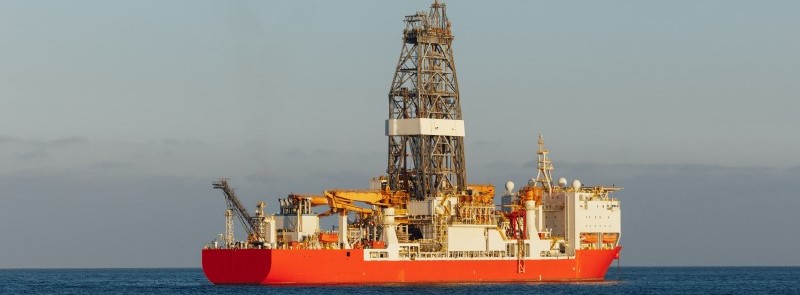
The MSGBC basin, spanning Mauritania, Senegal, The Gambia, Guinea-Bissau, and Guinea-Conakry, is rapidly emerging as a focal point for international oil and gas investment. While the northern reaches of this promising West African region have already transitioned into a production phase, the southern sector, along with its deeper offshore segments, presents a largely undrilled frontier. This renewed interest from global players, spurred by strategic acquisitions and government initiatives, signals a significant shift in exploration focus towards unlocking substantial hydrocarbon potential in areas previously overlooked. For discerning investors, understanding the geological promise, the evolving regulatory landscape, and the broader market dynamics influencing capital allocation here is paramount.
The Untapped Potential of Southern MSGBC
Investor attention is increasingly gravitating towards the southern portion of the MSGBC basin, an area that, despite its geological similarities to proven hydrocarbon provinces, remains largely unexplored. The recent move by a supermajor to acquire acreage in Guinea-Bissau earlier this year serves as a powerful signal, drawing multiple companies to evaluate opportunities across The Gambia and Guinea-Conakry. This contrasts sharply with the established production success seen in Mauritania and Senegal, where significant gas discoveries have already entered development. The consensus among industry experts highlights the south as a high-potential, yet underexplored, region. For investors, the early entry of a major player often de-risks a basin, opening the door for further capital deployment and potentially faster exploration cycles in this promising but challenging frontier.
Deepwater Dynamics: A Parallel to Namibia’s Success
Beyond the geographic shift, the drive into deepwater segments represents another critical dimension of MSGBC’s appeal. Historically, exploration efforts largely halted at depths around 1,000 meters, leaving vast portions of the basin’s deeper geology untested. However, new play concepts are emerging for these unexplored deepwater zones, drawing direct parallels to the highly successful Orange Basin in Namibia. The geological conditions in MSGBC’s deeper waters are now understood to be favorable, suggesting that these previously overlooked areas could unlock significant new resources. This shift in understanding, coupled with technological advancements in deepwater drilling, positions MSGBC’s deeper plays as a compelling long-term prospect for investors seeking high-impact discoveries similar to those that have transformed Namibia’s offshore landscape.
Government Initiatives and Investor Confidence in a Volatile Market
Regional governments are keenly aware of the need to attract and retain significant capital to realize MSGBC’s full potential. Countries are actively updating fiscal terms, streamlining regulatory frameworks, and preparing new licensing rounds to enhance the basin’s competitiveness. National oil companies, such as Senegal’s Petrosen, are playing a more proactive role in preliminary technical work, effectively de-risking acreage for international partners. Mauritania, for instance, has strengthened investment terms and local content regulations specifically to accelerate progress on its BirAllah gas development, improving both project economics and operational clarity. This proactive stance is vital in an environment where investors are closely scrutinizing long-term commitments. Our proprietary data indicates that investors are consistently asking about the long-term price of oil, with many querying predictions for crude barrel prices by the end of 2026. Such forward-looking questions underscore the need for stable, predictable government policies that can withstand market fluctuations and support multi-year development timelines.
Navigating Current Market Headwinds and Upcoming Catalysts
The renewed interest in MSGBC’s frontier opportunities plays out against a backdrop of significant market volatility. As of today, April 17, 2026, Brent Crude is trading at $91.87 per barrel, reflecting a sharp 7.57% decline from yesterday, with its daily range spanning $86.08 to $98.97. Similarly, WTI Crude stands at $84 per barrel, down 7.86%. This recent downturn extends a broader trend, with Brent having fallen from $112.57 on March 27, 2026, to $98.57 just yesterday, representing a substantial 12.4% drop over approximately two weeks before today’s further slide. Gasoline prices have also seen a notable decrease, currently at $2.95, down 4.85%. This volatility naturally influences investor appetite for frontier exploration. However, upcoming events could significantly shift market sentiment. The OPEC+ Joint Ministerial Monitoring Committee (JMMC) meeting is scheduled for today, April 17, followed by the full OPEC+ Ministerial Meeting tomorrow, April 18. These meetings are critical for assessing global supply strategies and could provide a much-needed jolt of stability or further uncertainty into crude markets. Additionally, investors will be closely watching the API Weekly Crude Inventory report on April 21 and the EIA Weekly Petroleum Status Report on April 22 for signals on demand and supply dynamics, with Baker Hughes Rig Count reports on April 24 and May 1 offering insights into drilling activity. These near-term market catalysts will undoubtedly shape the immediate investment climate for high-capex, long-horizon projects like those in MSGBC deepwater.
Strategic Outlook for MSGBC Investment
Despite the current market’s day-today fluctuations, the strategic rationale for investing in the MSGBC basin remains robust. The combination of established production in the north, significant underexplored potential in the south, and promising deepwater plays offers a diverse risk-reward profile for international oil and gas companies. Investors are not just looking at immediate returns but also at the long-term resilience and growth potential of their portfolios. The questions our readers are posing, such as “what do you predict the price of oil per barrel will be by end of 2026?”, underscore this longer-term perspective. While short-term price movements are important, the multi-year development cycles for deepwater projects necessitate a conviction in the underlying fundamentals and the supportive regulatory environment. With governments actively working to de-risk acreage and attract capital, and with proven geological concepts in analogous basins, MSGBC is well-positioned to become one of West Africa’s most compelling exploration and development frontiers for those with a strategic, patient investment horizon.


